Summary FO says response to external aggression will be decided jointly
ISLAMABAD (Dunya News) – Pakistan and Saudi Arabia have completed the ratification of the Makkah Joint Defence Agreement, while Turkiye is proceeding with the necessary steps under its domestic legal framework, Pakistan’s Foreign Office (FO) confirmed on Friday.
The agreement brings the three countries together under a collective defence framework designed to strengthen military cooperation and promote regional security and stability.
Signed by Pakistan, Saudi Arabia and Turkiye in August, the pact stipulates that an armed attack against one member would be considered an attack against all three. Its implementation, including the nature of any military assistance, remains subject to consultations among the participating countries.
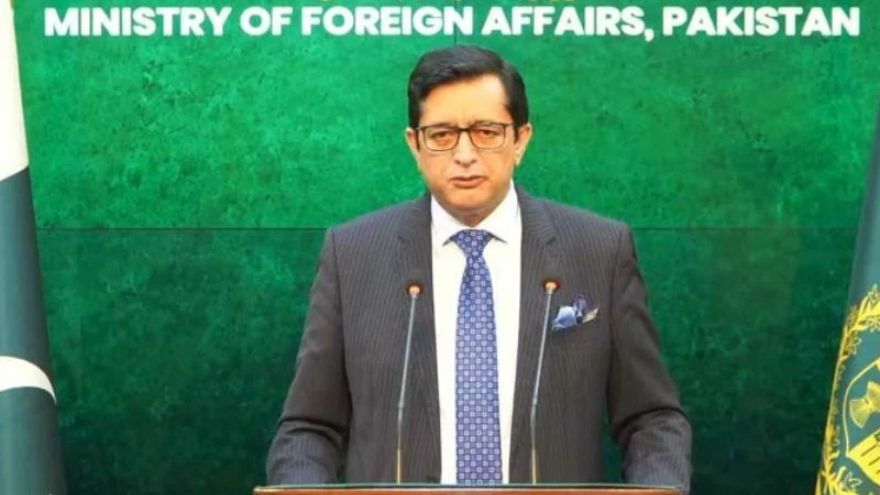
The FO said that the agreement reflected the shared commitment of the three nations to collective defence, deterrence and regional stability. Spokesperson Sajjad Haider Khan stressed that Pakistan remained committed to the agreement and that each country was following its own constitutional and legal procedures for ratification.
Ratification process
“Pakistan and the Kingdom of Saudi Arabia have already completed their ratification processes, while Turkiye is undertaking the requisite procedures in accordance with its domestic legal framework,” Khan said.
Turkiye submitted the agreement to its parliament for ratification earlier this week. The three countries are continuing discussions on its ratification and operationalisation, including through the Strategic Political and Defence Committee (SPDC), which held a meeting on October 5.
The FO had previously clarified that signing the agreement and committing military capabilities under it fell within the executive functions provided for under Pakistan’s national laws and Rules of Business, and did not necessarily require parliamentary approval.
Earlier this month, the three countries also agreed to rapidly deploy military forces and capabilities in Saudi Arabia following an emergency meeting of the SPDC in Riyadh. The announcement came against the backdrop of Houthi attacks on the kingdom amid the ongoing conflict in Yemen.
Defensive framework
Responding to questions about Article 2, which treats an armed attack against one party as an attack against all, Khan said the agreement was defensive in nature and consistent with Article 51 of the United Nations Charter, which recognises the right to self-defence.
He said the pact was not directed against any particular country but established a framework for collective assistance in the event of external armed aggression against any of the three parties.
The nature and extent of such assistance would be determined collectively by Pakistan, Saudi Arabia and Turkiye after an objective assessment of the circumstances, the spokesperson added.
Khan also rejected suggestions that the agreement contained undisclosed provisions, saying Pakistan endorsed the text released in the Turkish parliament and describing its provisions and articles as explicit and clear.
Houthi attacks
Asked whether the agreement could be invoked in response to Houthi attacks on Saudi Arabia, the spokesperson said the matter would have to be decided by the three partner countries in accordance with the pact.
Pakistan had expressed concern over the attacks and their implications for regional peace and security. Khan reiterated Islamabad’s support for Yemen’s sovereignty, unity and territorial integrity, saying a lasting resolution to the conflict could only be achieved through dialogue and a negotiated political settlement.
At the same time, he condemned attacks against Saudi Arabia and reaffirmed Pakistan’s commitment to the kingdom’s sovereignty, territorial integrity and security.
He also said Pakistan supported meaningful diplomatic engagement aimed at ending hostilities and securing a durable political settlement.
The defence agreement has drawn increased attention amid continuing regional security concerns. Earlier this week, Inter-Services Public Relations Director General Lieutenant General Ahmed Sharif Chaudhry said Pakistan was providing whatever support was needed to defend Saudi Arabia.
The latest developments follow a series of exchanges in the Yemen conflict, where the Houthis have controlled significant parts of the country, including sections of its Red Sea coast. The conflict has added to concerns over regional security and the strategic importance of maritime routes around the Bab al-Mandab Strait.