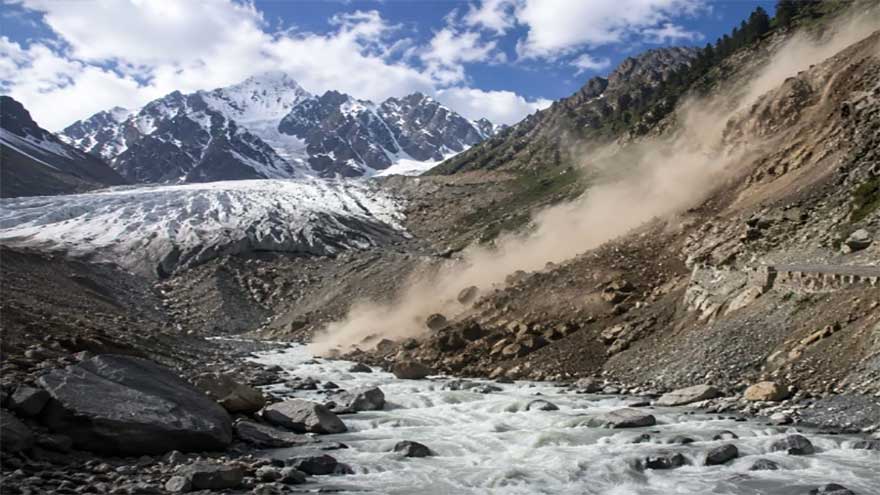
Summary The NDMA has warned that rising temperatures and rapid glacier melting between May 26 and 31 could trigger landslides, flash floods and road closures in northern Pakistan
ISLAMABAD (Web Desk) – Rising temperatures and an intense heatwave across Pakistan have accelerated glacier melting in northern regions, significantly increasing the risks of landslides, flash floods and glacial lake outburst floods (GLOFs), according to an alert issued by the National Emergency Operations Centre of the National Disaster Management Authority (NDMA).
The alert, covering the period from May 26 to May 31, warns that temperatures in many parts of the country could range between 40°C and 48°C. Sindh, Balochistan and southern Punjab are expected to experience the most severe heatwave conditions.
Acting on the directives of Prime Minister Shehbaz Sharif, the NDMA has initiated a nationwide review of preparedness measures to address potential weather-related emergencies. Provincial Disaster Management Authorities have also begun precautionary steps, including public awareness campaigns, deployment of emergency response teams, establishment of cooling centres and enhancement of medical facilities.
According to the NDMA, rapidly rising temperatures in Gilgit-Baltistan, upper Khyber Pakhtunkhwa, Azad Jammu and Kashmir and other mountainous regions are causing glaciers to melt at an accelerated pace. This has heightened the risk of landslides in areas including Hunza, Nagar, Gilgit, Chilas, Astore, Shigar, Chitral, Kalam, Upper Kohistan and parts of Azad Kashmir.
The authority warned that landslides could disrupt road connectivity between Shimshal, Attabad Lake, Karimabad, Gulmit, Shishkat Bala and Passu. Key transport routes, including the Karakoram Highway, Shigar Valley Road, Skardu Road and Deosai Road, may also face temporary closures.
In addition, rapidly melting glaciers and the possibility of glacial lake outburst floods have raised concerns for several vulnerable locations, including Darkot, Lasht, Reshun, Booni, Badswat, Shisper, Gulkin, Hanarchi, Roshan and Kumrat.
The NDMA further cautioned that mountain streams and rivers could experience unusually high flows, increasing flood risks in Hunza, Ghizer, Diamer, Astore, Ghanche, Shigar, Chitral, Dir, Swat and Kohistan districts.
The heatwave is also expected to affect large parts of Sindh, including Jacobabad, Qambar Shahdadkot, Dadu, Jamshoro, Khairpur, Sanghar, Umerkot, Sukkur, Ghotki and Mirpurkhas. In Balochistan, Chagai, Washuk, Kharan, Turbat, Sibi, Nasirabad and Jaffarabad are likely to experience extreme temperatures.
Similarly, several districts in Punjab, including Multan, Lodhran, Rahim Yar Khan, Bahawalpur, Bahawalnagar, Toba Tek Singh, Jhang, Muzaffargarh, Bhakkar, Layyah, Lahore, Sahiwal and Kasur, are expected to face intense heat conditions.
The NDMA has directed all relevant institutions to ensure emergency preparedness and advised the public to avoid unnecessary travel, particularly in mountainous regions where landslides and road blockages may occur.
The authority has also issued an advisory on clothing during the heatwave, recommending light-coloured and loose-fitting garments to minimise heat-related illnesses and respiratory problems.
Tourists and residents of northern areas have been urged to remain vigilant, monitor weather updates and follow official safety guidelines. The NDMA advised citizens to use the “Pak NDMA Disaster Alert” mobile application for authentic information and emergency guidance.