Summary Without naming Imran Khan, DG ISPR Lieutenant General Ahmed Sharif Chaudhry warns that jailed PTI founder’s anti-military narrative has escalated into a national security threat.
RAWALPINDI (Dunya News) – Pakistani military’s spokesman on Friday strongly criticised jailed Pakistan Tehreek-e-Insaf (PTI) founder Imran Khan for spreading what he called an “anti-army” narrative.
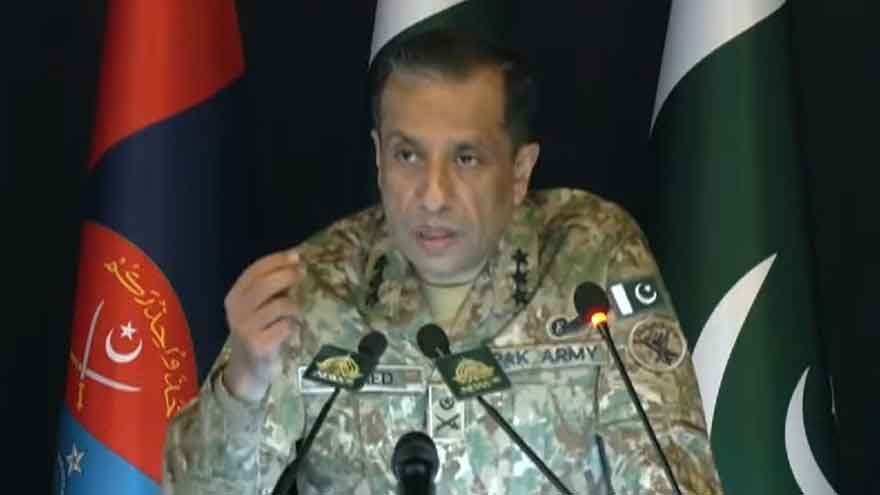
Speaking at a press conference in Rawalpindi, Inter-Services Public Relations (ISPR) Director General Lieutenant General Ahmed Sharif Chaudhry said that one individual has become a national security threat, cautioning that the public will not be allowed to be incited against the Pakistan Army.
He also congratulated the nation on the establishment of the Chief of Defence Forces (CDF) headquarters, calling it a “long-awaited necessity” to achieve synergy and jointness in Pakistan’s military operations.
“This has been widely discussed in the media. The nature of warfare has evolved – operations now span multiple domains. It’s no longer just land, sea, and air; warfare also occurs in space, cyberspace, the informational domain, and relies heavily on intelligence,” he said. He added, “Wars today are violent, short, and intense. To ensure efficiency and effectiveness, the CDF headquarters was essential, as seen in other countries as well.”
National Security Concerns
The DG ISPR highlighted the character and role of Pakistan’s armed forces. “We do not represent any region, ethnicity, religious group, or political ideology. Our military includes people of every language, religion, region, and sect. Our sole agenda is Pakistan,” he said, stressing that the armed forces primarily comprise middle and lower-middle class citizens. “If anyone attacks the Pakistan Army based on personal thinking, we will respond.”
He recalled past attempts to destabilise the country, including calls to halt remittances abroad and targeting military leadership during Operation Bunyan-un-Marsoos against a force eight times stronger. He questioned whether such actions were creating space for an “alternate army” and warned that attempts to divide the public from the armed forces would not be tolerated.
Lt Gen Chaudhry urged political parties and individuals to keep politics away from the military. “Constructive criticism or observations about the Army are acceptable, but inciting the public against the military will not be allowed,” he said.
External Collusion
Highlighting the role of foreign actors, the ISPR chief said the narrative has been amplified internationally, particularly by Indian media and foreign-based social media accounts. “After a tweet, coordinated accounts appear in sequence, followed by Afghan social media and international media picking it up,” he said. He cited instances where narratives were spread against National Defence University attendees, equating military officers with traitors, and warned against normalising dialogue with militants who are actively killing Pakistani citizens and soldiers.
Lt Gen Chaudhry described the individual behind these narratives as mentally unstable, accusing him of disregarding the Constitution, law, and rules while spreading rhetoric against the armed forces. “This person believes that democracy exists only when he is in power; otherwise, it is called dictatorship. Every development related to the Army has been turned into propaganda instead of focusing on real national issues,” he added.