Summary “Our region has long served as a hub of connectivity within the BRI. The growing importance of the global economy has further enhanced the significance of this ancient trade route,” Shehbaz said
ISLAMABAD (Dunya News) – Prime Minister Shehbaz Sharif has said that Pakistan is entering the second phase of the China-Pakistan Economic Corridor (CPEC), and that enhancing regional connectivity will bring a revolution in the economic and trade sectors.
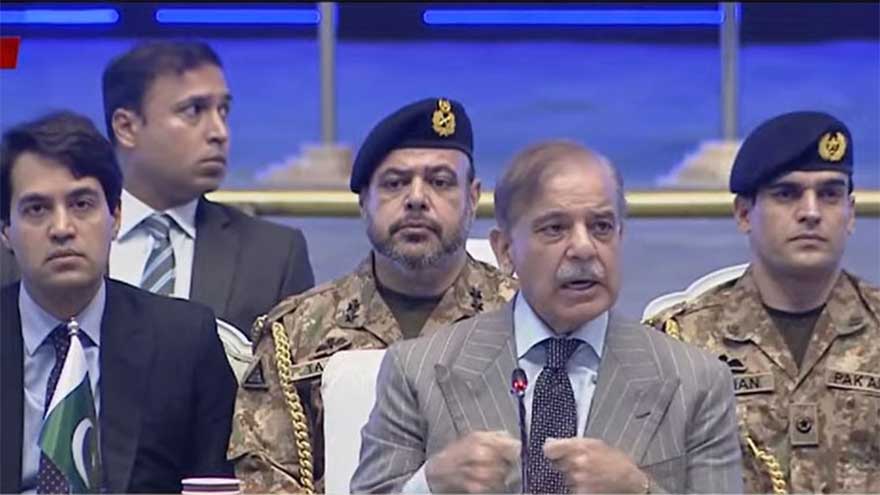
Addressing the closing session of the Regional Transport Ministers’ Conference here on Friday, he welcomed all participating delegates on behalf of the government and the people of Pakistan, saying that the conference had provided an important opportunity for dialogue.
Prime Minister Shehbaz said that the conference is important for promoting bilateral and regional connectivity, noting that global transport and communication systems are undergoing significant changes.
“Our region has long served as a hub of connectivity within the Belt and Road Initiative (BRI). The growing importance of the global economy has further enhanced the significance of this ancient trade route,” he added.
The prime minister said that Gwadar’s long coastline and Karachi’s port are integral parts of the Maritime Silk Road, adding that “Pakistan is entering the second phase of the CPEC which focuses on business linkages, investment, and shared prosperity.”
He stated that Pakistan is working on major connectivity projects, including the Trans-Afghan Railway and the Islamabad-Tehran-Istanbul Railway Corridor.
He said that large-scale projects will integrate the region’s economic potential. “Cooperation in trade, economy, and energy will mark the beginning of a new era,” PM Shehbaz continued.
He noted that in the digital age, connectivity is not limited to roads, railways, or air routes. “Today’s world is defined by data and technological integration.
“Pakistan is investing in digital infrastructure and that training the youth in line with modern technological demands is a top priority,” he concluded.