Summary India and Pakistan exchange updated list showing nuclear installations and facilities on 1st January
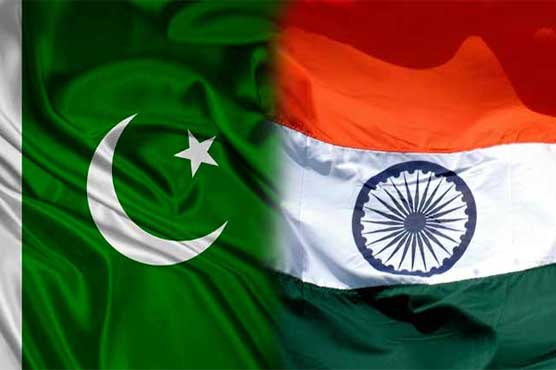
ISLAMABAD (Dunya News) – Pakistan and India exchanged a list of nuclear installations that the two countries have under a three-decade-old bilateral pact to maintain transparency and avoid attacking each other’s nuclear facilities.
“In accordance with Article-II of the Agreement on Prohibition of Attacks against Nuclear Installations and Facilities between Pakistan and India, signed on 31 December 1988, the list of nuclear installations and facilities in Pakistan was officially handed over to a representative of the Indian High Commission at the Ministry of Foreign Affairs on 1st January 2018, at 1030 hrs (PST),” the Ministry of Foreign Affairs stated in a press release.
In accordance with the agreement, the Indian Ministry of External Affairs in New Delhi handed over the list of Indian Nuclear installations and facilities to a representative of the Pakistan High Commission at 1100 hrs (IST).
The agreement contains the provision that both countries inform each other of their nuclear installations and facilities on 1 January every year. This has been done consecutively since 1 January 1992.
In a list handed over to New Delhi on Monday, Islamabad informed that a total of 457 Indian prisoners, including 58 civilians and 399 fishermen, are behind bars in various Pakistani jails.
The Foreign Office said that the step of giving the list of prisoners was consistent with the provisions of the Consular Access Agreement between Pakistan and India, signed on May 21, 2008.
Under the agreement, both countries are required to exchange lists of prisoners in each other’s custody twice a year, on January 1 and July 1.
It further said that Pakistan will release 146 fishermen on January 8.
Fishermen from Pakistan and India are frequently detained for illegally fishing in each other’s territorial waters since the Arabian Sea does not have a clearly defined marine border and the wooden boats lack the technology to avoid being drifting away.