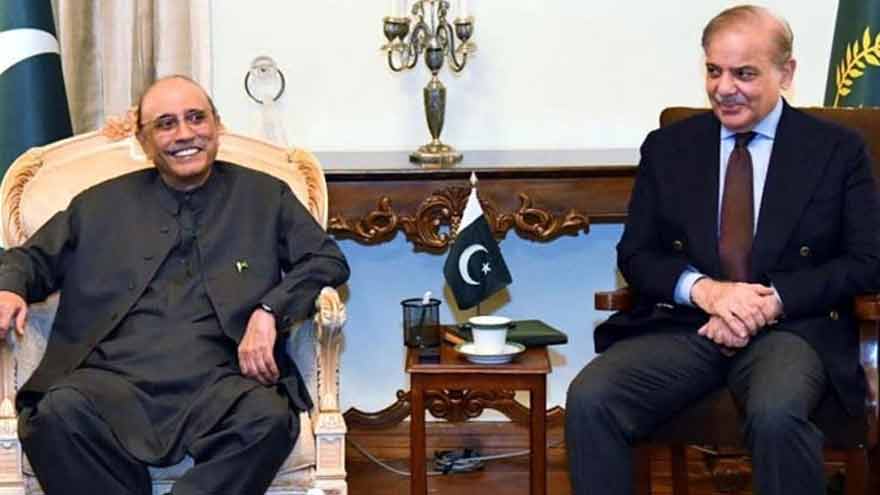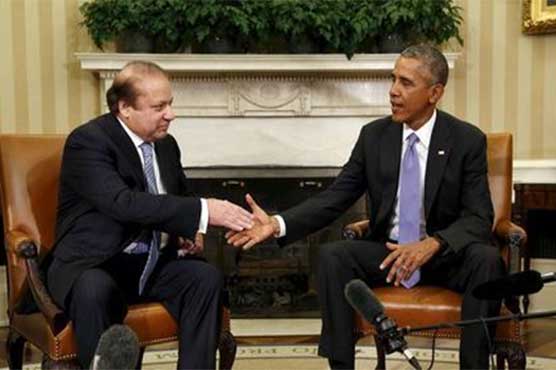
Summary Amid smiles and handshakes, Obama welcomed Nawaz Sharif to the White House.
WASHINGTON (Web Desk) — President Barack Obama welcomed Prime Minister Nawaz Sharif to the White House Thursday with fresh promises to strengthen relationship with Pakistan.
In a joint statement issued after a two-hour long meeting between the two leaders at White House in Washington, Nawaz Sharif and Barak Obama said that a resilient Pak-US partnership is vital for regional and global peace and security.
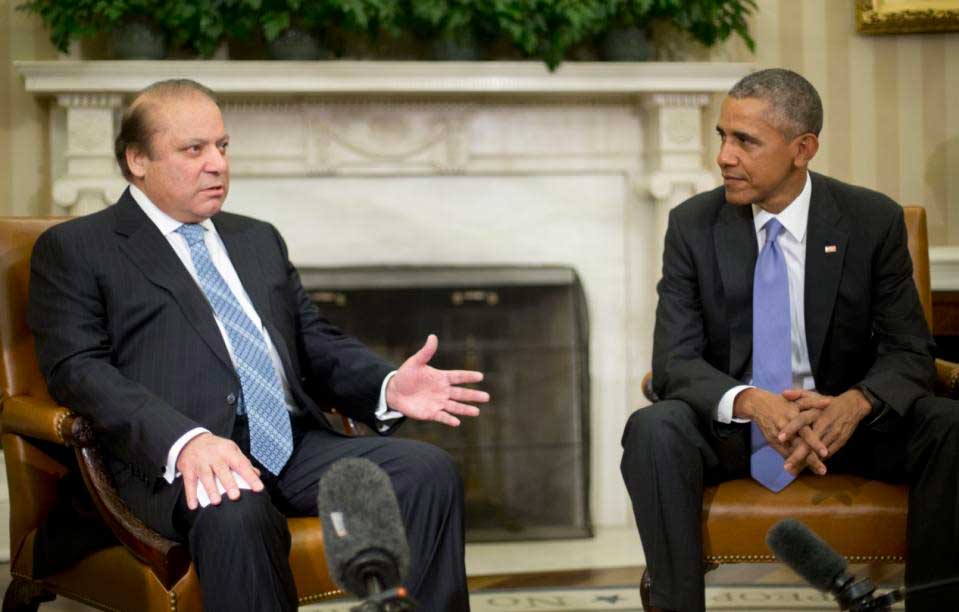
PM Nawaz met President Obama at White House on Thursday
The leaders discussed the importance of continued cooperation against terrorists and violent extremist groups.
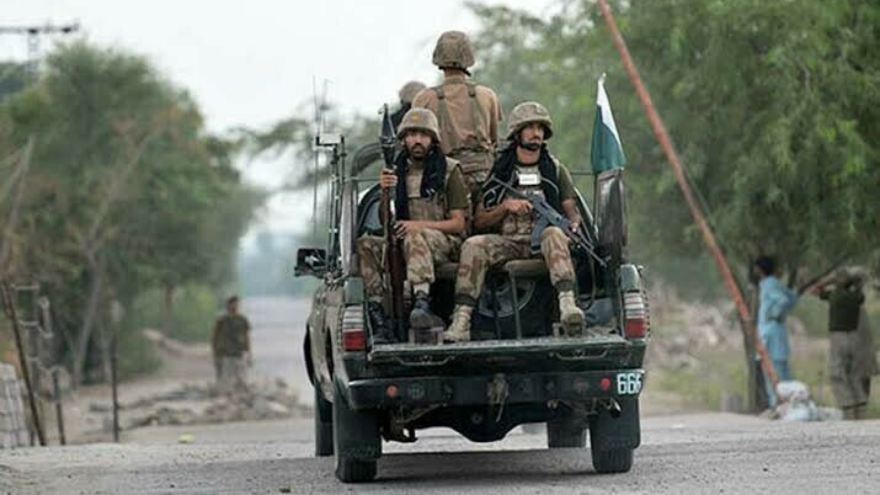
Obama affirmed Pakistan’s role as a key counter-terrorism partner and recognized the sacrifices that Pakistani civilians, military, and law enforcement personnel have made over the years as they confront terrorism and militant groups.
"The President expressed particular appreciation for Pakistan’s ongoing support to degrade and ultimately defeat Qaeda and its affiliates, noting that this partnership has helped to decimate the group’s leadership and operational capacity and has disrupted plots against the U.S. homeland," a statement released after the meeting said.
He also honored the sacrifices of the Pakistani security forces in Operation Zarb-e-Azb and other operations, which have degraded the ability of militants to plan and execute terrorist attacks and noted further steps being taken in this regard in line with the National Action Plan.
In turn, the Prime Minister thanked the United States for its support in bolstering Pakistan’s counter-terrorism capacity.
Both leaders renewed their common resolve to promote peace and stability throughout the region and to counter all forms of extremism and terrorism.
Obama appreciated Pakistan for hosting and facilitating the first public talks between the Afghan government and the Taliban in July 2015 and highlighted the opportunity presented by Pakistan’s willingness to facilitate a reconciliation process that would help end insurgent violence in Afghanistan.
Prime Minister Nawaz Sharif reaffirmed that Pakistan’s territory will not be used against any other country and noted that this is an obligation of all countries in the region.
Both leaders affirmed that regional peace and stability required the prevention of attacks across the Pakistan-Afghanistan border.
The Prime Minister outlined the actions that Pakistan is taking under the National Action Plan to ensure that the Taliban – including the Haqqani Network – are unable to operate from the soil of Pakistan.
The leaders stressed that coordinated management of the Pakistan-Afghanistan border and orderly return of Afghan refugees from Pakistan are fundamental to enhancing security.
President Obama and Prime Minister Sharif emphasised that improvement in Pakistan-India bilateral relations would greatly enhance prospects for lasting peace, stability, and prosperity in the region.
The two leaders expressed concern over violence along the Line of Control, and noted their support for confidence-building measures and effective mechanisms that are acceptable to both parties.
The leaders agreed that the importance of a sustained and resilient dialogue process between the two neighbors aimed at resolving all outstanding territorial and other disputes, including Kashmir, through peaceful means and working together to address mutual concerns of India and Pakistan regarding terrorism.
In this context, the Prime Minister apprised the President about Pakistan’s resolve to take effective action against United Nations-designated terrorist individuals and entities, including Lashkar-e-Taiba and its affiliates, as per its international commitments and obligations under UN Security Council resolutions and the Financial Action Task Force.
Acknowledging the ongoing critical counterterrorism efforts that have driven the robust U.S.-Pakistan security cooperation since September 11, 2001, President Obama and Prime Minister Sharif affirmed that this security relationship has been and will continue to be integral to regional stability. Both leaders noted that the stability of South Asia depended on cooperation among all neighbors to suppress all extremist and militant groups operating in the region.
Highlighting the quickly evolving extremist landscape from the Sahel to South Asia, the President and Prime Minister noted with satisfaction that the United States and Pakistan are working closely to counter emerging terrorist groups such as the Islamic State (Daesh) in South Asia.
The Prime Minister reiterated Pakistan’s firm resolve not to allow any ISIS footprint in Pakistan.
President Obama raised his concern regarding the U.S. nationals being held hostage by terrorist groups in the region,whereas, the Prime Minister indicated that Pakistan would assist in every way possible with the safe return of American and other hostages.
STRATEGIC STABILITY, NUCLEAR SECURITY, AND NONPROLIFERATION
President Obama and Prime Minister Sharif recognized the shared interest in strategic stability in South Asia. The two leaders underscored that all sides should continuously act with maximum restraint and work jointly toward strengthening strategic stability in South Asia.
They acknowledged the importance of regional balance and stability in South Asia and pursuing increased transparency and uninterrupted dialogue in support of peaceful resolution of all outstanding disputes.
President Obama and Prime Minister Sharif discussed the continuing threat of nuclear terrorism.
Obama welcomed Pakistan’s constructive engagement with the Nuclear Security Summit process and its cooperation with the International Atomic Energy Agency and other international forums.
The leaders noted Pakistan’s efforts to improve its strategic trade controls and enhance its engagement with multilateral export control regimes.
Recognizing the importance of bilateral engagement in the Security, Strategic Stability and Non-Proliferation Working Group, the two leaders noted that both sides will continue to stay engaged to further build on the ongoing discussions in the working group.
COOPERATION IN OTHER FIELDS
The two leaders expressed their desire to expand the bilateral relationship in areas outside the traditional security realm in recognition of the multifaceted issues facing both countries including trade and investment, education, science and technology, efficient and affordable energy, efforts to counter climate change, economic growth; regional integration, rule of law, people-to-people and cultural ties and support for democratic principles.
Taking note of the robust bilateral defense cooperation between their two countries, including recent military engagements, exercises, and consultations on regional security, President Obama and Prime Minister Sharif expressed satisfaction with the cooperation achieved in defense relations and reaffirmed that this partnership should endure.
President Obama and Prime Minister Sharif also discussed the importance of enhancing measurable capability of Pakistan to prevent, detect, and respond to infectious diseases.
they reaffirmed their commitment to fully implement the Global Health Security Agenda (GHSA), including a mutually-developed five-year plan to achieve the GHSA targets and advance the World Health Organization International Health Regulations, with a view to advance global cooperation across sectors to counter biological threats, whether naturally occurring, accidental or deliberate.
Moreover, both sides stressed the importance of adaptation to the adverse impacts of climate change.
As a country particularly vulnerable to the effects of climate change, Pakistan has suffered major floods, heat waves, and droughts in recent years.
Obama offered continued U.S. support to Pakistan to build infrastructure and organizational capacity to counter natural disasters and provide relief to the affected populations.
Building on important cooperation in basic education to date, the leaders welcomed the launch of the Let Girls Learn Initiative in Pakistan, a global effort led by the United States, which will provide 200,000 Pakistani girls access to education and the tools they need to succeed in life.
During the meeting, Prime Minister Nawaz Sharif reiterated the importance of market access for Pakistan as the most effective, mutually beneficial, and durable form of bilateral economic partnership.
The leaders reaffirmed their commitment to advancing economic connectivity between Pakistan and its neighbors to promote regional prosperity.
At the end of the meeting, President Obama and Prime Minister Nawaz Sharif expressed commitment to foster a deeper, stronger, multi-dimensional partnership based on mutual respect, trust and understanding to cooperatively tackle the global challenges of the 21st century.