Summary Pakistani public opinion is also largely against intervention in any Saudi-led action in Yemen
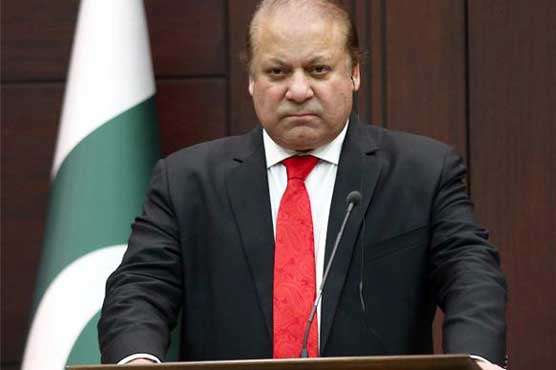
LAHORE (Reuters) - Pakistan s parliament began debating a Saudi plea for military help in Yemen on Monday, a request that pits Prime Minister Nawaz Sharif s staunch Saudi allies against a war-weary Pakistani public.
Saudi Arabia has asked Pakistan to join a Saudi-led military coalition that began conducting air strikes last month against rebels forces in Yemen.
Sharif has in turn hedged his bets. He has said repeatedly he will defend any threat to Saudi Arabia s "territorial integrity" without defining what action such a threat might provoke.
"They re looking to satisfy Saudi expectations at a minimal level," said Arif Rafiq, a Washington-based adjunct scholar with the Middle East Institute. "They re unlikely to be part of any meaningful action inside Yemen. Maybe they will reinforce the border."
Sharif owes the Saudis. Endemic tax dodging means Pakistan needs regular injections of foreign cash to avoid economic meltdown. Last year, the Saudis gave Pakistan $1.5 billion. Saudi Arabia also sheltered Sharif after he was overthrown in a 1999 military coup.
Pakistani intervention would probably also Iran, which shares a long and porous border in a region roiling with its own separatist insurgency. Pakistan s other main borders are with arch enemy India and Afghanistan, where Pakistani troops are conducting anti-militant operations. The Iranian foreign minister will visit Pakistan this week.
NOT SAUDI S HANDMAIDEN
Pakistani public opinion is also largely against intervention in any Saudi-led action in Yemen.
Many analysts say the military, which has ruled Pakistan for more than half its existence since independence, has the final call. The generals have been silent.
Pakistan has nearly 1.5 million active soldiers and reserves, but about a third of those are tied up with operations along the Afghan border. The bulk of the remaining forces face off with nuclear-armed India. Others are executing the government s new counter-terrorism plan.
Even though Saudi Arabia is a "special friend" of both the government and the military, Pakistani intervention in Yemen might be unwise, said retired Major General Mahmud Ali Durrani, a former national security adviser.
"If it was to defend Saudi Arabia against aggression, in spite of our commitments, I think we would stretch to sending troops," he said. "To send our troops to a third country - I think that would be foolhardy.
"Either way, it is an absolutely terrible choice to be made for Pakistan."