Updated on
Summary
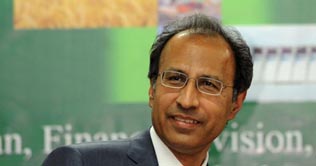
Federal Minister for Finance Dr. Hafeez Shaikh said on Sunday that several measures have been taken in the federal budget 2010-11 which would certainly help reduce inflation, budget deficit and improve the national economy. He stated this while addressing a post-budget press conference here at Pak Secretariat in Islamabad.The Minister was flanked by Deputy Chairman of Planning Commission Dr. Nadeem ul Haq , Secretary Finance Salman Saddique, Chairman of Federal Board of Revenue and Special Secretary to Finance Ministry Asif Bajwa and Principal Information Officer (PIO) Rashid Chaudhry. Senior officials of the Ministry of Finance and Economic Affairs and Planning Commission were also present on the occasion.The Minister said the current expenditures of the government had been cut down and freezed to help reduce inflation. Cut in the government's current expenditures would have positive impact on the inflation, he remarked. Besides, he said, the government did not increase the customs duty, rather it had been reduced on 29 items which would also contribute positively in reducing the inflation across the country. He said the government under income tax measures has enhanced exemption limit for the salaried taxpayers from Rs. 200,000 to Rs. 300,000. In addition, he said, exemption limit for non-salary income has also been raised from Rs. 100,000 to Rs. 300,000.Highlighting the General Sales Tax (GST), the Finance Minister said that the government was committed to reform the existing system of General Sales Tax (GST) and introduce a uniform taxation system in the country. He said the GST reforms would eliminate multiple tax rates and replace it with a single lower rate of 15 per cent adding that 1 percent raise in GST was only for three months. It would be reversed to 15 percent after three months, he added. He clarified that 1 per cent increase in the GST would not cause inflation rather after three months the uniform GST system would help reduce the inflation for the relief of the people. The Federal Minister said that earlier discussions held on the issue of GST were not based on facts adding that the government wanted to introduce uniform rate by reforming the existing GST in consultation with the provinces.Replying to a question, Finance Minister said 50 per cent ad hoc relief announced for the government servants would not be applicable to the cabinet members rather their existing wages would be cut by 10 per cent as an austerity measure and to reduce inflation. He said the current 50 per cent ad hoc relief would also not be applicable to the police, armed forces and judiciary as their salaries had already been increased to 100 percent. He said that the 50 per cent ad hoc increase for the government employees would be implemented on their running basic salaries.Dr. Shaikh said that all the corporations following the government pay structure would also be provided resources to transfer the ad hoc relief to their employees.The Minister said that Pay and Pension Committee had submitted its report on the salaries and wages of the government employees and the government was focusing to implement it in letter and spirit in next three years.The committee, he said, had pointed out some inequities in different rental ceilings and allowances of the government employees like housing, medical and others. The government would rationalize them offering relief to the government employees across the board, he added.Dr. Shaikh said that in the current budget provinces were provided more shares, upto 57 per cent from the federal divisible pool for social safety net. Now, he said that it was the responsibility of the provinces to bring the vulnerable segments of the society under social safety net more efficiently and honestly. In the light of this fact the federal budget has rightly become less important, he added. Dr. Abdul Hafeez Shaikh said 52 per cent increase in Public Service Development Projects (PSDP) of all provinces was a historic achievement of the government.He said now the federal budget was less important after transferring of resources to the provinces and now the provincial share from the federal devisable pool had been increased from 50 to 57 per cent. Provinces development programmes are our programmes, he said.The minister said in the past there was confusion over spending but now there was administrative arrangement between the federal government and the provinces. He also said the health sector was no more the domain of the federal government after administrative arrangements. Now the provinces have bigger place in economy in terms of health, education and infrastructure sectors, he added.