Updated on
Summary As the talks develop, India would consider reopening a serious discussion on Kashmir, Mathai said.
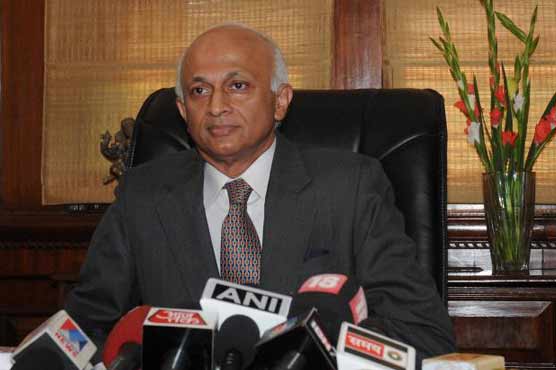
India is willing to talk about the disputed territory of Kashmir with Pakistan as part of an effort to advance peace talks, Indias top diplomat said, adding that Pakistan needs to take serious action against terror elements.The comments by Indian Foreign Secretary Ranjan Mathai, in an interview with The Wall Street Journal on Wednesday, suggest that a recent thaw in relations between the two countries could lead to discussions on the key territorial issue, which has been off the table since 2007.Pakistan President Asif Ali Zardari visited India on Sunday and Indian Prime Minister Manmohan Singh accepted his invitation to make a first official trip to Pakistan, although he didnt commit to a time frame. The U.S. views better relations as essential to political stability in the region, including Afghanistan.A deal over the Himalayan territory of Kashmir, split between India and Pakistan in 1948 and claimed in its entirety by both, is vital to a long-term peace deal between the two nations, which have fought three wars since independence from Britain in 1947.Pakistani officials have long demanded India start discussions on Kashmir, while India wants Pakistan to crack down on militants. Choreographing progress on these demands will likely be important for further progress in the detente.Abdul Basit, a spokesman for Pakistans foreign ministry, said that while there had been progress in the tone and tenor of the discussions, Pakistan believed that unless the Jammu and Kashmir issue is resolved we cannot expect lasting peace in South Asia.Mr. Mathai said Pakistans failure to clamp down on militant groups that have attacked India is the major roadblock to peace talks.He said it was deeply troubling to India that Hafiz Saeed was able to address public gatherings and appear on television.The U.S. and India allege Hafiz Saeed helped plan the 2008 attacks on Mumbai, which killed more than 160 people.Last week, Washington offered a $10 million reward for information leading to his arrest and conviction.At the same time, Mr. Mathai said New Delhi views recent moves by Pakistan, including an agreement in February to open its markets to Indian goods, as a signal Islamabad is serious about an improvement in ties.I wouldnt have been as optimistic six months ago, Mr. Mathai said about prospects for the latest round of peace talks, which began in earnest a year ago. The fact the government is able to move on the trade track shows theres a greater willingness to take things forward by all the players.As the talks develop, India would consider reopening a serious discussion on Kashmir, Mr. Mathai said. New Delhi, he added, would be happy to start talks toward a deal to keep Kashmirs borders as they are but allow greater trade and movement of people across the Line of Control, the de facto frontier that divides the territory.India and Pakistan were close to such an agreement in 2007. But the then-secret negotiations foundered as Pakistans president at the time, Pervez Musharraf, became entangled in political troubles at home that led to his resignation the following year.It was a very useful channel of discussions, Mr. Mathai said. They made progress.Mr. Basit, the Pakistani spokesman, said he had no knowledge of the 2007 talks.New Delhi believes it is now up to the Pakistanis to decide how to proceed on peace talks, Mr. Mathai said.India, he added, is looking for something solid to announce before Prime Minister Singh visits Pakistan.One potential area of progress, Indian and Pakistan officials say, is a deal over Sir Creek, an area of marsh land bordering the Pakistan province of Sindh and Indian state of Gujarat and claimed by both countries.Other areas of discussion are likely to prove more contentious.