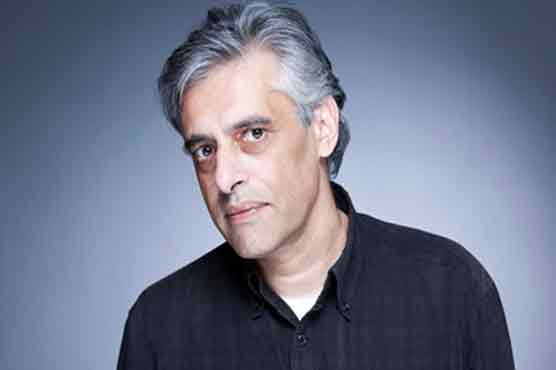
Summary Bhattacharjee, who was missing for almost a week, has been found dead near cliffs in Seaford.
SEAFORD (Web Desk) - The 53-year-old ‘Bond’ and ‘Ghandi’ actor had last been seen leaving rehearsals at the Royal Court Theatre in London last Wednesday evening, after which he sent a text to his girlfriend but had not been heard from since, the Mirror reported.
The hunt for Bhattercharjee, who appeared in the James Bond film Casino Royale and EastEnders, spread across Twitter with Stephen Fry and Kim Cattrall among hundreds who expressed concern, on Wednesday.
His death is not being treated as suspicious by Sussex Police.
Meanwhile, a number of Bhattercharjee’s pals and fans of his work took over to twitter to express their grief over the death.
He was tall, slim and naturally funny, always meticulous in his movement and perfect in his articulation.
He reminded me of an elegant bird – a heron, perhaps, or a flamingo. His eyes twinkled as much as they burned.
He slowed things down, rather than speeded them up, but his slowness and deliberation were always an exemplary demonstration of good timing and manners as a performer.
In the mid-1970s, he was the go-to actor for Asian parts in new plays in the Royal Court s Theatre Upstairs, and it was always a guarantee of an element of class and distinction in the show that night if his name was on the bill.
Bhattacharjee was last seen on 10 July leaving a rehearsal for a new play in the same building in Sloane Square, London, part of the new artistic director Vicky Featherstone s Open Court weekly rep season in which he had already played the president of Georgia. His body was found two days later in East Sussex
He was the only son of Gautam Bhattacharjee, a software researcher who was a member of the Communist party in India and was forced to leave the country after his part in the naval mutiny of 1942. In Britain, Gautam met Anne, who was herself from a migrant family of Russian Jews, and their son, Paul, was educated at state schools in Harrow, Middlesex.
In his teens, Paul was involved in anti-racist campaigns in London and met Verma, who became his great friend and mentor, in workshops they both attended in Southall.
Verma recognised from the start a fellow spirit whose highly developed social conscience was linked to a remarkable artistic imagination.
Tara Arts, Britain s first Asian theatre company, was formed by Verma in 1977 and Bhattacharjee was an actor and director with them over the next 10 years, notably in Yes, Memsahib (1979), which documented the formation of modern east Africa by colonial Indian "coolie" labour; Diwali (1980), which he directed, an epic story set against the annual festival of lights; Meet Me (1983), which highlighted mental illness in the Asian community; and The Little Clay Cart (1984), a delightful adaptation by Verma of an eighth-century classic as a fable on poverty and revolution.
One of his most crucial roles was that of Gandhi in a play Verma wrote, and Anthony Clark directed, for the Edinburgh festival fringe in 1982. Gandhi emerged in this play as the first modern Asian, Verma said, in the way we understand such a definition.
The impression this experience made on Bhattacharjee never left him and informed his entire subsequent career.
He showed up tellingly in Murmuring Judges, the second of David Hare s "state of the nation" trilogy, at the National Theatre in 1991, but gravitated more naturally towards the RSC, where he played leading roles in John Marston s The Malcontent, the disputed Shakespearean history Edward III and Philip Massinger s The Roman Actor in the Swan, Stratford-upon-Avon, season of 2002 which Thelma Holt and Bill Kenwright later presented in the West End.