Updated on
Summary Something has made his yorker, bouncer and slower ones easier to deal with.
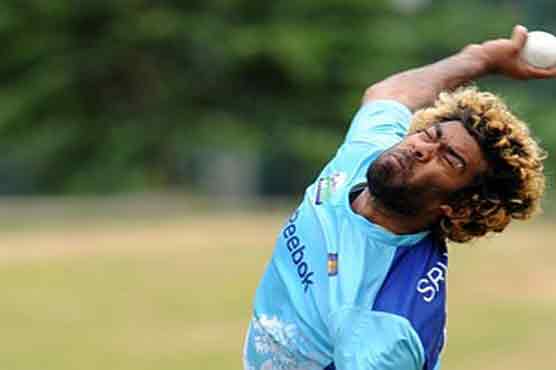
Since his Test debut in 2004, Lasith Malinga has been one of the most discussed bowlers in international cricket, his unusual action causing great curiosity, though it has never been formally questioned.Like most players, Malinga is a product of his environment.His youth was spent playing tennis-ball cricket on the beach, where he adapted his skill and action to suit his environment, producing a delivery that limited the bounce a tennis ball produced, allowing him to hit the target.The only time I faced Malinga was in a three-day warm-up match on India As tour to Sri Lanka in 2002. On seeing his low-slung action, Gautam Gambhir and I realised we had to watch his hand closely and keenly, for there seemed to be very little conventional method to his bowling.He was generating disconcerting speed and bounce, and without any clues in his action about what line or length hed achieve, our job remained tough. But because it was early in his career, he was still quite erratic, so both Gambhir and I managed to get centuries in that match. Malinga would go on to establish himself as one of the most dangerous bowlers in the world.The trick to batting is to pick the line and length early, because it helps you get into the right positions. The only way to gauge the length is to focus on the point of release - the earlier the release, the fuller the ball.To judge the line, focus on the wrist and the bowlers position on the crease. If the wrist is tilted towards third man and the bowler is very close to the stumps, the educated guess is that the line will be around off stump, since the bowler is trying is to move the ball away from the batsman.If the wrist facing fine leg and the bowler is operating wide of the crease, the ball is likely to slant into the batsman. While the method to gauge length is foolproof, there are exceptions to the rule when judging line. Since theres hardly any time to react after the ball is delivered, most batsmen hedge their bets on following these principles, albeit with a hint of caution.These rules are relatively easy to follow for orthodox bowlers, whose actions are more predictable, with their bowling arms close to the ear. As a batsman, it takes a lot of time to get used to watching Malingas bowling hand from in front of the umpires face.His accuracy in bowling toe-crushing reverse-swinging yorkers, and ability to bowl bouncers and well-disguised slower ones, have been impressive. Unfortunately, like with most freak actions, after a few years in international cricket Malinga was exposed. Once the novelty wore off, batsmen found ways to judge line and length, and the level of difficulty reduced considerably.But deception wasnt Malingas only weapon. A good yorker or bouncer are still a tough delivery to counter. The flip side was that Malinga was at his best only when he bowled either of the two.Today, because he doesnt hit the pitch with an upright seam consistently, his good-length balls arent difficult to handle. In seam-friendly conditions, where even lesser bowlers thrive, Malinga finds it tough to be as effective, because since the ball doesnt land on the seam, it doesnt dart around enough. In 11 innings in the CB Series in Australia in February-March this year, Malinga took 18 wickets at 35, with an economy rate of above 6.The introduction of a new ball from either end in an ODI innings since October 2011 has only compounded Malingas problems. While he remains effective with the new ball, his performance dips considerably in the middle and death overs because neither ball gets old enough even towards the end of the innings.