Updated on
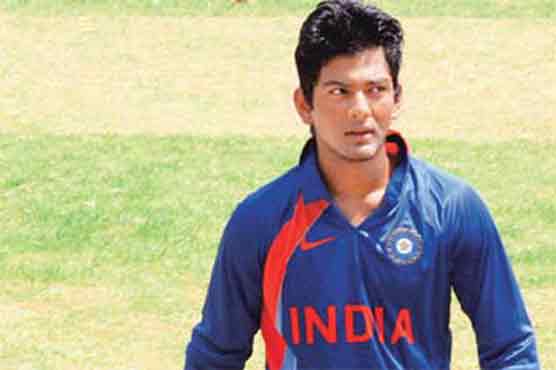
Summary Unmukt Chand, who is leading India's U-19 side to the World Cup, is different type of a cricketer.
Unmukt Chand looks your standard 21st century teenage athlete being groomed for a future on the professional treadmill.T-shirt, shorts and fashionable flip flops; strong physique earned in the gym; rakish hair and traces of stubble. Then, while talking about captaining Indias Under-19 team, he says he was never put under any real pressure because there were no recalcitrant players in the side. Older people with larger vocabularies might struggle to tell you what recalcitrant means; Chand wont because he has habits that are at odds with those of the stereotypical newbie in Indias IPL and PlayStation generation.Chand is India Under-19s premier batsman and hes been given the responsibility of leading their World Cup campaign, which begins on August 11 in Queensland. His generation of cricketers is different from previous ones, and Chand is different among them. He is two seasons old in the Ranji Trophy and has an IPL contract with Delhi Daredevils. His bat is his bedfellow, but so are a couple of books.I keep a diary with me. I keep a dictionary with me all the time, he says. Whenever I come across new words, I write them in the diary, look for their meanings in the dictionary, frame a sentence and try and use them when I talk.Chand talks of writing a book: wildly ambitious for a teenage cricketer but not so outrageous, perhaps, for a regular diarist. In the beginning, [diary writing] was very regular, all my daily routines. But now I write about how I feel - good or bad, what Ive learnt from someone. Something I think is important, I jot it down. Sometimes at 3am Im writing diaries.I feel that if you put pen to paper then it is a very strong way of learning. You dont forget things easily.The world hasnt seen Chand bat yet - he didnt make a splash in the IPL - but he is a proven age-group cricketer, having risen through Delhis youth structure. He has led India Under-19 in three tournaments and won two (the Asia Cup was tied). In the first, in Vizag in September 2011, Chand was the second-highest run scorer, making 336 at an average of 67 and strike rate of 106. He began that competition by gunning down Australias 163 with Manan Vohra in 12 overs - in a 50-over game.The second tournament was in Townsville, a venue for the upcoming World Cup, and it was the first time any of these boys were playing in Australia. India lost all their league games in unfamiliar conditions but were in the semi-final because of the quadrangular format. Chands 94 against England helped put his side in the final, where his 112 against Australia gave India the title. In the Asia Cup a few months later, he scored centuries in the semi-final, against Sri Lanka, and in the final, against Pakistan.Chand says he takes his books along every time, to study while at the cricket. His parents are teachers, and studying has been second nature to him from his time at Delhi Public School in Noida, to Modern School, and now to St Stephens College, an institution of high standing in India. When asked if its hard to strike a balance between responsibilities as heavy as education and a career in cricket, Chand says its not, because he has grown up like this.He gives credit to his parents and uncle for where he is today, recounting childhood routines of being ferried from home to the swimming pool to school to the cricket ground and home again. (Chand was also a national-level swimmer in the butterfly stroke when at school.)Im really lucky to have very good support from my family, he says. My uncle is my idol. He talks to me four-five times a day. We talk about everything - not just cricket, about whats happening in my life. I keep getting lessons from them. Whenever something good happens, they praise me, but they also caution me that this could have also happened. Thanks to them Ive been saved from other influences.Chand first played for Delhi in the Ranji Trophy while in Class 11, and for Daredevils the following year. He recalls with fondness the excitement and anxiety he felt in the lead-up to being named in the Delhi squad. The last two years on the domestic circuit, where he has mixed it with the professionals, have been instructive.Its really important not just to play cricket but to learn about it and learn about yourself... Ive started knowing about myself, my game, and how I react in certain situations and certain conditionsPatience is the most important thing. In Ranji you need to have patience, he says of the difference between age-group and first-class cricket. I remember in the first match I was playing, against Gujarat, I was playing well, but then they started bowling outside off stump, wide outside off stump. I left a few balls but then I got a bit impatient, went after a ball and got out. Thats how I learned that you need to be patient. I can say that two years ago I was much more immature than I am today.When asked whether the IPL is shifting the priorities of cricketers of his generation, Chands response is that it is not, for him at least. You cant play for India by performing only in IPL. You need to perform in Ranji Trophy, he says. Its important for me as a cricketer to take it really seriously. Its an important tournament and a cherished one.The IPL, however, gave Chand an experience that the Ranji Trophy could not - an exposure to the pressure of playing in front of 30,000 spectators and being watched by millions on television. Two days after his Class 12 exams ended, in April 2011, he was told hed be playing his first IPL match the next day - against Mumbai Indians at the Kotla. I was very excited, very nervous, he says. There was a puja at home. Everyone made the occasion very special. But when all these things happen, you start thinking this is not a normal game, this is something else.As I entered the ground, I was totally oblivious. I didnt know what to do, what was happening. I was really nervous. I could visualise myself being telecast on the TV, my parents watching. So all these things were happening.His two-ball duck on debut is a blur of emotion. All these things will come with any newcomer, Chand says. It came with me, and it was a good experience. You dont get to experience these things again and again in life. This year was much better. I was more calm, not nervous.Chand played only two matches in IPL 2012 and hasnt had a breakthrough innings yet. However, the experience - of facing the speed of Lasith Malinga and the guile of Shane Warne, of trying to focus in the midst of terrific noise, of having every on-field action scrutinised by cameras - has put the challenges of Under-19 cricket in perspective.It has helped me stay cool under pressure at times when others were not, because Ive been in those situations and Ive been in that pressure, he says. I try to give the confidence to as many players as I can, and share as much as I can.Chand is good friends with his Delhi team-mate Virat Kohli, who is perhaps the perfect example of how success at the Under-19 World Cup can help a fledgling career take flight. Chand says hes not as aggressive as Kohli, and that he speaks to him about overcoming challenges in the early stages of a career - of the sort that Kohli has successfully overcome to become the master of the chase in one-day cricket.When he was struggling to convert starts into big scores in domestic one-dayers, Chand says Kohli told him to say to myself that Im the best and just react to the ball. That was something that really moved me.After he [Kohli] returned from Bangladesh [the Asia Cup], he came to the dressing room once during a Ranji Trophy match. I asked him a few questions. He told me, Ive understood my game. It took me three years. I didnt know what was happening for the first three years. Now I plan my game and play accordingly. Hes very encouraging to me. Hes a good buddy.One of the more recent entries in Chands diary is from a meeting with Rahul Dravid, who spoke to the Under-19 team while they were training for the World Cup at the National Cricket Academy in Bangalore. The message Chand took from the interaction was that cricket is a process of self-discovery.The most important thing for us is to be self-aware, Chand said of what Dravid told them. All the big players [Dravid] has seen in his life were aware of themselves, of their personalities, of their games. Its really important not just to play cricket but to learn about it and learn about yourself. This is how NCAs helped me really. Ive started knowing about myself, my game, and how I react in certain situations and certain conditions.The Under-19 World Cup might not make or break Unmukt Chands career but he will be a more self-aware cricketer for the experience; and his interactions with players from 15 other cultures could leave his diary full and dictionary well-thumbed.