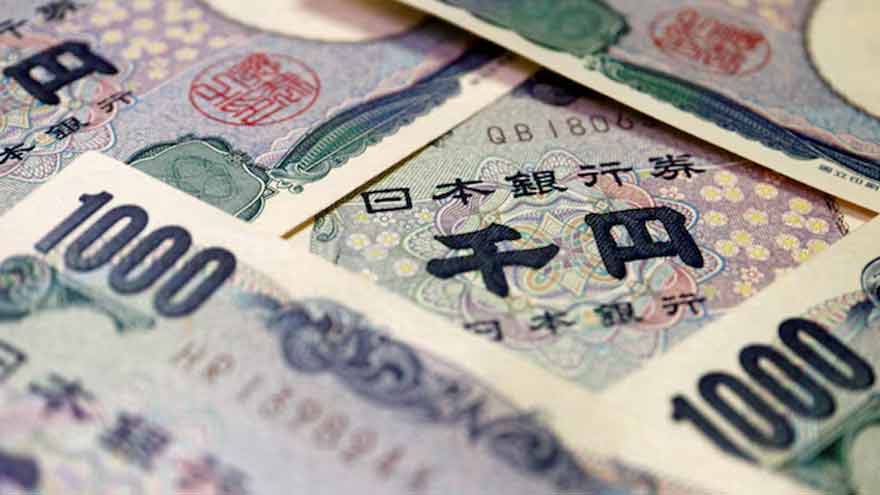
Summary Yen rebounded as Takaichi’s election win ended losses, easing political uncertainty. Gains trimmed amid intervention risks, while markets eye Fed cuts and global political developments
SINGAPORE (Reuters) - The yen strengthened in Asian trading on Monday after Japanese Prime Minister Sanae Takaichi swept to victory in Sunday's election, abruptly reversing a six-day string of losses as traders bet fiscal stimulus will boost the stock market.
The yen overturned a 0.3% decline which saw the currency reach its weakest level in two weeks to strengthen as much as 0.7% before paring gains.
It was last trading 0.3% firmer at 156.76 yen against the dollar.
The yen also retraced losses against other currencies, which earlier saw it reach its weakest level on record against the Swiss franc and trade near the weakest point since the creation of the euro .
"While the initial yen weakness may not have played out, the outlook for the yen is still one which is likely to struggle to strengthen," said Sim Moh Siong, currency strategist at Bank of Singapore in Singapore.
"At least in the near term, there's also concern about intervention risk, which may be capping the upside for dollar-yen."
Japan's top currency diplomat Atsushi Mimura said earlier on Monday that the government is "closely watching currency movements with a high sense of urgency" after Takaichi's coalition swept to a historic election win.
Takaichi is projected to deliver as many as 328 of the 465 seats in Parliament's lower house for her Liberal Democratic Party. Alongside her coalition partner, the Japan Innovation Party - known as Ishin - Takaichi now has a supermajority of two-thirds of seats, allowing her to override the upper chamber, which she does not control.
"The Liberal Democratic Party's landslide victory removes political uncertainty and strengthens policy execution, but shifts market focus squarely to how fiscal policy is designed and communicated," said Shoki Omori, chief desk strategist for rates and FX at Mizuho in Tokyo.
"Risks from fiscal expansion had already been largely priced in before the election," he added. "The key question now is whether those risks are reinforced or gradually unwind."
The U.S. dollar index , which measures the greenback's strength against a basket of six currencies, was flat at 97.629, at the start of a week that will see the release of several key data releases out of Washington, including retail sales, inflation and Wednesday's delayed jobs report.
Traders are increasing their bets on policy easing from the Federal Reserve later this year.
Fed funds futures are now pricing an implied 19.9% probability of a 25-basis-point cut at the U.S. central bank's next two-day meeting on March 18, up from a 18.4% chance on Friday, according to the CME Group's FedWatch tool.
The pound was last down 0.1% at $1.3599 as markets considered developments in a political crisis swirling around British Prime Minister Keir Starmer, whose chief of staff,
Morgan McSweeney, resigned on Sunday. McSweeney said he was taking responsibility for advising Starmer to name Peter Mandelson as ambassador to the U.S., despite his known links to Jeffrey Epstein.
Against the Chinese yuan trading offshore in Hong Kong , the U.S. dollar was last flat at 6.9317 yuan.
The Australian dollar was last up 0.1% at $0.7018, while the New Zealand dollar nudged 0.1% higher to $0.6013 and the euro was flat at $1.1818.