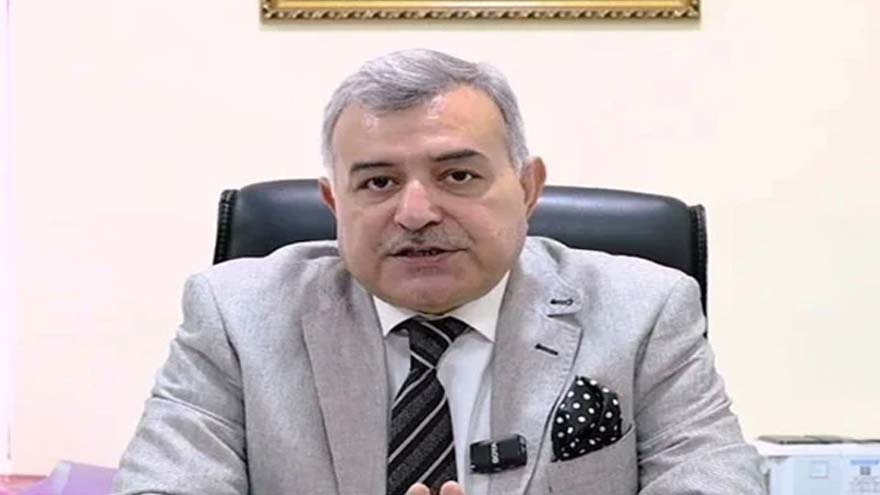
Summary Khurram Schehzad said this landmark achievement reflects a decisive shift toward fiscal discipline, credibility, and responsible economic management.
ISLAMABAD (APP) - Adviser to the Finance Minister, Khurram Schehzad, on Thursday said Pakistan, for the first time in its history, has started repaying its domestic debt ahead of maturity at an unprecedented scale, reflecting a decisive shift toward fiscal discipline and responsible economic management.
The adviser wrote on X, since late 2024, the Ministry of Finance has early-retired Rs3,654 billion of domestic debt owed to the market and the State Bank of Pakistan (SBP) within a span of just 14 months.
The latest repayment of Rs300 billion was made to the SBP on Thursday.
Khurram Schehzad said this landmark achievement reflects a decisive shift toward fiscal discipline, credibility, and responsible economic management.
He shared that the early repayments included Rs1,000 billion in December 2024, Rs500 billion in June 2025, Rs1,160 billion in August 2025, Rs200 billion in October 2025, Rs494 billion in December 2025, and Rs300 billion in January 2026.
With the latest repayment, he said that FY2026 (July–January) alone recorded more than Rs2,150 billion in early debt retirement, which was 44 percent higher than the total early repayments made during FY2025.
The adviser said that nearly 44 percent of the SBP-held debt had been retired early, reducing the central bank debt stock from around Rs5,500 billion to approximately Rs3,000 billion, including liabilities originally maturing in 2029.
He added that of the total early repayments, 65 percent pertained to SBP debt, 30 percent to treasury bills, and five percent to Pakistan Investment Bonds, resulting in a healthier and more sustainable debt profile.
Khurram Schehzad said the positive impact was also visible in overall public debt, which declined from over Rs80.5 trillion in June 2025 to around Rs80 trillion by November 2025.
He further noted that Pakistan’s debt-to-GDP ratio had declined from around 74 percent in FY2022 to nearly 70 percent, reflecting broader improvements in fiscal fundamentals alongside disciplined debt management.
He said that per-capita debt figures often generate misleading narratives and do not provide an accurate assessment of a country’s actual debt burden.
He said, many advanced economies carried some of the highest per-person debt levels globally, yet remained fiscally stable due to strong revenue bases, repayment capacity and effective debt management.