Summary Other Asian markets suffering losses
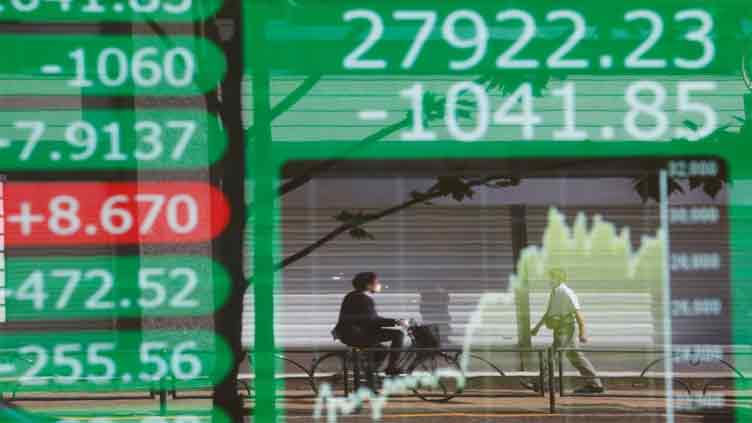
HONG KONG (Web Desk/Reuters) - Asian stocks traded lower on Wednesday after ratings agency Fitch unexpectedly downgraded the United States' top-tier sovereign credit rating as Japan’s Nikkei and Hang Seng shed over 2 per cent.
Rating agency Fitch earlier on Tuesday downgraded the US government's top credit rating, a move that drew an angry response from the White House and surprised investors, coming despite the resolution of the debt ceiling crisis two months ago.
Read more: Fitch cuts US credit rating to AA+, Treasury calls it 'arbitrary'
During Wednesday’s trading, Hang Seng was first to lose over 2pc. By the time trading was closed, it was down 2.47pc.
Similarly, Nikkei, which followed the Hang Seng, was 2.3pc lower than the previous day’s level followed by Taiwan’s TWII 1.85pc. South Korea’s Kospi was down 1.9pc while Australia’s ASX 200 dipped by 1.29pc.
Meanwhile, India’s Nifty 50 was down 1.43pc as 11 of the 13 major sectoral indexes logged losses with high weightage financials and information technology shedding 0.6pc each.
"Most of the Asia turmoil this morning and the Treasury yields move is triggered by the Fitch decision," said Manishi Raychaudhuri, head of Asia Pacific equity research at BNP Paribas.
"It's kind of a short-term knee-jerk reaction, so we will have to wait and watch for how this pans out."
Investors counterintuitively fled to the relatively safety of sovereign debt from riskier equity markets. Treasuries, whose yields fall when prices rise, were also bought when Standard & Poor's cut the US top "AAA" rating by one notch to "AA-plus" in 2011.
"This basically tells you is the US government’s spending is a problem. It's an unsustainable budget situation because the economy can't even grow its way out of this problem going forward," said Steven Ricchiuto, US chief economist, Mizuho Securities. "Therefore, they're going to have to either tackle it or accept the consequences of potential further additional downgrades."
Looking beyond the Fitch downgrade, the main area of focus will still be central banks, corporate earnings and, in China specifically, stimulus prospects the geopolitical issues, he said.
The United States publishes fresh data on jobless claims and unemployment later this week.