Summary US economic growth accelerates in second quarter; inflation retreats
WASHINGTON (Reuters) - The U.S. economy grew faster than expected in the second quarter as labor market resilience supported consumer spending, while businesses boosted investment in equipment, potentially keeping a much-feared recession at bay.
While the Commerce Department's advance second-quarter gross domestic product (GDP) report on Thursday sketched a picture of sustained strength in domestic demand, inflation subsided considerably last quarter.
That led some economists to believe that the Federal Reserve would not need to raise interest rates beyond this year, but rather keep borrowing costs higher for a while. The U.S. central bank on Wednesday raised its policy by 25 basis points to a 5.25%-5.50% range.
"The economy is more than resilient, solid second-quarter growth shows it has triumphed over the naysayers saying recession was inevitable following the inflation shock and the Fed's aggressive rates stance to stem it," said Christopher Rupkey, chief economist at FWDBONDS in New York.
Gross domestic product increased at a 2.4% annualized rate last quarter. The economy grew at a 2.0% pace in the January-March quarter. Economists polled by Reuters had forecast GDP rising at a 1.8% rate in the April-June period.
The government's measure of inflation in the economy, the price index for gross domestic purchases, increased at a 1.9% rate, slowing from the 3.8% pace logged in the first quarter. Excluding food and energy, prices rose at a 2.6% pace following a 4.2% rate of increase in the first quarter.
Outside the housing market and manufacturing, the economy has largely weathered the 525 basis points in rate hikes from the Fed since March 2022 as the central bank battles inflation.
Economists have since late 2022 been forecasting a downturn, but with price pressures ebbing, some now believe the soft-landing scenario for the economy envisaged by the Fed is feasible.
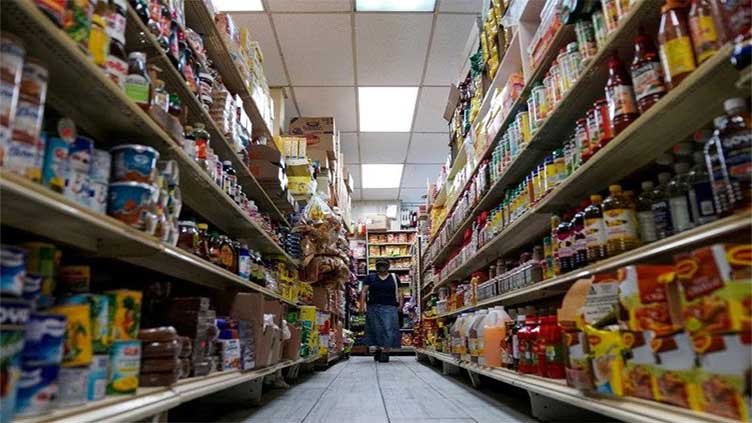
Consumer spending, which accounts for more than two-thirds of U.S. economic activity, increased at a 1.6% pace. Though the pace of growth slowed from the first quarter's robust 4.2% rate, it was enough to add more than a full percentage point to GDP growth. While spending on long-lasting manufactured goods has slowed after booming during the COVID-19 pandemic, outlays on services are taking up some of the slack.
Spending is being propped up by excess savings accumulated during the pandemic, estimated by economists to be as much as $2.1 trillion at one point, debt and strong wage gains from the tight labor market as companies hoard workers after struggling to find labor during the pandemic.
That is highlighted by persistently low levels of layoffs.
A separate report from the Labor Department on Thursday showing initial claims for state unemployment benefits fell 7,000 to a seasonally adjusted 221,000 for the week ended July 22, the lowest level since February. Economists had forecast 235,000 claims for the latest week.