Summary In interbank market, exchange rate of US dollar against rupee witnessed slight increase of Rs0.01.
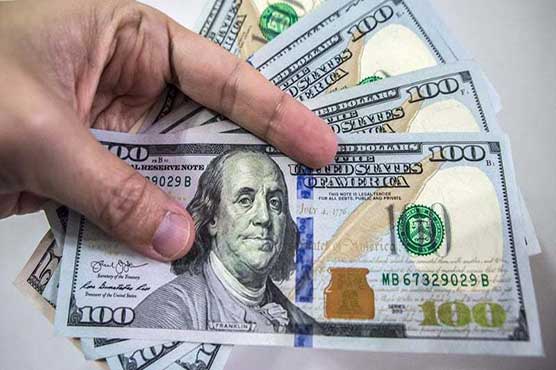
KARACHI (Dunya News) – The Pakistani rupee on Wednesday regained its strength by 5 paisa in the open market to close at Rs155.95 against the US dollar.
In the interbank market, the exchange rate of US dollar against rupee witnessed slight increase of Rs0.01 and was traded at Rs155.87 against Rs155.90 the previous day.
However the price of Euro depreciated by Rs0.27and was traded at Rs173.36 against the last closing of Rs173.63.
The exchange rate of Japanese Yen remained stable and was traded at Rs1.43 whereas decrease of Rs1.15 was witnessed in the exchange rate of British Pound which was traded at Rs200.50 as compared to last closing of Rs201.65.
Exchange rate of UAE Dirham witnessed increase of Rs0.01 and was traded at Rs42.44 as against the last closing of Rs42.43 while the Saudi Rayal witnessed increase of Rs0.01 and was traded at Rs41.56, against Rs41.55 the previous day, the data revealed.
Earlier, analysts had expressed fear that the intense ongoing trade war between the United States and China would result in fluctuation of the U.S. dollar in the local market, and the value of the Pakistani rupee would stabilise depending on the measures taken by the government with appropriate economic policies.
Currency traders were of the view that the increasing inflows of remittance have supported the local rupee in the market.
Previously, the rupee was observed to cumulatively depreciate against the greenback, which in turn, had resulted in increased prices of goods and hardships for the general public.
The SBP has let the rupee depreciate significantly in the inter-bank market after finalising an agreement with the International Monetary Fund (IMF) for a loan programme on May 12.
The IMF asked Pakistan to end state control of the rupee and let the currency move freely to find its equilibrium against the US dollar.
On the other hand, the World Bank Group has also supported the idea of leaving the rupee free from state control in an attempt to give much-needed boost to exports and fix a faltering economy.
After the International Monetary Fund (IMF) lent the first tranche of $991.4 million to Pakistan, the local currency had depreciated massively.
The stringent conditions – on which the global moneylender has formally approved the bailout package of $6 billion for Pakistan – seemed to have exerted more pressure on the local currency.
The gradual drop in the rupee had come due to high demand for the dollar against thin supply as the country continued to make aggressive international payments to partially pay off huge foreign debt and for imports.
Economists were of the view that effective measures must be implemented on the priority basis to recover the state from the balance of payment deficit.
Besides increased demand of the greenback in the local market, they had termed ‘balance of payments deficit’ as the main reason in the recent hike in the value of the US dollar.
Moreover, they had considered that state’s exports and investment were required to grow significantly, and the imports must be reduced to remove pressure on the local currency. According to experts, the government must ensure implementations on economic policies after the deal with the IMF.