Summary The news hit big-name energy giant including ExxonMobil and Chevron
HONG KONG (AFP) - Asian energy firms tracked losses in their US counterparts Thursday, as crude prices tumble on the back of a supply glut and strong dollar ahead of a key meeting of the OPEC oil cartel.
Profit-taking also weighed on stocks following the previous day s gains, while the euro retreated further before a European Central Bank gathering that is expected to end with a boost to its already vast stimulus programme.
Oil prices plunged Wednesday after official figures out of Washington showed another sharp rise in US stockpiles and production, suggesting demand in the world s number two economy remains sluggish.
US benchmark West Texas Intermediate sank 4.6 percent -- falling below $40 a barrel for the first time since August -- and Brent North Sea crude dived 4.4 percent.
The news hit big-name energy giant including ExxonMobil and Chevron, which were the Dow s biggest losers.
And despite a slight rise in oil prices Thursday, Asia energy firms and miners turned negative. Sydney-listed BHP Billiton, the world s biggest miner, fell 2.2 percent and Woodside Petroleum dropped two percent.
In Hong Kong, PetroChina dived 2.3 percent while CNOOC was three percent down. Inpex shed 1.3 percent in Tokyo.
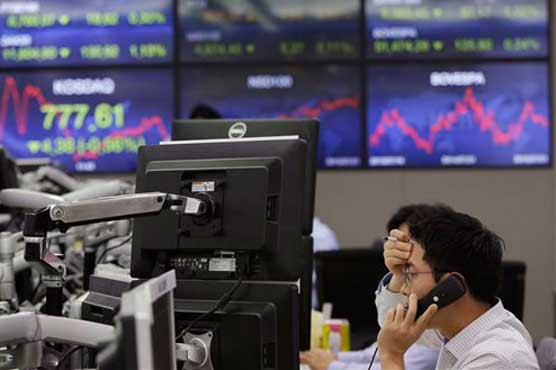
Hong Kong s Hang Seng Index shed 0.3 percent in mid-morning trade, Tokyo was off 0.2 percent at lunch, and Sydney and Seoul were almost one percent lower.
However, Shanghai stocks jumped 0.8 percent, a fourth-straight gain after diving Friday by 5.5 percent on news that some of China s top brokerages were being probed in the wake of a summer market rout.
The losses on stock markets have been "magnified by the fall in the oil price, which was a reflection of nervousness ahead of the OPEC meeting", Shane Oliver, head of investment strategy in Sydney at AMP Capital Investors, told Bloomberg News.
The Organization of the Petroleum Exporting Countries is due to meet at its Vienna headquarters Friday but analysts do not expect it to announce any reduction in output.
Oil prices have slumped from about $115 a barrel in the summer of 2014 to their present levels owing to record production levels, a slowdown in the global economy and a stronger dollar.
"I m not happy with the oil prices," Iraq s oil minister Adil Abd Al-Mahdi told reporters in the Austrian capital, cautioning however that no agreement had been reached on production. "We will wait and see," he added.
The greenback rallied Wednesday in New York after Federal Reserve chief Janet Yellen said she considered the US economy strong enough to withstand an interest rate rise.
Her comments virtually assure a hike at its next policy meeting this month following a slew of mostly strong data. The dollar jumped against the yen and euro in US trade.
However, while it eased back slightly against the Japanese unit in Tokyo, it edged higher against the European single currency as the ECB prepares further loosening of monetary policy.
"There s a lot of anticipation of ECB easing and it seems to be pretty much the consensus that it will happen," Capital Investors Oliver said.
"The US economy has had the training wheels support of ultra- easing monetary policy, and suddenly they re being told by their parent -- the Fed -- it s time to take them off. Naturally, the markets, like the child, are feeling nervous."