Summary Kirchner has been seen as an obstacle to Mercosur's efforts to forge a free-trade deal with Europe.
BUENOS AIRES (AFP) - International exporters and investors will closely watch a run-off election in Argentina on Sunday that could lead to an easing of trade and import restrictions in Latin America s third-biggest economy.
Opinion polls show Mauricio Macri, a former football executive, could win and become Argentina s most economically liberal leader since the 1990s.
That has raised hopes among financiers, but fears among domestic businesses and poorer Argentines who have benefited from the social and trade policies of the outgoing president, Cristina Kirchner.
If Macri breaks the 12-year grip of Kirchner and her late husband Nestor s left-wing movement by beating their ally Daniel Scioli, he could liberalize the economy and lift the limits currently imposed on buying of US dollars.
"Argentines need to get back to thinking in pesos," he said last week. "For that we have to reestablish confidence."
Scioli has warned Argentina faces a sharp depreciation of its peso currency if Macri abruptly lifts the controls, as he has proposed, on December 11, the day after the new president takes office.
That could slash Argentines spending power.
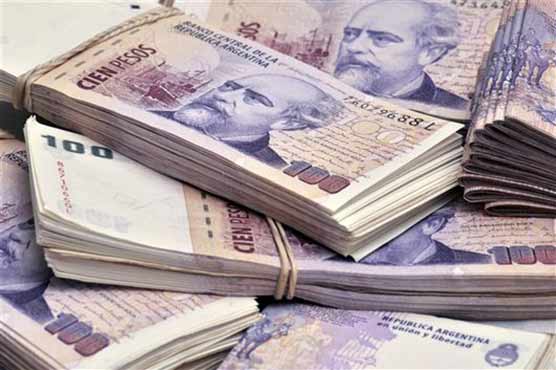
But experts say that whoever wins will sooner or later have to bring the official exchange rate -- just under 10 pesos to the dollar -- into line with the market rate, currently close to 15 pesos.
"Foreign investors are backing Macri. But either candidate would take a similar path" by easing the dollar limits, said the director of the Buenos Aires stock exchange, Juan Napoli.
"Macri would do it quickly, Scioli would do it gradually."
Macri has attracted voters who say they are tired of Kirchner s state controls and her combative style.
But some businesses fear the pro-market Macri would lift import restrictions that protect their products and jobs -- which Scioli has vowed to defend.
"We don t want to return to the industrial genocide of the 1990s with free imports," said Marco Meloni, owner of two textile factories.
"Products would be approved that come from slave labor in Asia."
- Fighting off vultures -
The winning candidate will also face a dispute with so-called "holdout" creditors who have sued in the US courts for unpaid debts.
Kirchner calls them "vultures." She and her late husband tried to restructure tens of billions of dollars of debt that Argentina defaulted on in 2001, when it was bailed out by the International Monetary Fund.
Scioli s advisors have said he will negotiate "in good faith" with the hedge funds over the bond payments. Yet he has refused to "kneel before the vulture funds" and ruled out asking for more loans from the IMF.
Macri has vowed to settle the debt dispute while also promising to "defend the interests of the Argentine people."
- Trade abroad, jobs at home -
The two candidates could also take different approaches in their international trade relations, with Argentina s partners in the South American bloc Mercosur and beyond.
Kirchner has been seen as an obstacle to Mercosur s efforts to forge a free-trade deal with Europe.
"One would expect Scioli to prioritize relations with Mercosur and the countries of the region in order to move on later to negotiations with the European Union," said Mauricio Claveri of the consultancy Abeceb in Buenos Aires.
"Macri on the other hand would likely give more priority to deepening ties overseas, without limiting himself to the surrounding region."
Closer to home, some voters just want more of what Kirchner gave them.
Nicolas Quiroga, 31, from the poor suburb of Jose C. Paz near Buenos Aires, used to scrape a living by scavenging in bins in the wake of the 2001 financial crisis, but now he is a trained doctor.
He says that Nestor Kirchner, president from 2003 to 2007, was to thank for helping him get to medical school in Cuba.
"The job stability in my household and the improved fortunes of so many families in my neighborhood are a product of state policies that radically changed our destiny," he said.
"We are faithful to the program that Nestor and Cristina started."