Summary Japanese brokerage SMGC Nikko also said further easing was "inevitable".
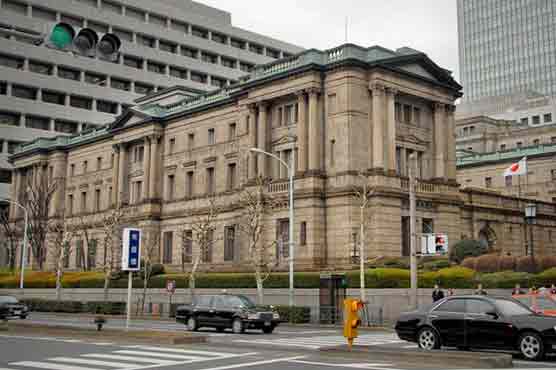
TOKYO (AFP) - Japan s central bank held fire on expanding its monetary easing programme Tuesday and its chief said the economy was expanding, but economists warned more stimulus could be needed to boost the sagging economy.
A series of weak data had strengthened pressure on the central bank to expand its 80 trillion yen ($665 billion) annual asset-buying scheme to stimulate the economy, which contracted in the second quarter.
The Bank of Japan (BoJ) said in a statement that while Japan "has continued to recover moderately... exports and production are affected by the slowdown in emerging economies".
The yen gained against the dollar after the decision, with the US unit buying 119.76 yen compared to 120.65 yen before the announcement.
Analysts had expected the BoJ to sit on its hands this time to see whether the US Federal Reserve decides to raise its key interest rate for the first time in almost a decade, a move that could hit emerging markets.
But concern about decelerating growth in China, the world s number two economy and a key trade partner, had fuelled fears about Japan s economy as its exports have begun to stall.
Facing a deflated mood in the markets, which saw Tokyo s benchmark Nikkei give up strong early gains to close only 0.34 percent higher, BoJ governor Haruhiko Kuroda struck an upbeat note at an afternoon press conference.
He predicted Japan s economy, the world s third-largest, would return to growth in the current quarter, arguing that the 0.3 percent shrinkage in April-June was a "one-off" case.
The central bank chief also expressed confidence that Beijing has enough firepower to boost growth and said a US rate rise would only prove that the world s top economy is in good health.
"China has shown its resolve to support the economy from the fiscal and monetary viewpoints. I believe there is a significant room for policy space," Kuroda said.
"I believe the Chinese economy will continue gradual growth in light of policy steps and other factors," he said.
- Further easing inevitable -
Japan s economy remains in the doldrums more than two years after Prime Minister Shinzo Abe launched his "Abenomics" policy blitz to kickstart the economy and conquer deflation, and the odds are growing that the bank may act next month.
Slowing exports to China -- which sparked a bloodbath in global markets last month after it devalued the yuan -- have heightened concerns the BoJ is fighting a losing battle.
"The Bank of Japan s more cautious assessment of economic conditions suggests that policymakers will announce additional monetary stimulus before too long," said Marcel Thieliant of Capital Economics in a client note.
Japanese brokerage SMGC Nikko also said further easing was "inevitable".
Abe s programme called for big government spending, massive BoJ monetary easing and reforms to cut red tape in the highly regulated economy.
Those reforms have stalled, however, and experts say Abe s push to pass a highly unpopular security bill could make them even harder to enact.
Household spending has been unsteady following a sales tax rise last year, brought in to pay down a massive national debt, which saw consumers rush to stores before prices rose.
Inflation has also remained close to zero, keeping Japan teetering on the brink of a dangerous cycle of deflation -- in which consumers delay spending in hopes of cheaper prices, hurting businesses and sapping government coffers.
Kuroda insisted inflation was on a rising trend, although he admitted that it would "likely stay around zero for the time being".