Summary The railways need an "immediate course correction" after decades of mismanagement, says minister.
NEW DELHI (AFP) - India unveiled plans Tuesday to open its railways to foreign investment and introduce the first bullet train in a budget for the network closely watched for clues about the new government s economic priorities.
The rail finance bill is regarded by economists as setting the stage for the general budget -- due Thursday -- in which the right-wing government of Prime Minister Narendra Modi will lay out keenly awaited reform plans.
Shares fell afterwards as some analysts lamented a lack of detail about how proposed improvements would be financed.
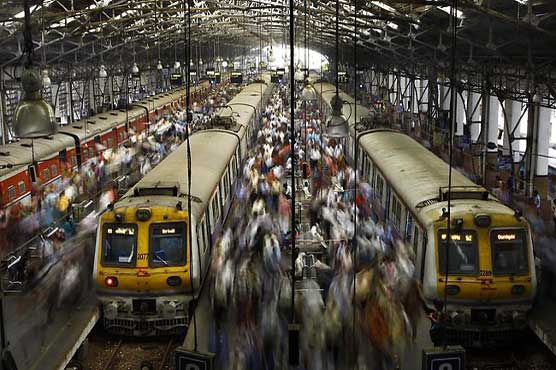
The crumbling state-run railways need an "immediate course correction" after decades of mismanagement, Railway Minister Sadananda Gowda told parliament as he outlined his plans for the network which carries 23 million people daily.
Gowda said he would seek cabinet approval for foreign direct investment (FDI) in the railways for the first time and undertake a renewed push for public-private partnerships (PPP) in all areas except for passenger operations.
He also said he would avoid announcing populist new projects that would "get many claps from this house", but "would be rendering injustice to the struggling organisation."
Despite this, he proposed India s first bullet train to run between the nation s financial capital Mumbai and commercial hub Ahmedabad in Modi s home state of Gujarat which will require completely new infrastructure.
He also announced plans to move ahead with a network of high-speed trains that would run at speeds of up to 200 kilometres (120 miles) an hour on upgraded existing rails.
After strong rises in recent sessions, shares slumped as some analysts said Gowda s plans were long on ambition but short on detail about financing.
"The railway budget was such a damp squib. The market is now trying to temper its expectations about the main show Thursday," said Alok Churiwala, head of Churiwala Securities, a brokerage.
"It s okay to talk about bullet trains and so on, but where are concrete proposals for funding these things? It s a reality check," Churiwala told AFP.
The Bombay Stock Exchange s leading benchmark index, the Sensex, was down 2.18 percent in afternoon trade at 25,531.95 points in afternoon trade.
Manish Agarwal, infrastructure analyst at global consultancy PwC, highlighted that public-private partnerships were not a magic bullet to the funding shortages for a government struggling with a high fiscal deficit.
"Given limited success on (PPP) station-modernisation projects so far, the implementation roll-out remains to be seen," he said.
- Government s vision -
Gowda also announced a 40-percent hike in the budget for cleaning trains and plans for better toilets whose state often horrify travellers.
He said the railway aimed to upgrade some stations to look like the country s shiny new airports.
Modi, who made bullet trains a key election pledge while campaigning, said in televised remarks after the speech that the railway budget reflected the "government s vision" for development of the train system.
In keeping with financial discipline promised by Modi, Gowda pared market borrowing to 118 billion rupees in the financial year ending March 2015 from 128 billion rupees in the interim budget presented by the previous left-leaning Congress government.
Dilapidated transportation has held back growth of Asia s third-largest economy, analysts say.
Modi s Bharatiya Janata Party (BJP) scored a landslide poll win in May on a platform on firing up the Indian economy growing which has been at just under five percent, less than half the rate notched up a few years ago.
To help fund new wagon purchases, modernise track, revamp lines and improve safety, the government last month announced a double-digit passenger fare hike.
Gowda said the fare increase was "bitter medicine in the beginning but tastes like nectar in the end".
Analysts say as much as $500 billion must be invested over the next decade to overhaul the network.