Summary His comments came as Russia Monday moved to cut natural gas supplies to Ukraine over unpaid debts.
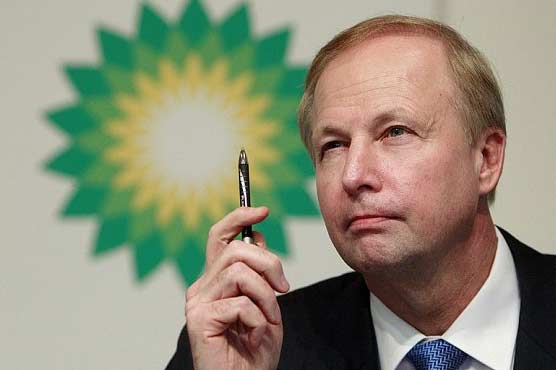
MOSCOW (AFP) - Bob Dudley, the chief executive of British energy giant BP, stressed Monday the interdependence of Europe and Russia as the West braced for possible disruptions of gas supplies via Ukraine.
"The interdependence of suppliers and consumers is a force of stability in a very turbulent world," US national Dudley told a major energy conference in Moscow.
"In particular, I think the fact that Europe depends on Russian gas and Russia depends on European revenues creates an important link and I do believe that energy can act as a bridge."
His comments came as Russia on Monday moved to cut natural gas supplies to Ukraine over unpaid debts and warned Europe of possible supply disruptions if Kiev siphons off gas destined for the West.
BP has insisted that it remains committed to Russia s state oil giant Rosneft, despite the latter s chief executive Igor Sechin being named among officials facing US sanctions over Russia s stance on Ukraine.
BP retains a near-20 percent stake in Rosneft after the British firm sold its 50 percent holding in joint venture TNK-BP to the Russian company.
While Western energy companies are looking to Russia to help them secure new sources of oil and gas to meet rising global demand, Russian firms are benefiting from their partners technological expertise, especially in the field of uncovering energy from shale rock.
Dudley on Monday pointed to "limited growth of the global economy".
Speaking at the World Petroleum Congress bringing together top oil companies, he told delegates: "This is not an age of expansion... We need to set strict limits on capital spending and really focus on safe, reliable, efficient operations and a very careful selection of projects."
Looking back, BP said said in its Statistical Review of World Energy 2014 that global energy demand accelerated last year "but, reflecting the weakness of the global economy, growth of 2.3 percent remained slightly below the historical average".
Energy consumption in emerging economies grew below the long-term average rate, rising by 3.1 percent on slower growth in China.
Consumption in the mature economies of the OECD grew by a higher-than-average rate of 1.2 percent owing entirely to strong growth in the United States -- the world s biggest consumer of crude oil, BP added.