Updated on
Summary Saudis face unemployment as oil-rich kingdom battles to enrol thousands of its young population.
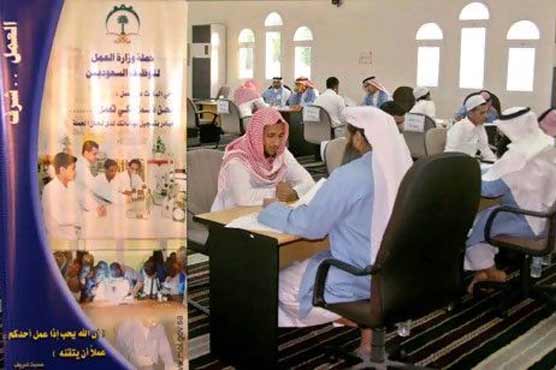
Although the kingdom has the largest Arab economy, and is the worlds biggest oil exporter, the unemployment rate remains above 10 percent in a country where youth represent 55 to 60 percent of around 19 million nationals.I applied for jobs with the public and private sector, but I had no luck, complained Majed Hasan, 26, who has an English-language degree, and that the low salary and long working hours drove him away from working at a translation office.Majed, who lives in the western city of Jeddah, said he worked for a year in a telecommunications shop, then opened his own grocery, which he had to shut down due to competition from foreigners.Mufreh al-Kubaishi, 25, who has a law degree from an Australian university, said he was considering going for post-graduate studies because (work) conditions are not encouraging.He said he has two sisters and a brother in the southwestern province of Jazan who graduated a few years ago and are still without jobs.The World Bank has said unemployment among Saudis has remained above 10 percent in past years, hitting mainly newcomers into the labour force, especially university graduates.Dozens of universities across the desert kingdom pump out some 100,000 graduates every year into a work force dominated by some eight million foreigners, mostly from Southeast Asia, who are prepared to take the low wages that a Saudi would reject.One of the main problems is that Saudis prefer government jobs, where salaries are better and working hours are shorter than in the private sector.The private sector appears also not keen on employing Saudis.Saudi economist Ihsan Abu Haliqa argued that the problem is due to a lack of determination to accommodate the Saudis in jobs that are filled by foreigners.Official statistics show that in 2011 alone, some 1.1 million work visas were issued for foreigners who are above the level of domestic workers and the like. This means around 100,000 workers being brought in monthly, he said.Economics lecturer at King Abdulaziz University in Jeddah, Farouk al-Khatib, said the public sector represents job security and less stress for Saudis.The rights of employees are better secured than they are in the private sector. There is no arbitrary dismissal, nor overtime work, while working hours end in the early afternoon, and the weekend break is two days, he said.He said that even those who do join the private sector continue to look for a job in the public sector.In an attempt to tackle the growing problem, Saudi authorities have been for many years trying to Saudise jobs and created a support programme for job seekers.In January, Labour Minister Adel Faqih said the main challenge facing us is how to find new jobs for Saudis in the private sector, because we need three million posts by 2015 and six million by 2030.He said Saudis should replace foreign workers, who transfer home 100 billion riyals ($26.7 billion/21.1 billion euros) a year.Under its Nitaqat (Ranges) programme, which is aimed at prodding local firms to employ Saudis, the labour ministry imposed new quotas last year on companies for hiring local staff, which would determine their ability to recruit foreigners.For example, banks with a work force of up to 500 must now have a work force that is at least 49 percent Saudi.Those in the wholesale trade with the same number of staff have to employ a minimum of 19 percent Saudis, with the same quota applied to media, insurance companies and government schools.Meanwhile, for those still unemployed, some 1.23 million people benefit from a programme known as Hafiz (Incentive), 86 percent of them women, according to the director of the programme, Khaled al-Ajmi.Hafiz pays a monthly allowance of 2,000 riyals ($534/418 euros) to those on its lists.Official figures show that unemployment among women surges to near 30 percent, with some one million women looking for jobs, including 373,000 who are university graduates.Women face massive restrictions in the job market due to the strict rules of segregation between men and women in the ultra-conservative kingdom.Saudi Arabia has been reaping the windfall of high oil prices for several years, with inflated receipts allowing the government to spend on social needs and splash on infrastructure investments.The economy of Saudi Arabia grew by 7.1 percent last year, Finance Minister Ibrahim al-Assaf said earlier this month after growing by 4.6 percent in 2010.