Updated on
Summary Obama concerned over Europe's economic crisis and its impact on his re-election hopes.
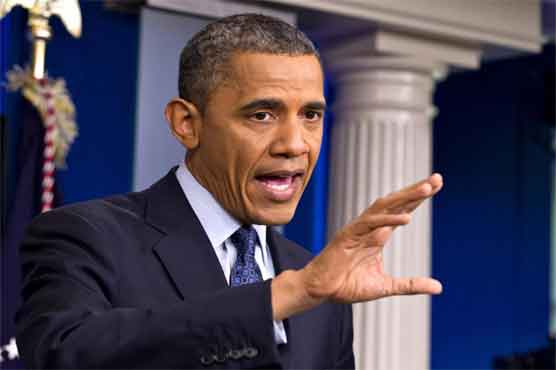
President Barack Obama demonstrated just how deeply hes worried about Europes economic crisis and its possible impact on his re-election hopes, prodding leaders across the Atlantic to quickly and vigorously deal with a mess he can do little about.The president held forth, unprompted, on what European leaders could and should do to fix their economic woes. Despite the rare cross-Atlantic needling at a news conference Friday, Obama insisted he was not scolding them or telling them what to do.He never mentioned his election opponent, Republican Mitt Romney, but the campaign seemed to be an important factor in the days events.Powerless to take on the crisis overseas by himself, Obama tried to show Americans he was nonetheless engaged in trying to help by offering ideas and advice. At the same time, he was sending a message to his European peers to be resolute and move firmly.Now, the good news is there is a path out of this challenge, Obama said. These decisions are fundamentally in the hands of Europes leaders, and, fortunately, they understand the seriousness of the situation and the urgent need to act.Weighing in late Friday on the U.S. economy, the rating agency that downgraded the governments long-term credit last year renewed its assessment, asserting that leaders arent addressing the federal debt burden. Still, Standard & Poors said the United States has an adaptable and resilient economy and many other governments hold dollar reserves, a sign of confidence.Demonstrating his limited direct influence in Europe at the same time hes being thwarted at home by Republicans on his domestic agenda could reinforce a sense of presidential powerlessness not an image an incumbent seeking re-election wants to project.But Obama tried to tie the two issues together to his advantage.Along with a specific recommendation that Europe inject much-needed money into its banking system, he saidEuropean leaders must focus on economic growth and job creation, not just cutting and cutting and cutting spending to deal with debt problems. Thats the same point hes trying to make to Congress and to voters back home.American voters will decide whether Obama or Romney will be the next president for the next four years. But theyre not the only ones.German Chancellor Angela Merkel, who leads Europes strongest economy and needs to be part of any major rescue effort; will be a factor, too. And, here at home, so will Republican House of Representatives Speaker John Boehner.Boehner has presided over a Republican majority which time after time has torpedoed Obamas economic and jobs legislation, even bills that have garnered some bipartisan support in the Senate. Obama says one reason more jobs havent been produced in this country is because of this Republican roadblock.Boehner sees it differently. He says, Whats going on in Greece, and the effect its having in Spain ... its quite likely that this contagion is going to continue. He contends those problems overseas are because European countries waited too long to deal with their debt problem and their spending problem, a notion that Romney embraces on the campaign trail.That runs directly counter to arguments by Obama and many European leaders that the austerity programs forced in place in countries like Greece only made matters worse, adding to joblessness, further suppressing growth and arousing voter anger.It all mirrors the split in the United States between Republicans who want deep spending cuts and Democrats includingObama who want to promote more growth even if it temporarily means more government spending until the economy recovers enough to move to serious deficit-reduction.Europe has clearly proven that austerity was the wrong policy to pursue during a recession, says Rep. Maurice D. Hinchey, a New York Democrat and member of the Congressional Joint Economic Committee.Many European countries have already slipped back into recession.Greeces June 17 election could result in the country quitting the euro. International economists are not sure what would happen next.The economy of Greece is tiny, and its withdrawal alone would not have much impact on the global economy. On the other hand, it could trigger investor panic into pulling money out of bonds of other weak European countries such as Spain, Portugal, even Italy.Europe is on the precipice. And the odds are uncomfortably high they go over the ledge, said Mark Zandi, chief economist at Moodys Analytics. Hes hopeful European countries will bury their differences and work together to keep the eurozone from shattering. But if they dont, then the European economy will sink deep in recession and take the rest of the global economy with it, including our own.The European Union, composed of the 17 countries that use the euro and 10 others, is the worlds biggest trading entity, bigger than either the United States or China, the worlds two biggest single economies.And that could have dire consequences for Obama and other incumbents running for re-election.Obama said Friday he has been in constant contact over the past two years with Merkel and other European leaders about the crisis. Before the afternoon had ended, the White House said Obama had spoken again with the French president, Francois Hollande, a new partner for Obama in the U.S. push for economic stimulus in Europe, not just austerity.But there are no immediate plans for any influx of American cash.Romney and his campaign aides agree that Europe is in bad shape, but they say its due to excessive spending on social programs and not enough fiscal discipline. Obamas policies on spending and taxes will take America on the path to Europe, Romney tells campaign audiences.