


Reliving Partition through the tales of my elders
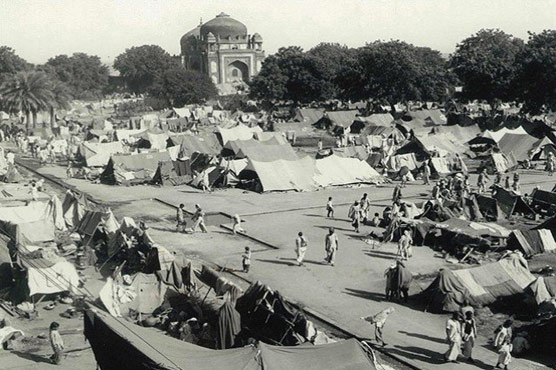
Since my childhood I, like many from my generation, have grown up hearing stories of the Partition. Photo: AFP
By Wardah Farooqi
It has been seven decades since one of the greatest partitions in the history of the world resulted in the most massive human migration on both sides of the divide.
It has been seventy years since the birth of Pakistan and India – two neighbouring countries that came into existence through the same event. Yet, despite the shared history, that connects the two countries, there is a lot of suspicion and strain in ties that dates back to the Partition.
Today as I sat in the comfort of my home, I watched on as my television screen was bombarded with Independence Day messages and advertisements. All the fanfare made me wonder how it would have been to have lived through the time that shaped so much of what this region now identifies itself with.
Since my childhood I, like many from my generation, have grown up hearing stories of the Partition. While a majority of the tales reveals the brutalities and the suffering of an uncertain time, some speak of friendships and trust – something which seem to be highlighted very little in our shared history.
I recalled how my Nani, maternal grandmother, and my Dada, paternal grandfather, used to narrate stories to us, making us relive every moment of the times they witnessed during the Partition. From those stories I gathered that every single person at that time, somehow, was part of the Independence movement, whether intentionally or unintentionally.
There were of course those who had to take on certain responsibilities in the aftermath of the Partition. My Nani, now 78 years old, often told us about her brother who used to be a significant member of the Muslim League and even served under Quaid-e-Azam Muhammad Ali Jinnah. “He (her brother) used to be considered a trustworthy person by those in power. After independence, he used to assist all those migrating from India to Pakistan.”
The same houses which had been vacated by Hindus after partition were offered as residences to people coming in, we were told by our grandparents. “Naturally everyone was quite happy with the hospitality of my brother, Mazhar, who was a very active member of Muslim League at that time”, recounted Nani.
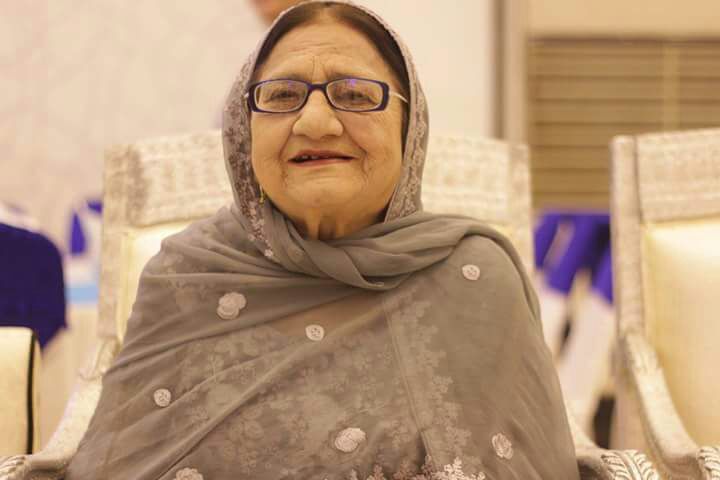
My grandmother Jamila-tul-Haq Farooqi.
But there are memories of fear and horror. She used to tell us how they, as young girls, had been instructed to protect themselves. “My Abbu (father) used to prepare us all the time for any attack that may occur in the streets where Muslims resided. He used to keep sand mixed with spices as a weapon of defence and instructed to throw it directly in the eyes if anyone attacked.”
Division was in the air and so everything would be divided. My grandparents often told us of how neighbourhoods and even streets were divided into Muslim and Hindu majority areas. My Dada would tell us that tensions were on the rise so much so that with streets divided, groups weren’t allowed to go into each other’s designated areas. “We all studied in the same college together and at times we felt there was such open hatred for us.” However, there were fond memories as well. “But some of them were really nice to me. And so I had a few friends who were Sikhs, with whom I spent a very good time,” Dada would tell us fondly.
But lives were affected in manners that seem unimaginable by someone listening to those tales well over half a century later. My Nani used to tell us about the things that had been left behind, including furniture and household items, by people fleeing Pakistan. Some obviously needed money so they sold their belongings in order to be able to flee. Her father also bought a bed and some other furniture items which my Nani later took as dowry with her at the time of marriage.
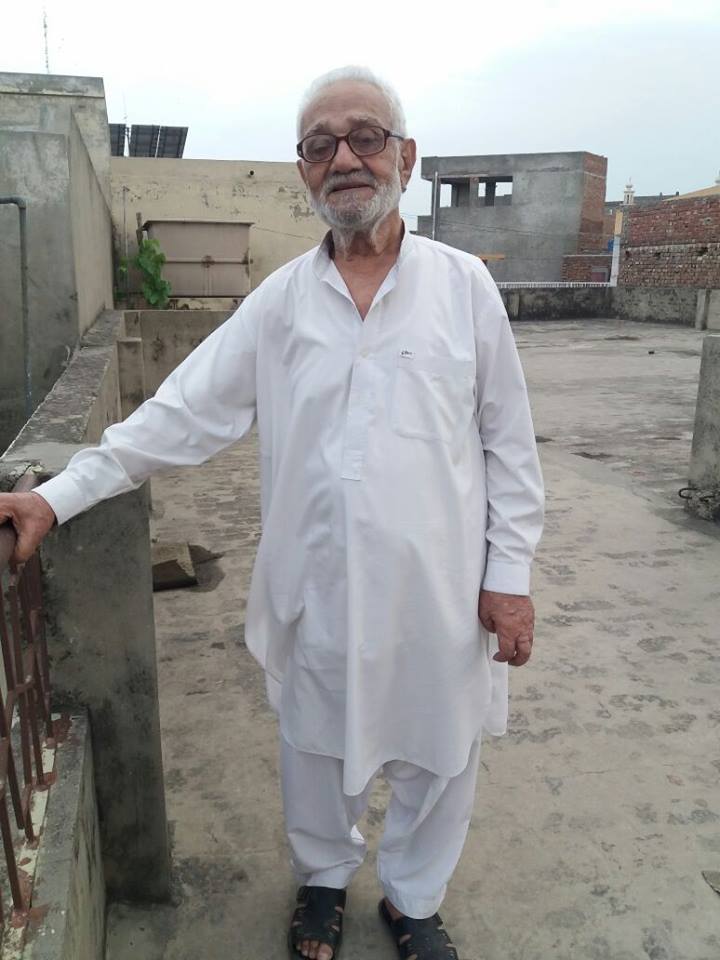
My grandfather Bashir Ahmad Farooqi.
Misery did not end with the partition, it continued. My Dada would recall the pain of all those families that had migrated from India to Pakistan and had become homeless. “Young children were commonly seen crying in every corner of the street searching for their parents as families were separated,” he used to tell me. These heart wrenching scenes were everywhere, the misery on every nook and corner. “People living here used to assist these migrants by providing them with the vacated residences left by those who fled Pakistan.”
“It took a long time even after Independence of Pakistan for everything to settle down. Everyone lived in a miserable state initially due to extreme financial crisis,” Dada would say.
While there is a lot of history that comes through books and school lessons, there are a lot of untold stories that need to be heard to acknowledge the personal pain and suffering lived by thousands during the Partition. As my 80-year-old Dada celebrates Independence Day with his grandchildren, I am reminded of the sacrifices that people had made decades ago for a country we call Pakistan, and for a place we call home.
