'World first' bionic eye implanted in Australia
Dunya News

Australian scientists said they had successfully implanted a world first bionic eye prototype.

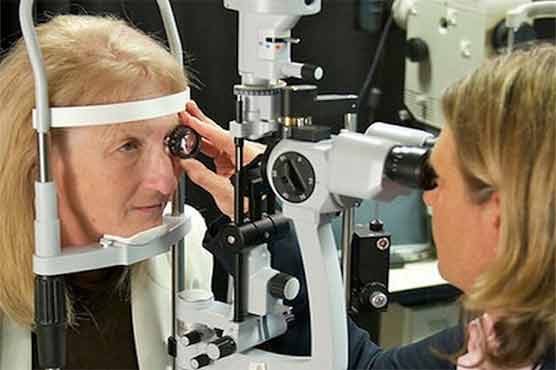
The Australian scientists described the experiment as a major breakthrough for the visually impaired.Bionic Vision Australia (BVA), a government-funded science consortium, said it had surgically installed an early prototype robotic eye in a woman with hereditary sight loss caused by degenerative retinitis pigmentosa.Described as a pre-bionic eye, the tiny device is attached to Dianne Ashworths retina and contains 24 electrodes which send electrical impulses to stimulate her eyes nerve cells.Researchers switched on the device in their laboratory last month after Ashworth had fully recovered from surgery and she said it was an incredible experience.Penny Allen, the surgeon who implanted the device, described it as a world first.Ashworths device only works when it is connected inside the lab and BVA chairman David Penington said it would be used to explore how images were built by the brain and eye.Feedback from the device will be fed into a vision processor allowing doctors to determine exactly what Ashworth sees when her retina is subjected to various levels of stimulation.The team is looking for consistency of shapes, brightness, size and location of flashes to determine how the brain interprets this information, explained Rob Shepherd, director of the Bionics Institute which was also involved in the breakthrough.The team is working towards a wide-view 98-electrode device that will provide users with the ability to perceive large objects such as buildings and cars, and a high-acuity 1,024-electrode device.Patients with the high-acuity device are expected to be able to recognise faces and read large print, and BVA said it would be suitable for people with retinitis pigmentosa and age-related macular degeneration.Penington said the early results from Ashworth had fulfilled our best expectations, giving us confidence that with further development we can achieve useful vision.The next big step will be when we commence implants of the full devices, he said.