CT scan can rule out heart attack
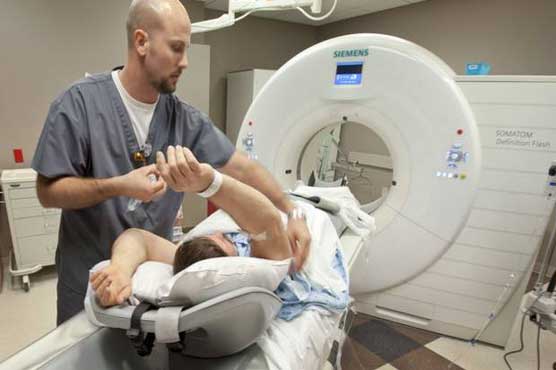
Dunya News

If you're having chest pains, an advanced type of CT scan can quickly rule out a heart attack.

New research suggests this might be good for hospitals, but not necessarily for you. These heart scans cut time spent in the hospital but didnt save money, the study found. They also prompted more tests and questionable treatments and gave relatively large doses of radiation to people at such low risk of a heart attack that they probably didnt need a major test at all.There is no evidence that adding these tests saved lives or found more heart attacks, wrote Dr. Rita Redberg, a cardiologist at the University of California, San Francisco in an editorial. Her commentary accompanied the study in Thursdays New England Journal of Medicine. And since radiation from the scans can raise the long-term risk of developing cancer, doctors may legitimately ask whether the tests did more harm than good, she wrote.Lets be clear: None of this changes the advice to seek help quickly if youre having chest pain or other signs of a heart attack. Any delay raises the risk of permanent heart damage. But more than 90 percent of the 6 million people who go to hospitals each year in the U.S. with chest pain have indigestion, stress, muscle strain or some other problem — not heart disease. Doctors are afraid of missing the ones who do have it, and increasingly are using CT scans — a type of X-ray — with an injected dye to get detailed views of arteries.More than 50,000 of these scans were done in Medicare patients in 2010, and their use is growing. Far more than that were done in younger patients like the ones in this study, who were 54 years old, on average. The test requires a substantial dose of radiation, which can raise the risk of cancer years down the road. In some cases, patients might just be told that a doctor wants the test. They may be too frightened to question it or unaware they can refuse or ask about other testing options without jeopardizing their care.The aim of the study was to see whether these heart scans, called coronary CT angiography, were faster, better or less expensive than usual care, such as simpler tests or being kept a while for observation.