Hearings of 9/11 suspects begins in Guantanamo
Dunya News

Hearings begins for 9/11 defendants By Cheryl Pellerin American Forces Press Service in Guantanamo.

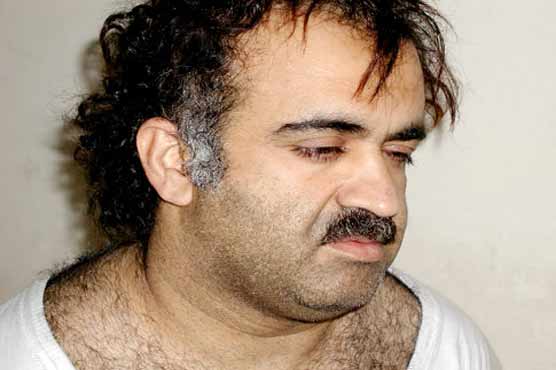
Three months after the arraignment of Khalid Sheikh Muhammed and his four co-defendants, those accused of planning and executing the 9/11 terrorist attacks will be back in court this month for hearings on motions made by the defense and prosecution.Army Brig. Gen. Mark S. Martins, chief prosecutor in the Office of Military Commissions, is overseeing the trial in the case of the United States vs. Khalid Sheikh Mohammed, Walid Muhammad Salih Mubarak Bin Attash, Ramzi Binalshibh, Ali Abdul Aziz Ali and Mustafa Ahmed Adam al Hawsawi.Martins is a graduate of the U.S. Military Academy and Harvard Law School and is a Rhodes scholar.The military commission convened to try the charges referred to it against [the defendants] will hold what are known under the Military Commissions Act of 2009 as sessions without panel members present, Martins told American Forces Press Service.The sessions will take place at Naval Station Guantanamo Bay, Cuba, Aug. 22-24 and Aug. 26-28.Such sessions -- in the same manner that a federal district court hearing a criminal case will do prior to the seating of a civilian jury -- enable the hearing of various matters in an orderly, methodical way for resolution by the judge prior to trial, he added.What the chief prosecutor described as an adversarial process is consistent, Martins said, with the fair, transparent and accountable administration of justice under the rule of law.The charges allege that the co-defendants are responsible for planning and executing the attacks of Sept. 11, 2001, in New York, Washington and Shanksville, Pa., resulting in the deaths of 2,976 people.During a 13-hour arraignment in a secure courtroom at Guantanamo Bay in May, the five were charged with terrorism, conspiracy, attacking civilians, attacking civilian objects, intentionally causing serious bodily injury, murder in violation of the law of war, destruction of property in violation of the law of war, hijacking or hazarding a vessel or aircraft.Before evidence can be presented, particularly in a complex, joint trial such as this one figures to be, many matters must be addressed and placed on the record, the chief prosecutor said, adding that this session is being called to consider 24 or so motions made by the defense and the prosecution.Martins emphasized that the charges are only allegations and that the accused are presumed innocent unless proven guilty beyond a reasonable doubt.In terms of the motions to be heard, he added, each piece of business must receive due deliberation.Some of the motions by the defense allege jurisdictional error, which means that if the defense position were to prevail, the commission would lack the authority to proceed, Martins explained.The prosecutions position, not surprisingly, is in opposition to these motions, he added.In some of its motions, he said, the prosecution is seeking standard protective orders necessary to ensure that certain materials provided to the defense in discovery are not publicly released.These include classified information protecting sources and methods of intelligence gathering, information about terrorist organizations, certain privacy information, and several categories of information routinely protected in the public interest, the chief prosecutor said.Martins advised media members who hear continuing complaints from defense counsel in the sessions about a lack of resourcing and the difficulty of forming effective attorney-client relationships to seek out additional perspectives, including by reading government submissions to the court on the matter and by reviewing facts about resources provided, counsel and investigative hours billed and paid, numbers of flights to Guantanamo available and not taken, opportunities for communication with client through a privilege team, and similar empirical data.The judge intends to hear arguments from legal counsel for the American Civil Liberties Union and several media organizations regarding public access to the proceedings, Martins said.The prosecution supports the judge hearing such argument and is facilitating counsels travel to Guantanamo for this purpose, he said. The trial process only benefits from the increased public-access measures that have been put in place, including closed-circuit transmission of the proceedings to the continental United States and same-day posting of unofficial, verbatim transcripts of each session.But, he added, the prosecution opposes departure from the public-access rules used in U.S. federal district courts and military courts-martial, while ACLU and the media organizations seek such a departure in desiring the proceedings to be televised.Report by Awais Saleem
