Summary FBR Chairman Rashid Langrial calls for modern urban governance as Pakistan's urban population grows 60% and major cities expand beyond existing administrative boundaries.
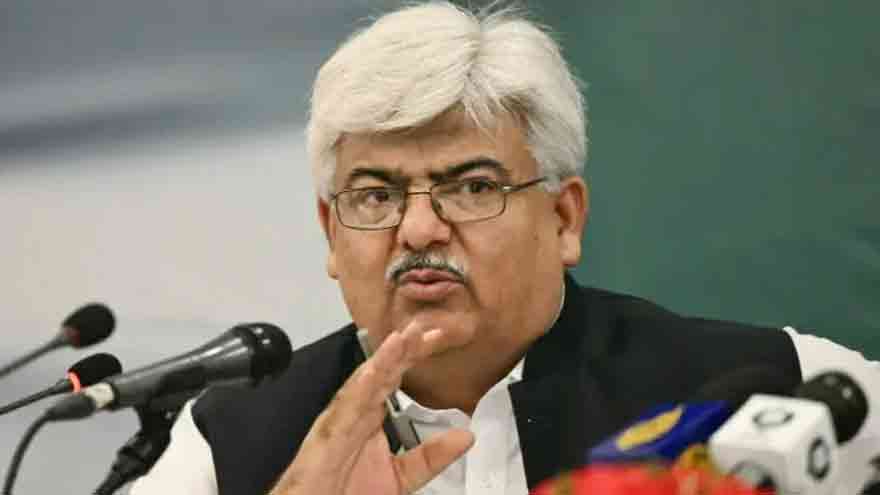
ISLAMABAD (Dunya News) – Federal Board of Revenue (FBR) Chairman Rashid Langrial has called for a revamped administrative system to manage Pakistan's rapidly expanding cities, saying urban governance must reflect changing demographic and geographical realities.
In a post on social media platform X, Langrial said Pakistan's urban land area had increased by approximately 25 percent over the past 14 years, while the country's urban population had grown by nearly 60 per cent between 2012 and 2026.
He highlighted significant urban expansion in several major cities, noting that the urban footprints of Faisalabad, Multan and Sialkot had doubled during the period.
Islamabad and Rawalpindi recorded a 1.8-fold expansion, while Lahore's urban area grew 1.5 times. Karachi witnessed a 40 per cent increase in its urban footprint, whereas Peshawar recorded 20 per cent growth.
The FBR chairman also pointed out that urban expansion had connected several neighbouring cities and towns.
He said Lahore, Gujranwala and Kasur have increasingly merged through urban development, while Sheikhupura, Muridke and Kamoke have also become part of Lahore's wider urban expansion.
He said a large urban corridor was emerging along the Grand Trunk (GT) Road.
Langrial noted that Lahore's urban footprint now extends across four districts, yet there is no single unified administrative authority responsible for managing the entire urban region.
He also highlighted Karachi's fragmented administrative structure, saying its management was divided among around a dozen different land-owning agencies.
The FBR chairman further observed that the administration of Punjab's cities had remained under appointed administrators for nearly a decade.
He stressed that while Pakistan's cities were expanding rapidly, the government's administrative structures continued to operate according to outdated geographical boundaries.