Summary Pakistan, alongside Italy, leads the Uniting for Consensus (UfC) group, which opposes adding new permanent members to an expanded Security Council
(Dunya News) - Pakistan has called for the abolition or strict restriction of the United Nations Security Council’s (UNSC) veto power, warning that its misuse has contributed to institutional paralysis and weakened the UN’s credibility.
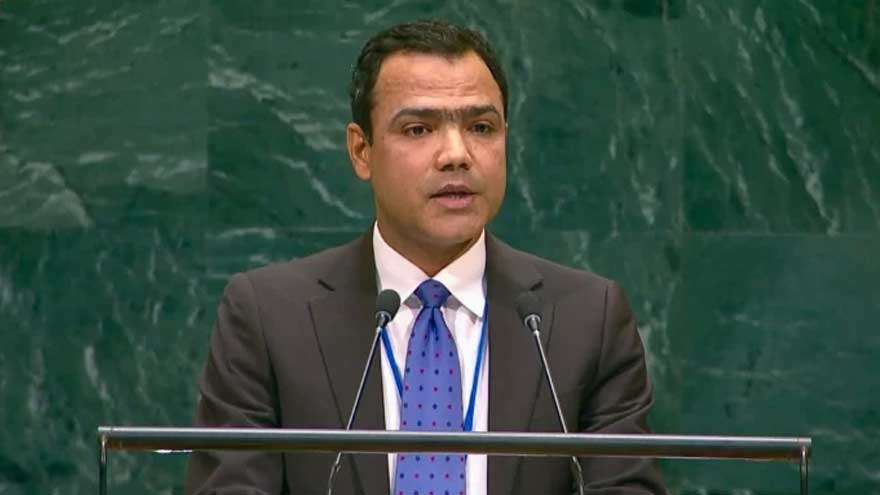
Speaking at a United Nations General Assembly (UNGA) session in New York on Monday, Gul Qaiser Sarwani, Counsellor and Political Coordinator at Pakistan’s UN Mission, said the veto gives the five permanent members — the United States, Russia, China, France and the United Kingdom — disproportionate influence across the UN system.
Sarwani argued that expanding the number of permanent members or extending veto privileges to additional countries would deepen existing inequalities, reinforce historical advantages and create new centres of power, further undermining the Council’s effectiveness.
He reaffirmed Pakistan’s opposition to granting permanent membership to additional countries, including those campaigning for seats through the G4 grouping: India, Brazil, Germany and Japan.
Pakistan, alongside Italy, leads the Uniting for Consensus (UfC) group, which opposes adding new permanent members to an expanded Security Council.
“The veto should be abolished or at least severely restricted; it must not be expanded,” Sarwani said, stressing the need for a more representative, democratic and accountable Council.
Pakistan also expressed support for UN General Assembly Resolution 76/262, adopted in April 2022. The resolution requires the General Assembly to convene within 10 working days whenever a veto is cast in the Security Council, allowing member states to discuss the decision.
Sarwani maintained that any efforts to limit the veto must remain consistent with the provisions of the UN Charter. He suggested that the Council’s elected membership could be strengthened through broader representation and changes to decision-making thresholds, helping create a more effective check on the veto power.
#PakistanAtUNGA The misuse of the veto undermines the Security Council’s effectiveness and the credibility of the UN, while giving the Permanent members unmatched influence and profile throughout the UN system. Proposals on the veto range from its abolition to restriction on its use. We believe that the veto should be abolished or at least severely restricted. It must not be expanded. Pakistan remains committed to comprehensive, democratic, and equitable reform. The objective must be to democratize the Council, correct existing imbalances and strengthen accountability. Reform must serve collective interest of the entire UN membership, not a select few. Statement by Gul Qaiser Sarwani, Counsellor/Political Coordinator at the Pakistan Mission, at the UN General Assembly Debate on Agenda item: 62 ‘Use of Veto’ Complete video of the statement below
— Permanent Mission of Pakistan to the UN (@PakistanUN_NY) October 26, 2026
Opening the meeting, UN General Assembly President Khalilur Rahman of Bangladesh described the veto initiative as an established mechanism for promoting transparency, accountability and collective responsibility within the United Nations.
Rahman noted that 21 meetings had been held under the initiative, praising the Security Council for submitting special reports to the General Assembly and participating in the resulting debates.
He stressed that the effectiveness of the Security Council has direct consequences for people affected by armed conflict, insecurity and humanitarian crises. When the Council fails to take decisive action, he said, the heaviest burden falls on those already suffering from violence and instability.
Rahman called for greater consensus within the Council and urged member states to ensure that debates over the veto remained constructive rather than repetitive.
He emphasised that the use of a veto should not end diplomatic engagement and that the principles of the UN Charter must continue to guide international efforts to achieve peace.
During the subsequent debate, delegates also raised concerns about the current veto system and the potential consequences of its continued use, particularly for conflict-affected regions and populations far removed from the centres where Security Council decisions are made.