Summary Federal cabinet approves emergency rule in KP, advising President Asif Ali Zardari to invoke constitutional powers amid rising terrorism and deteriorating law and order.
ISLAMABAD (Dunya News) – A state of emergency has been imposed in Khyber Pakhtunkhwa under Articles 232 and 234 of the Constitution after President Asif Ali Zardari signed the summary..
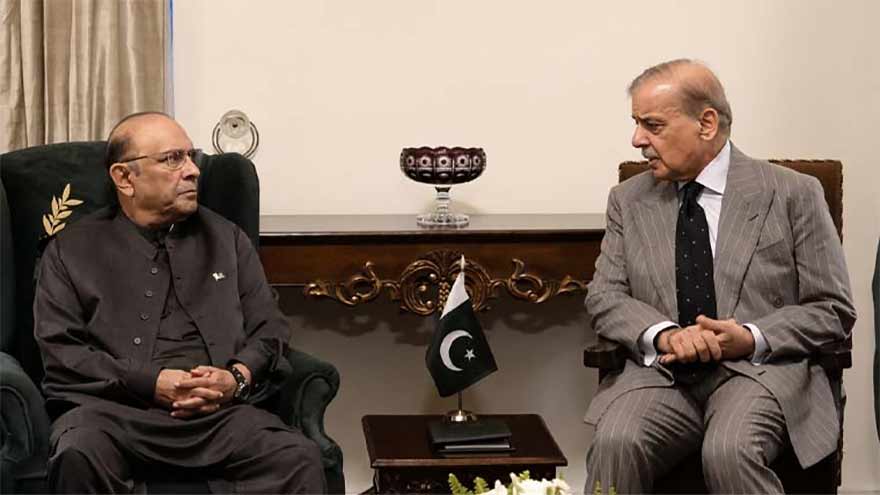
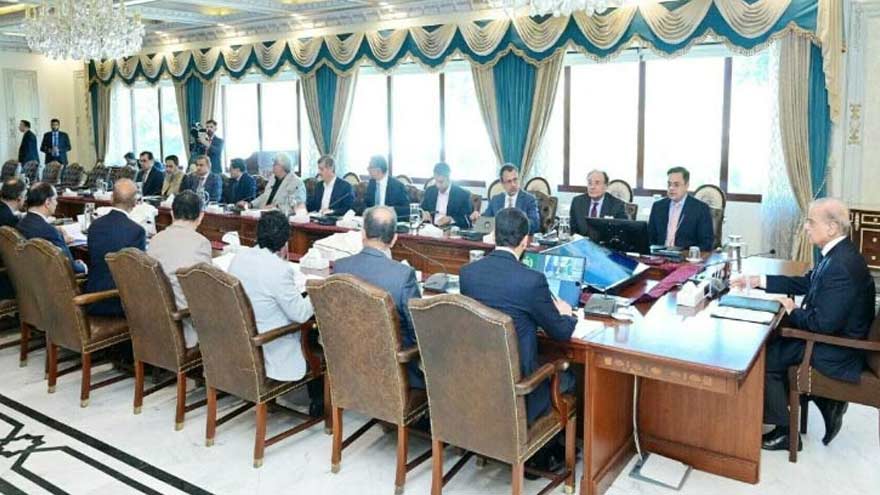
The advice was formally sent to the President’s House from the Prime Minister’s House following a crucial cabinet meeting chaired by Prime Minister Shehbaz Sharif on Sunday.
During the meeting, the cabinet received a briefing on the security situation in KP and reviewed the provincial government’s deliberate disengagement from the fight against terrorism.
The cabinet recommended that the prime minister advise the president to invoke his constitutional authority to impose an emergency in the province in view of the seriousness of the situation.
The meeting was attended by Deputy Prime Minister Ishaq Dar, Defence Minister Khawaja Asif, Interior Minister Mohsin Naqvi, Adviser Rana Sanaullah, Minister of State Talal Chaudhry, Amir Muqam, Syed Imran Shah, Hanif Abbasi, Moeen Wattoo, Pervez Khattak, Ahad Cheema, Mustafa Kamal and Haroon Akhtar.
Security report reveals 195pc rise in terrorism
Two special security reports presented at the meeting show that terrorist incidents in KP increased by 195 per cent between March 1, 2024, and September 23, 2026, highlighting the growing security challenges facing the province.
According to the reports, militants based in Afghanistan, local facilitators and what the findings described as shortcomings in provincial policies and a lenient approach towards militants have contributed to the deteriorating situation. The reports also pointed to gaps in provincial preparedness and counterterrorism measures.
Police and security personnel were the targets of 73 per cent of terrorist attacks recorded in 2026, the reports stated.
They also highlighted the growing use of drones by militants. According to the findings, no drone attacks targeting police and security forces were reported in 2024, while the number reached 170 in 2026. The reports also cited an approximately 107 per cent year-on-year increase in drone attacks.
The threat from improvised explosive devices (IEDs) has also remained significant, with 181 attacks recorded in 2025 and 159 reported up to September 2026.
Police, CTD face resource shortages
The reports identified serious gaps in the operational capacity of the KP police and Counter Terrorism Department (CTD), including more than 9,000 vacant police positions.
The provincial police and CTD are facing shortages of modern weapons, essential operational equipment and surveillance and intelligence-gathering tools. The reports also highlighted inadequate access to night-vision and thermal-imaging equipment.
In the terrorism-affected southern districts, a shortage of armoured and protected vehicles has affected police mobility and operational capabilities, according to the findings.
The reports further noted that the Safe City project remained limited to Peshawar, while police in the merged districts faced shortcomings in training, resources and operational preparedness.
The CTD was also reported to be facing a shortage of specially trained personnel and relying on regular police staff to meet its staffing needs. Its district offices, operational facilities and specialised infrastructure were described as insufficient to address the growing security threat.
The findings highlighted gaps in law enforcement capacity, provincial preparedness and counterterrorism measures. A cabinet committee has expressed serious concern over rising terrorist incidents, institutional weaknesses and governance issues in the province.