Summary Pakistan envoy pointed to continuing terrorist threats in Africa, the Middle East and Afghanistan, warning that extremist groups were exploiting cross-border networks to expand their reach
(Dunya News) - Pakistan has called for a stronger and forward-looking international response to terrorism, urging the United Nations Security Council to strengthen its counterterrorism framework and address shortcomings in the existing sanctions regime.
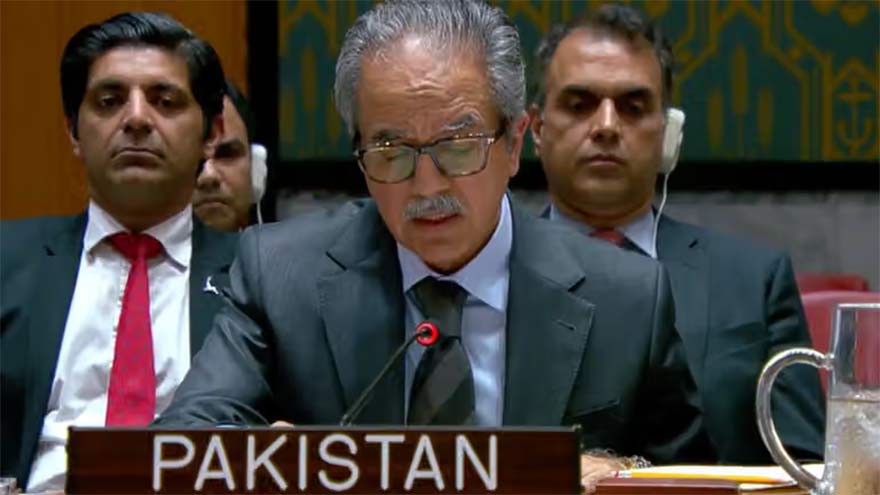
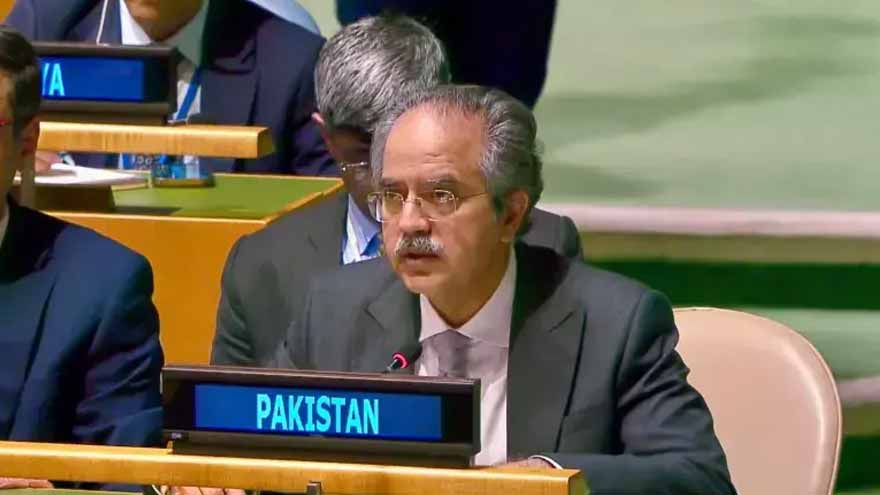
Speaking at a Security Council debate titled “Threats to International Peace and Security Caused by Terrorist Acts: 25 Years after 9/11 — Renewing the Security Council’s Fight Against Terrorism,” Pakistan’s Permanent Representative to the UN, Ambassador Asim Iftikhar Ahmad, paid tribute to the victims of the September 11 attacks, including seven Pakistanis, and expressed solidarity with the US government and people.
Recalling the international response to the 9/11 attacks, the ambassador said the Security Council had acted swiftly by adopting measures including Resolution 1373, which remains a key component of the UN’s counterterrorism framework.
Highlighting Pakistan’s role in the global fight against terrorism, Asim Iftikhar said the country’s counterterrorism operations, intelligence cooperation and security coordination with international partners had significantly weakened Al-Qaeda’s capabilities.
He said some of the most notable successes in the international campaign against Al-Qaeda had been achieved through Pakistan’s counterterrorism efforts and active cooperation.
The Pakistani envoy stressed that the country had paid a heavy price in the fight against terrorism. More than 90,000 Pakistanis, including security and law-enforcement personnel as well as civilians, have lost their lives in terrorist attacks since the beginning of the century, while the country has also suffered substantial economic losses.
He said that although the Security Council had responded to terrorism 25 years ago with urgency, unity and determination, the nature of the threat had since changed considerably, with new forms of extremism and emerging challenges requiring a revised international response.
Asim Iftikhar called for improvements to the existing sanctions mechanisms to close loopholes in the international counterterrorism system.
He drew attention to the rise of far-right extremism, persistent terrorist threats in Africa, the Middle East and Afghanistan, and the growing use of modern technology by terrorist groups for propaganda, radicalisation, recruitment, communication and financing.
Expressing particular concern over terrorism emanating from Afghanistan, he said more than 4,700 Pakistanis had been killed in terrorist attacks over the past three years.
He urged the international community to take effective action against terrorist organisations including the Tehreek-e-Taliban Pakistan (TTP), Balochistan Liberation Army (BLA), East Turkestan Islamic Movement (ETIM) and Daesh.
The ambassador also warned about the increasing use of the dark web, virtual assets and cryptocurrencies to finance terrorism. He cautioned that the threat could grow substantially in the absence of effective regulatory mechanisms.
Calling for a comprehensive approach to counterterrorism, he stressed the need for balanced implementation of all four pillars of the UN Global Counter-Terrorism Strategy, along with greater attention to the root causes of terrorism and conditions that allow extremist groups to flourish.
He also called for accountability in situations involving foreign occupation, arguing that occupying powers should be held accountable and should not be allowed to act with impunity against people exercising their right to self-determination.
Asim Iftikhar said the international community must ensure that its response keeps pace with — and stays ahead of — the rapidly evolving terrorist threat.
He urged the Security Council to fulfil its responsibilities, ensure that perpetrators are brought to justice, and strengthen international cooperation and regional coordination to build a united and collective front against terrorism.