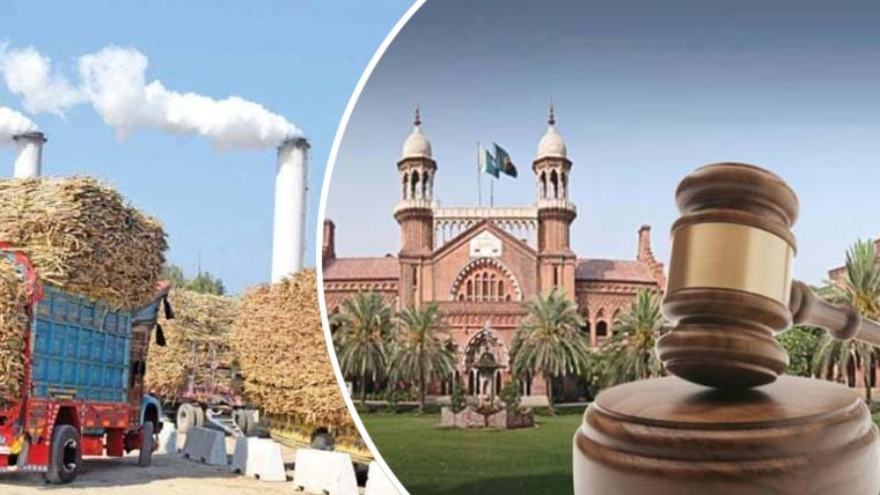
Summary Lahore High Court issues detailed 11-page ruling approving sugar mills restructuring scheme while reaffirming SECP regulatory powers and corporate legal independence.
LAHORE (Muhammad Ashfaq) – The Lahore High Court has issued a detailed judgment approving a restructuring scheme involving sugar mills, in a ruling that also reaffirmed the regulatory authority of the Securities and Exchange Commission of Pakistan (SECP).
The decision was delivered by Justice Hassan Nawaz Makhdoom, who disposed of a petition filed by companies seeking approval of their corporate reorganisation plan. The court maintained that restructuring within the corporate sector is permissible under law provided statutory requirements are met.
In an 11-page written judgment, the court observed that the SECP holds full authority under the law to conduct independent inquiries and supervise companies in the public interest. It emphasised that the protection of investors and broader public interest must remain a priority at every level of regulatory oversight. The ruling underlined that regulatory bodies are empowered to continue their responsibilities without interference, even where corporate restructuring schemes are under consideration.
The court further noted that companies in the corporate sector are legally entitled to restructure their internal frameworks in order to become more efficient and operationally effective. It clarified that objections to any restructuring scheme can only be sustained if the arrangement is unlawful, fraudulent, or contrary to public policy. Once legal requirements are fulfilled, courts are expected to respect collective commercial decisions made by stakeholders.
In its observations, the bench highlighted that the role of the court is akin to that of an umpire rather than an appellate forum in such matters. It added that judicial approval of a restructuring plan does not grant companies any exemption from applicable laws or regulatory oversight.
During the proceedings, the applicant companies argued that the restructuring was aimed at improving corporate efficiency and administrative performance. The court was informed that, under the proposed arrangement, the two sugar mills would retain their separate legal identities rather than functioning as subsidiaries of one another.
After hearing the arguments and reviewing the record, the court approved the restructuring scheme, concluding proceedings in the matter while reinforcing the continuing jurisdiction of regulatory authorities.