Summary ISPR DG Lt Gen Ahmed Sharif Chaudhry, joined by senior Navy and Air Force officers, congratulated the nation on the first anniversary of Marka-e-Haq.
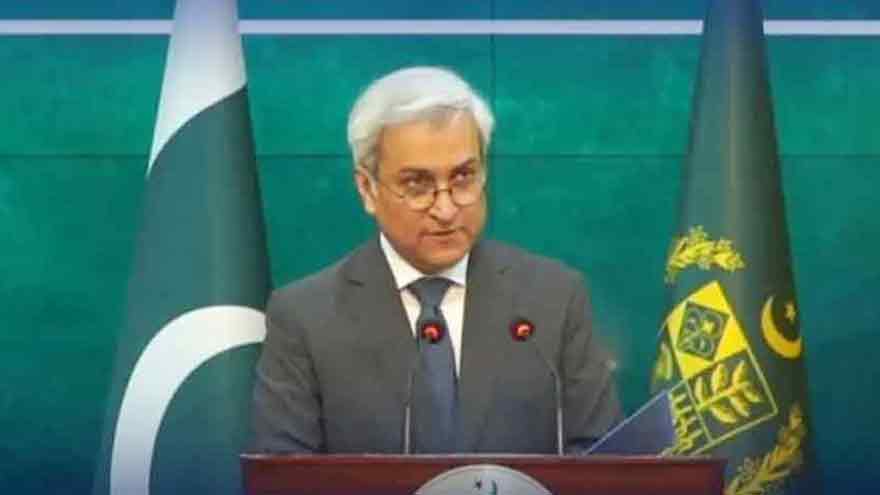
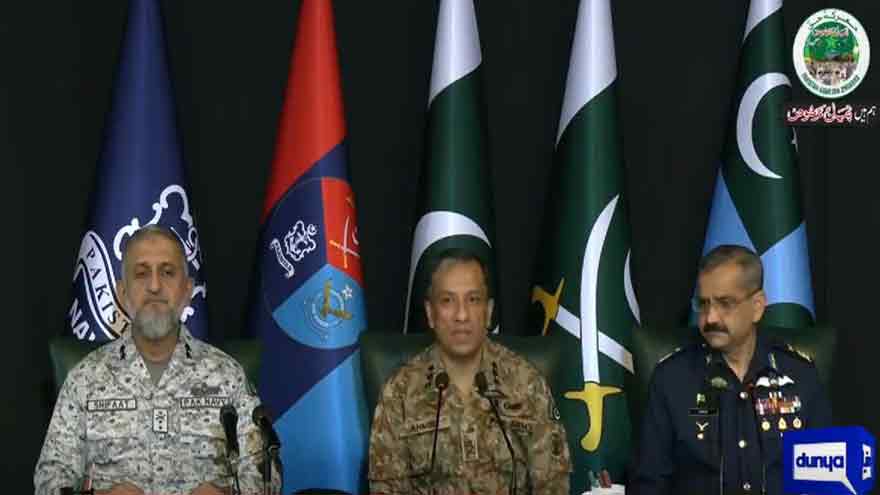
RAWALPINDI (Dunya News) – Inter Services Public Relations (ISPR) Director General Lt Gen Ahmed Sharif Chaudhry congratulated the nation on the first anniversary of Marka-e-Haq, commemorating Pakistan’s victory over a five-time stronger enemy.
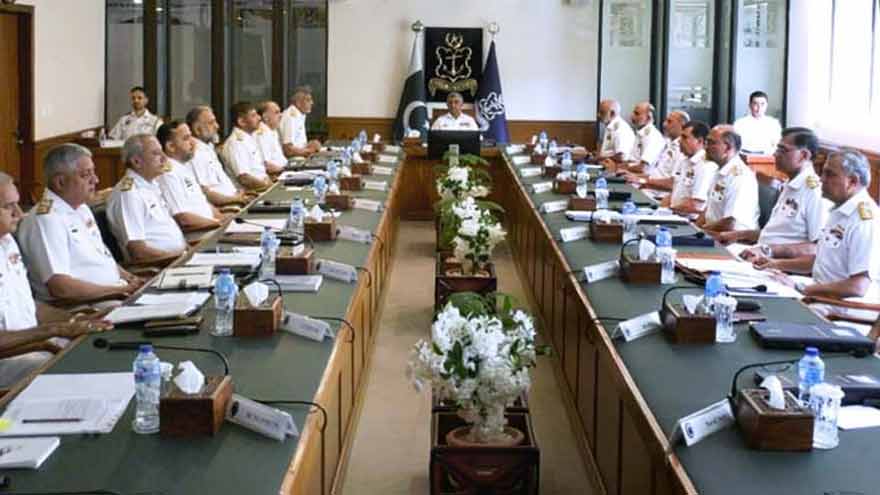
Addressing a joint press conference alongside senior officials of the Pakistan Air Force and Pakistan Navy, the military spokesperson congratulated the nation on the completion of one year of Marka-e-Haq victory.
He said Pakistan’s armed forces, under the vision of the military leadership, successfully countered a much larger adversary in a multi-domain conflict.
The DG ISPR explained that warfare was not limited to borders anymore. “It’s [fought] on land, in the sea, in the air, in cyberspace … and in the minds. It’s cognitive as well.”
The DG ISPR stated that India blamed Pakistan for the Pahalgam incident within minutes and without any investigation, stating that New Delhi had a history of promoting false narratives linking Pakistan to terrorism.
He claimed that even after one year, India had failed to provide evidence regarding the Pahalgam attack and accused India itself of sponsoring terrorism inside Pakistan. DG ISPR said that India’s anti-Pakistan terrorism narrative had now collapsed permanently.
Lieutenant General Ahmed Sharif Chaudhry further revealed that India carried out false flag operations to strengthen its narrative, adding that some Indian politicians appeared “more like warmongers than politicians.”
He reiterated that Pakistan had consistently worked for regional peace and maintained that the Kashmir dispute remained an internationally recognised unresolved issue under United Nations resolutions.
Questioning India’s claims regarding the Pahalgam incident, the DG ISPR asked where the evidence was after one year and who was actually responsible for carrying out the attack. He also questioned which alleged militant camps India had targeted.
He said Pakistan had been prepared a year ago and remained fully prepared today, adding that the armed forces successfully responded across all domains, including cyber and electronic warfare.
Read More: Marka-e-Haq victory sends clear and strong message to India: Khawaja Asif
The military spokesperson also criticised the speed with which an FIR was registered in India following the Pahalgam incident, claiming Indian authorities immediately alleged that the attackers had come from outside the country without presenting concrete proof.
According to him, the international community continues to ask who was behind the Pahalgam incident and what motives were involved. He said even sections within India were demanding answers.
The DG ISPR further said international media representatives visited affected areas and mosques after Indian strikes and witnessed that civilians, including women, children, and elderly people, were among the victims.
He also accused sections of India’s military leadership of adopting politically motivated rhetoric over the past year, while asserting that Pakistan’s armed forces maintained professionalism and restraint throughout.
He added that despite repeated provocative statements from the Indian side, Pakistan continued to respond responsibly and professionally.
Lieutenant General stressed that doubts about Pakistan’s internal unity had been proven wrong, as the nation stood united from Kashmir to Gwadar regardless of class or background.
DG ISPR also shared data regarding Pakistan’s counterterrorism operations following Marka-e-Haq. He claimed that after being given a “lesson of a lifetime,” India reverted to using militant proxies as its preferred strategy.
Referring to statistics displayed during the briefing, he said Pakistan witnessed an increase in terrorist incidents after Marka-e-Haq. He added that Pakistan later targeted alleged terrorist infrastructure inside neighbouring Afghanistan in October, after which the number of attacks declined.
The military spokesperson reiterated allegations that terrorism inside Pakistan was being sponsored by India, while Afghan territory was allegedly being used as an operational base.
He further unveiled that after the events of Marka-e-Haq, India reached out to the Afghan Taliban administration’s acting foreign minister, questioning the nature of those contacts.
During the briefing, the DG ISPR also played clips from Indian television channels and commented that Pakistan and its military leadership appeared to dominate Indian media discussions. He remarked that Indian commentators “need to grow up.”
Following the presentation of several video clips, he said the material was intended to provide an overview of India’s activities over the past year, adding that he would also highlight Pakistan’s actions during the same period.
Recalling a press conference held on May 11, 2025, he repeated his earlier claim that only “10 per cent” of Pakistan’s military potential had been demonstrated during Marka-e-Haq.
“We are prepared; if anyone wants to test us, they are welcome to do so,” he said after footage showcasing Pakistan’s military capabilities was displayed. He added that the equipment and systems presented were developed indigenously in Pakistan.
The DG ISPR stressed the importance of national security in the current global environment and said Pakistan’s armed forces, with public support, remained committed to defending the country’s sovereignty and territorial integrity “at all costs.”