Summary The agenda further states that the full court will also deliberate on matters related to the status of senior advocates.
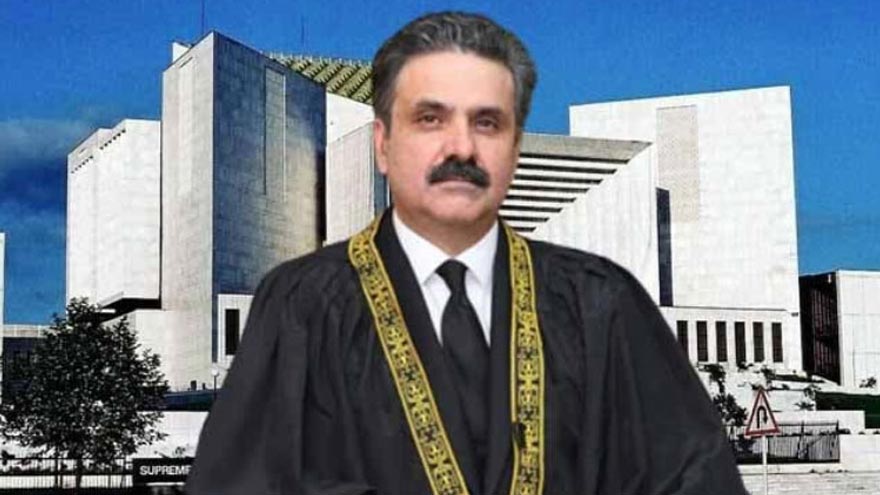
ISLAMABAD (Dunya News) - Chief Justice of Pakistan Yahya Afridi has convened a full court meeting for today, bringing top judges together to review key matters on the Supreme Court’s agenda.
The meeting, which will take place at 2 PM under the chairmanship of the Chief Justice Yahya Afridi, will discuss proposed amendments to the Supreme Court Rules 2025, according to the official agenda.
The agenda further states that the full court will also deliberate on matters related to the status of senior advocates.
It is noteworthy that three Supreme Court judges had earlier written a letter requesting the convening of a full court meeting.
Additionally, Supreme Court judges Justice Syed Mansoor Ali Shah and Justice Athar Minallah have tendered their resignations from the apex court yesterday (Thursday). Both judges have also vacated their chambers at the Supreme Court.
Justice Mansoor Ali Shah’s resignation spans five pages and has been formally submitted to President Asif Ali Zardari. Sources confirmed that Justice Shah, a senior member of the Supreme Court, dispatched his resignation earlier today following weeks of visible discontent over recent constitutional developments.
Read also: Federal cabinet approves amendments to Pakistan Army, Air Force, and Navy Acts
Objections to 27th Amendment
Justice Mansoor Ali Shah had previously voiced strong reservations regarding the 27th Constitutional Amendment. He had written two letters to Chief Justice Yahya Afridi, outlining his constitutional concerns and highlighting what he described as deep institutional implications for judicial independence.
In his resignation letter, Justice Shah termed the 27th Amendment “a grave assault on the Constitution of Pakistan,” stating that it had “fragmented the Supreme Court into pieces.” He further remarked that the amendment had effectively placed the judiciary under the control of the government, undermining the very foundation of separation of powers.