Summary On the first day of the Iran war, an elementary school in southern Iran was hit
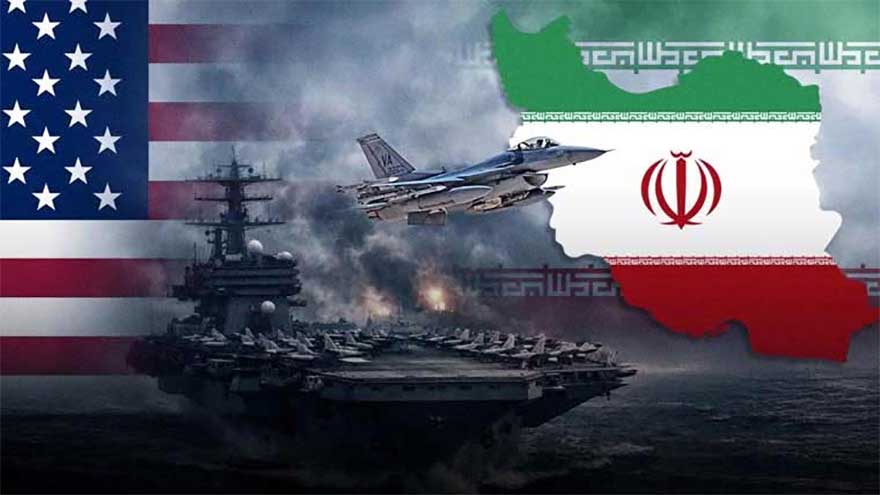
LAHORE (Dunya News) – The US and Israel attacked on Iran on Feb 28, 2026 and martyred Iran’s supreme leader. Later, the war reshaped the Middle East, with brinkmanship over the Strait of Hormuz and final push toward ceasefire.
The military escalations, devastating human toll, market shocks and political reckonings that altered the course of the war have been reported moment by moment.
FEBRUARY 28, 2026
Supreme leader killed in US-Israel strikes
As the hours passed on this first day, the international media would go on to report that the first salvo of strikes had killed Iran’s supreme leader and other senior Iranian officials, including the country’s defense minister and the commander of Iran’s Revolutionary Guard Corps.
THE FIRST RETALIATORY STRIKES HIT ISRAEL
Iranian retaliation would be swift and fierce. The whole region was about to be at war.
US strike on girls’ school
On the first day of the Iran war, an elementary school in southern Iran was hit, killing at least 168 children and 14 teachers, according to Iranian state media. Horrifying images emerged showing rows of body bags lined up, and a mass grave dug for the young victims.
MARCH 1, 2026
First US casualties
This would also be the first instance of US forces killed in the war with Iran, just days after it began. It’s a sensitive situation to report on – not just for the families who may not have learned yet, and shouldn’t learn from a headline, but for the troops still on the ground.
Tracking the price of crude
All weekend we were waiting for what we knew would happen: Oil prices were about to surge on the fear that Iran could retaliate against the US and Israel's attack by closing off the Strait of Hormuz. Futures markets are closed on the weekends, and the Saturday morning attack left us with a nail-biting 36 hours of speculation.
MARCH 4, 2026
CIA working to arm the Kurds
The CIA had been working to arm Iranian Kurdish groups in northern Iraq, in hopes of fomenting a popular uprising inside Iran, added a critical new dynamic to the war just a few days in.
MARCH 8, 2026
On the ground in Tehran
Massive plumes of black smoke to the East, South and West of the city. Fires seemed to be pulsating at the base of where the black smoke came from. An eerie sight and we soon found out that Israel had bombed three oil storage facilities around Tehran.
MARCH 8-12, 2026
Hormuz effect on oil and gas prices
After a second weekend of war, reality set in for the oil market: The conflict wasn't coming to an end anytime soon. Iran had threatened to blow up any oil tanker sailing through the Strait of Hormuz, choking off 20% of the world's oil supply, creating the world's largest oil supply shock in history, the International Energy Agency had said. When futures trading resumed that Sunday evening, oil rocketed higher, nearing $120 a barrel, before settling just below $100 on Monday afternoon.
More Iran leaders killed, including Larijani
MARCH 17, 2026
More Iran leaders killed, including Larijani
The war began with a stunning salvo of strikes that killed Iran’s supreme leader and other senior Iranian officials, including the country’s defense minister and the commander of Iran’s Revolutionary Guard Corps. Now, a few weeks later, with the targeted killing of Iran’s security chief Ali Larijani, Israel yet again proved its remarkable ability to locate, target and kill senior Iranian officials.
MARCH 23, 2026
Questioning Trump
As the war entered its fourth week, I questioned President Trump about his current thinking on the conflict as he departed West Palm Beach, Florida. After he’d postponed strikes on Iran’s power plants, citing ongoing talks that Iran had denied were happening, I asked the president who would control the Strait of Hormuz by the end of the war.
MARCH 23, 2026
Israel expands strikes in Lebanon
When Hezbollah openly announced it had fired projectiles into Israel to avenge the death of Iran’s supreme leader Ayatollah Ali Khamenei, it seemed a wildly erratic, almost suicidal move. The group had, by most estimations, taken a battering in the Israeli onslaught of late 2024, and seemed in a precarious place to fulfill the obvious mandate of their sponsor to impose a cost on Israel for the assassination in Iran. I recall feeling baffled that Hezbollah would agree to such an obvious, but likely self-defeating move — and a sense of dread for what that would mean for the civilian population of Lebanon when Israel inevitably responded with its ferocious firepower.
APRIL 3, 2026
Iran shoots down US fighter jet
Iran had claimed routinely to have shot down US fighter jets. And Kuwait had recently shot three down accidentally, according to the US military.
April 7, 2026
Trump: ‘A whole civilization will die tonight’ and a ceasefire
Trump had warned he would attack critical infrastructure, but this added a new layer of intensity to his 8:00 p.m. ET deadline to reopen the Strait of Hormuz.
APRIL 10, 2026
Talks in Pakistan
As Vice President JD Vance took off from Joint Base Andrews aboard Air Force Two that Friday morning, a drama was playing out thousands of miles away in Tehran: Iran’s top negotiator, Parliamentary speaker Mohammad Bagher Ghalibaf, and his delegation refused to board their aircraft.
The Iranians wanted to make sure Vance was actually on his way before they left for the venue in Pakistan’s capital Islamabad. But several hours after Vance was airborne, Ghalibaf and the Iranians were still on the tarmac in Tehran.
APRIL 12, 2026
The implications of many of Trump's Truth Social messages aren't immediately apparent, but the one he posted Sunday morning, April 12, was a head-scratcher: He announced the US blockade of the Strait of Hormuz — the crucial waterway that he has repeatedly told Iran must be reopened unconditionally.
APRIL 18-24, 2026
On again, off again diplomacy
As the weekend of April 18 approached, the US and Iran appeared to be closing in on a deal to end what at the time was a seven-week war.
Pakistani mediators had spent days in Iran trying to push them closer to a compromise. I received several messages from sources on Friday, April 17, telling me to prepare for a second round of in- person talks as soon as that weekend.
APRIL 25, 2026
The view from Pakistan
Shortly after midnight, Iran’s Foreign Minister Abbas Araghchi touched down amidst the roar of two Pakistani fighter jets sent to escort him into Islamabad’s Nur Khan air base. There was a sense of urgency as the country’s powerful Field Marshal Asim Munir greeted him.
Along with Pakistan’s interior and foreign ministers, they strode down the red carpet, then were swept away in waiting limousines for meetings at the nearby military headquarters
Four hours later as the sky shaded from black to blue, they emerged from ‘Army House’, their talks wrapped. It was a little after 8:30 p.m. ET.
MAY 11-15, 2026
Trump returns from China
By the second week of May, as President Trump grew increasingly frustrated with diplomatic efforts to end the war, administration officials focused on whether his trip to Beijing could yield a breakthrough.
Attack sites and economic impacts
The US and Israel attacked between 3,000 and 13,000 sites in Iran. The most notable of these were Iran's three nuclear sites, Fordow, Natanz and Isfahan.
The price of Brent crude oil reached $122 per barrel.
Details of the stock market crash
ISRAEL: The Israeli stock market (Tel Aviv Stock Exchange) was the most affected as soon as the war began. Its index fell by thirty to thirty-five percent, which was considered the biggest crash in the country's history.
America: Due to its global power and direct involvement in the war, the US stock market index (S&P 500) and Dow Jones fell by twelve to fifteen percent in just one week, losing trillions of dollars to investors.
Pakistan: The Pakistan Stock Exchange (PSX) suffered a severe downturn due to regional tensions and fears of rising oil prices. The KSE 100 Index saw a record 10 to 12 percent decline and the market had to be temporarily closed several times.
Japan: One of Asia's largest markets, Japan's Nikkei 225, crashed badly and recorded a huge decline of up to 14 percent due to fears of oil supply disruptions from Gulf countries.
United Kingdom: European markets also could not escape the effects of the war and the UK's FTSE 100 Index fell by 8 to 10 percent within the first ten days of the war.
Ships that passed through the Strait of Hormuz
Two Pakistani-flagged LPG tankers passed through the Strait of Hormuz on March 24, while a Pakistani-flagged LPG tanker and two Pakistani-flagged oil tankers passed through the Strait of Hormuz on April 6.
A Qatari-flagged LPG tanker also passed through the Strait of Hormuz on May 12.
On March 14, five Pakistani-flagged crude oil tankers, three product tankers, two LNG (gas), and two general cargo tankers passed through the Strait of Hormuz.
On April 19, the US President announced that the US had seized the Iranian-flagged cargo vessel TOUSKA in violation of the US naval blockade in the Strait of Hormuz. However, the twenty Iranian sailors on board the Iranian cargo vessel were released and taken to Iran via Pakistan. The cargo vessel also had eleven Pakistanis on board and was returned to Pakistan.