Summary Iran has also halted almost all shipping through the Strait of Hormuz, through which 20% of oil supplies move
WASHINGTON (Reuters) - President Donald Trump was warned that attacking Iran could trigger retaliation against U.S. Gulf allies despite his claims on Monday that Tehran's reaction came as a surprise, said a U.S. official and two sources familiar with U.S. intelligence reports.
Pre-war intelligence assessments did not say that Iran’s response was "a guarantee, but it certainly was on the list of potential outcomes," said one source, who like the other two requested anonymity to discuss the issue.
The president twice on Monday said that Iran’s retaliatory strikes against Qatar, Saudi Arabia, the United Arab Emirates, Bahrain and Kuwait were a surprise, the first time at a Kennedy Center board meeting in the White House.
"They (Iran) weren’t supposed to go after all these other countries in the Middle East," he said. "Nobody expected that. We were shocked."
Trump’s assertion followed other administration claims that have not been backed by U.S. intelligence reporting, such as that Iran would soon have a missile capable of hitting the U.S. homeland and that it would need two to four weeks to make a nuclear bomb and would then use it.
Those allegations and an imminent threat posed by Iran to the U.S. and its forces in the region have been among varying reasons that Trump and some top aides have given to justify his decision to join Israel in launching their air war against Iran on February 28.
Trump was also briefed ahead of the operation that Tehran would likely seek to close the economically vital Strait of Hormuz, according to two other sources familiar with the matter.
Over the past two weeks, Iranian drones and missiles have struck targets in the Gulf states that have included U.S. military bases and an Emirates base hosting French troops, civilian structures, including hotels, airports, and energy facilities.
Iran has also halted almost all shipping through the Strait of Hormuz, through which 20% of oil supplies move, causing global energy prices to spike.
Democratic lawmakers emerged from administration briefings on the war last week saying they heard of no imminent threat that required the U.S. and Israel to launch the war.
The White House did not immediately respond to a request for comment. The Office of the Director of National Intelligence declined to comment.
WARNINGS OF A REGIONAL WAR
The U.S. Official said that Trump was briefed before the war that striking Iran could trigger a broader regional conflict that would include Iranian retaliation against Gulf capitals, especially if Tehran saw those countries condoning or actively supporting the U.S. attacks.
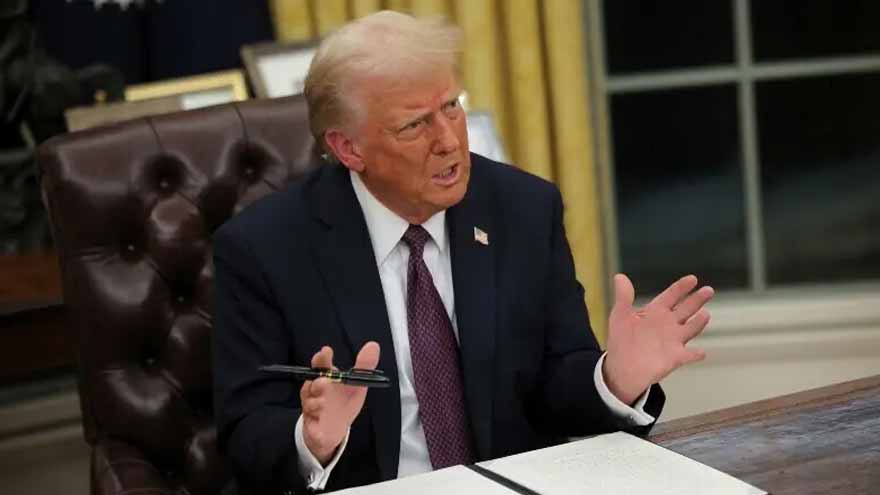
Trump repeated his claim later on Monday during a signing event in the Oval Office. He was asked if he was surprised that nobody had briefed him about that risk that Iran would strike back at the Gulf States.
"Nobody, nobody, no, no, no. The greatest experts, nobody thought they were going to hit," replied Trump.
The second source familiar with the matter said that before the U.S.-Israeli attacks, the U.S. intelligence community assessed that Israel’s plan to launch strikes aimed at killing top Iranian leaders likely would result in retaliation against U.S. military and diplomatic outposts.
The administration did not order departures of diplomatic staff from several regional embassies until after the air strikes began.
The community also warned that Iran “could” widen its retaliation to American allies in the region, the source said.