Updated on
Summary
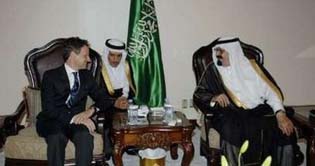
US Treasury Secretary Timothy Geithner discussed G20 issues with Saudi King Abdullah and urged Gulf countries on to invest in his country during a one-day visit to Saudi Arabia. International financial institution reform and ways to restore global economic confidence was part of the agenda of the worlds 20 major economies in talks between the US finance chief, Abdullah, and other top Saudi officials in the Red Sea industrial city of Yanbu, the official SPA news agency said. On a day in which the Saudi monarch inaugurated 45 billion riyals (12 billion dollars) worth of infrastructure and industrial projects in Yanbu, Geither praised the oil giant and the Gulf emirates for domestic investment programmes that he said were helping to push the world economy back to growth. I think the world has yet to fully appreciate the scale of ambition and investment we are seeing in the (Saudi) kingdom and the Gulf region to lay the foundation for future growth, he said earlier at the Jeddah Chamber of Commerce and Industry. Geithner was spending Tuesday in Saudi Arabia and Wednesday in the United Arab Emirates to discuss bilateral relations and shore up confidence in the US economic recovery. On Wednesday, Geithner was scheduled to meet with United Arab Emirates officials and the heads of two of the UAEs main public investment funds in Abu Dhabi. In Jeddah, Geithner made a pitch for more direct investment into the United States, saying that the problems which underpinned the rejection of Dubai Ports Worlds attempts to invest in US ports three years ago had been addressed. Since the controversy surrounding the Dubai Ports deal in early 2006, our government has put into place a series of reforms designed to safeguard national security, while providing more clarity, predictability and transparency to investors, the secretary told a small group of Saudi businessmen. Geithner had also been expected to discuss with King Abdullah approaches for putting more pressure on Iran to dissuade it from developing nuclear weapons, and cooperation to block financing for terrorism. We have a common security interest, he said. I believe we have much more in common than we are different.