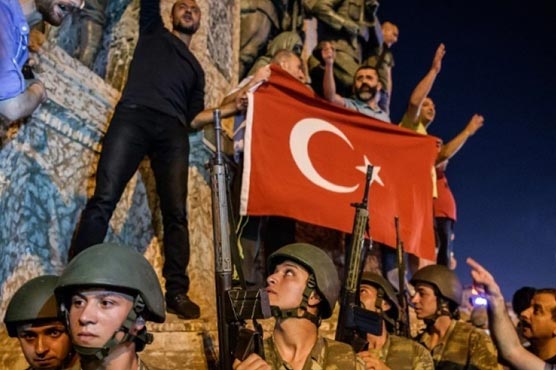
Summary Today marks the first anniversary of the failed coup attempt of July 2016 (Photo: AFP)
By Saad Syed
A year has passed since a faction within the Turkish Armed Forces attempted to overthrow President Tayyip Edogan’s government in a failed coup attempt that saw violence and bloodshed on the streets of Istanbul and Ankara.
Turkey, today, will mark the first anniversary of the coup as a celebration of ‘democracy and unity’ and the government has declared it a national holiday while deeming the failure of the coup as a historic victory of Turkish democracy.
The coup
The coup was led by a faction of the armed forces of Turkey calling themselves the ‘Peace at Home Council’. In the initial stages of the coup, military jets were witnessed flying over Ankara, while pro-coup forces blocked major roads and bridges, including the Bosphorus Bridge in Istanbul. The military headquarters were also occupied while important officials like the Turkish Chief of the General Staff, commander of the land forces, and head of the air force were taken hostage.
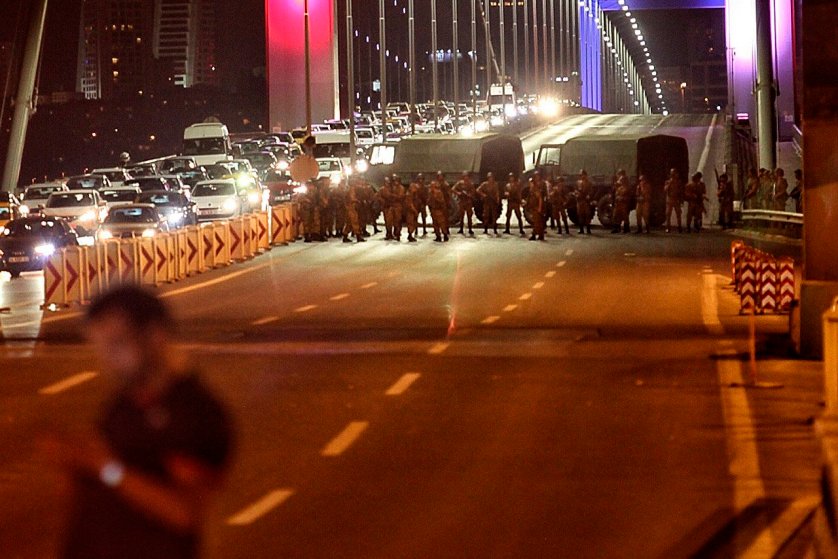
Turkish soldiers seen blocking the Bosphorus Bridge on the night of the coup. Photo: Getty Images
The pro-coup forces were aided by tanks, helicopters and fighter jets that clashed with Turkish forces loyal to the government. Important buildings like the police headquarters, presidential palace and the parliament were bombed by pro-coup forces. According to Reuters, pro-coup soldiers took over the state broadcaster, Turkish Radio and Television Corporation (TRT). Mirror Online reported that soldiers forced an anchor to read out a statement giving an official declaration of the coup, “The democratic and secular rule of law has been eroded by the current government and that Turkey was now led by the Peace at Home Council who would "ensure the safety of the population”.
Amidst the chaos and confusion, thousands of Turkish civilians who were against the coup took to the streets to protest against the attempted takeover of the government. Meanwhile, President Erdogan gave a Facetime interview to CNN Turk, urging his supporters to come out onto the streets and confront the pro-coup forces.
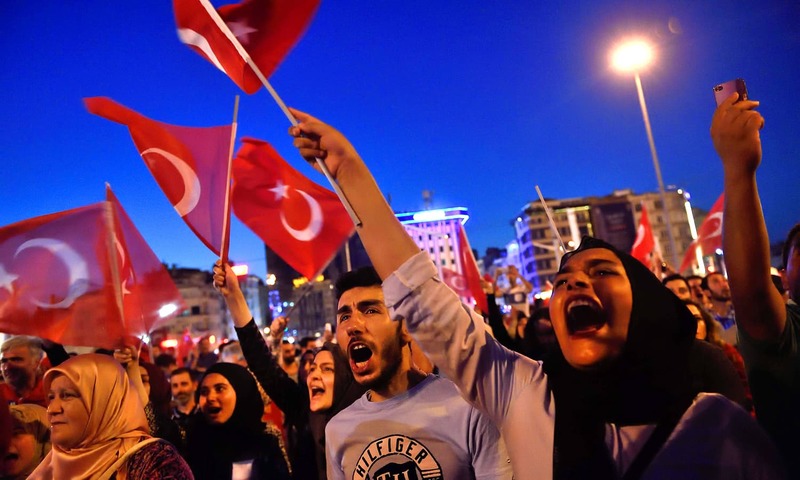
Citizens out in the streets of Istanbul to protest against the coup attempt. Photo: AFP
However, by the early hours of July 16, soldiers involved in the coup had started surrendering. Reuter reported that at 4AM of July 16, Erdogan arrived at Istanbul airport and addressed his supporters, vowing to take action against those who had plotted against the government. The coup had effectively ended by then, with pro-government forces prevailing upon the coup plotters and recapturing the areas and buildings taken over by anti-government forces who had started surrendering.
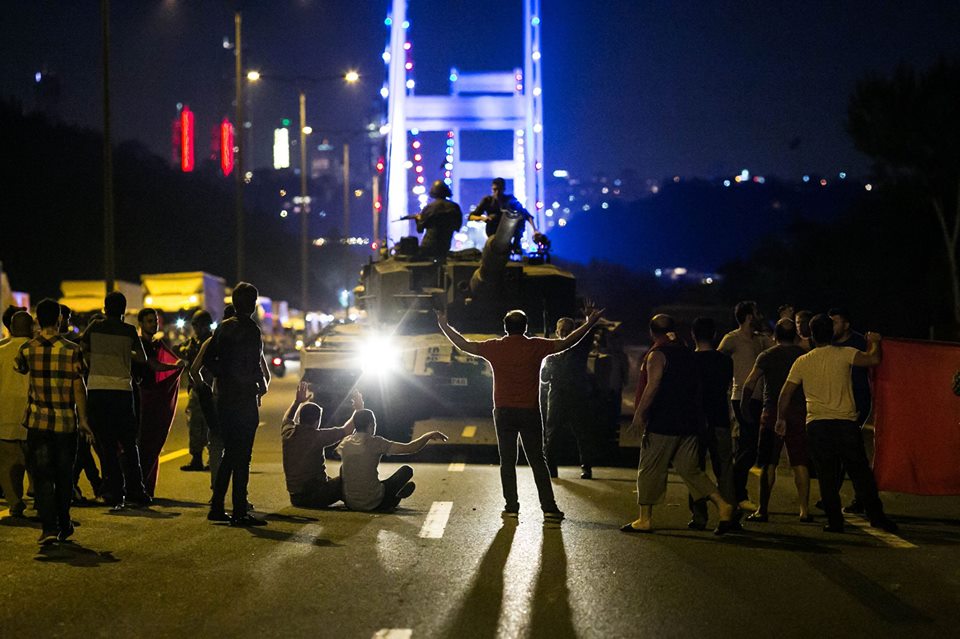
Citizens block a tank‘s path during a protest against the pro-coup forces. Photo: Getty Images
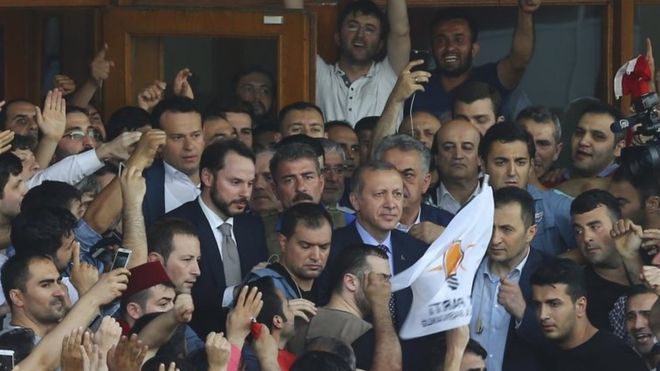
Erdogan with supporters at the Istanbul Airport on the morning of July 16. Photo: Reuters
The aftermath
Following the coup, Erdogan warned his opponents that “they would pay a heavy price for this”. His ominous statement, “From now on, nothing will be as it was before 15th July”, was reported widely by media outlets. Nothing was ever the same after the coup, and Erdogan initiated a mass purge of his government and civil service and arrested and suspended academics, civil servants, military officials, and journalists for conspiring against his government. According to BBC, the coup saw at least 260 deaths and 2,196 people being injured. Moreover, immediately after the coup and throughout the past year, 140,000 academics and civil servants were sacked, 50,000 people were arrested, 7,000 military officials were suspended and at least 130 journalists were put in prison.
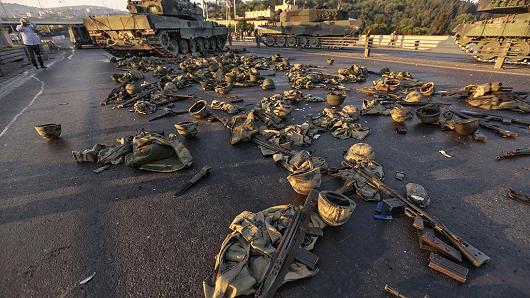
Weapons and accessories left behind by pro-coup forces after they surrendered. Photo: Getty Images
Repercussions for the Gulen Movement
President Erdogan accused the US-based cleric Fethullah Gulen of being behind the coup, who categorically denied the allegations, according to an email he sent to the New York Times. Gulen lives in exile in Pennsylvania and leads a popular social movement, Hizmet or the Gulen Movement as it is generally referred to. The movement is classified as a terrorist organisation by the Turkish government and according to the Guardian, the movement is influential and is a mixture of think-tanks, businesses, schools and publications.
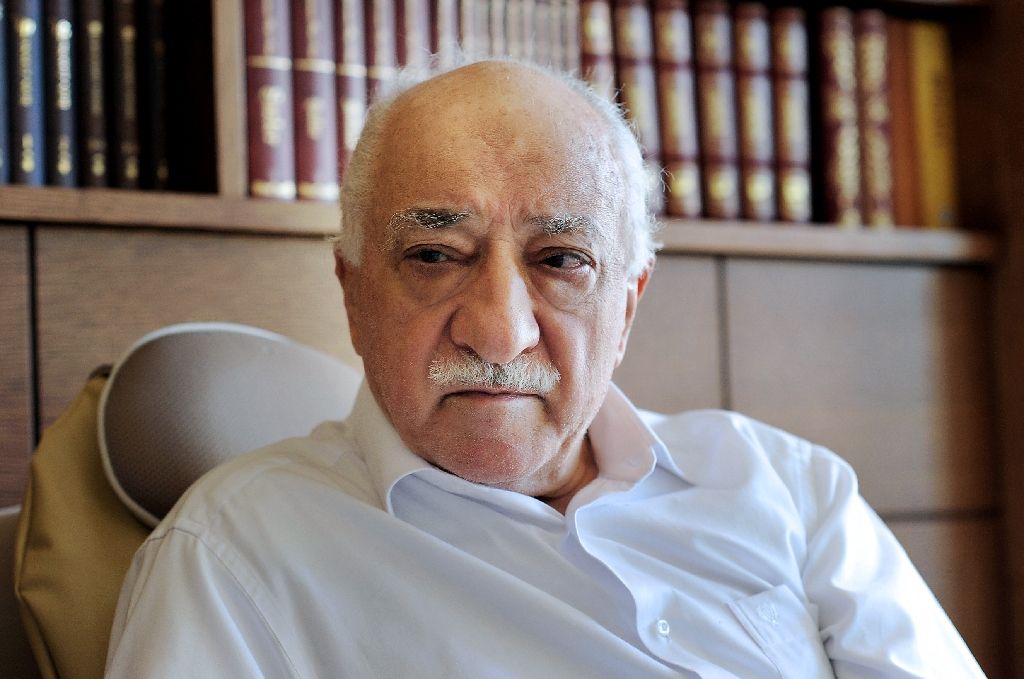
The US-based Turkish cleric, Fethullah Gulen is an ally-turned-foe of Erdogan. Photo: AFP
Fethullah Gulen is critical of Erdogan, and according to Human Rights Watch, it was reported that Erdogan’s purges among the civilian populace, the military and the judiciary were mainly aimed at followers of Gulen. A day after the coup, the New York Times’ editorial described the purges as a counter-coup, and expected the Turkish president to “become more vengeful and obsessed with control than ever, exploiting the crisis not just to punish mutinous soldiers but to further quash whatever dissent is left in Turkey”.
Fallout reaches Pakistan
In Pakistan, Gulen allegedly runs a network of about 28 schools - the Pak-Turk International Schools and Colleges. Following the coup, Turkish ambassador to Pakistan Sadik Girgin said at a press conference in Islamabad that they had “called on all friendly countries to prevent activities of Gulen’s group”. The statement was an indication of the fact that the Turkish government wanted Pakistani authorities to clamp down on the network’s activities.
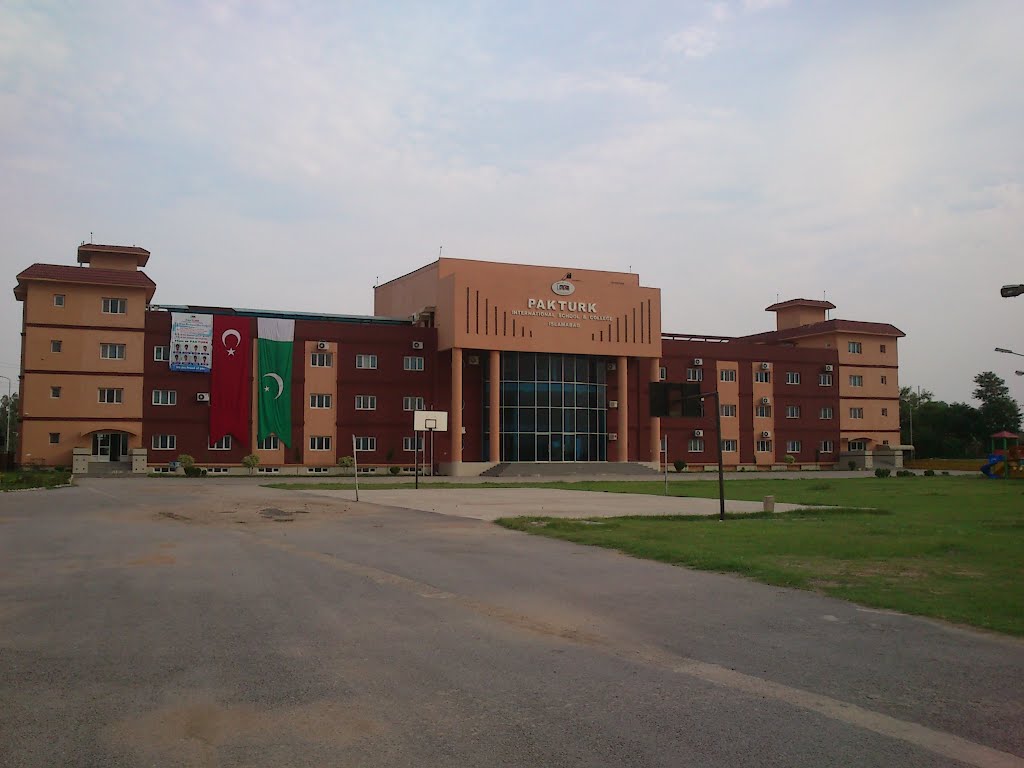
The Pak-Turk International Schools is a network of 28 schools with 11,000 students. Photo: Pak-Turk.edu
A few months later, ahead of Turkish President Erdogan’s visit to the country, the Pakistani government ordered more than a hundred teachers of Pak-Turk schools to leave the country with their families, citing “non-approval of their requests for extension of visa”. However, the Lahore High Court later stayed the deportation of the teachers of the Pak-Turk school, in response to a plea that the move was a violation of the fundamental rights under the constitution.