Summary There is no uniform consensus over how to fast in countries with extremely long fasting hours.
(Web Desk) - From dawn to dusk, around 1.6 billion Muslims around the world refrain from eating, drinking, smoking or engaging in any sexual activity. Fasting starts at sun rise (known as Sahur) and ends at sun set (known as Iftar). But what happens in countries where the sun never sets?
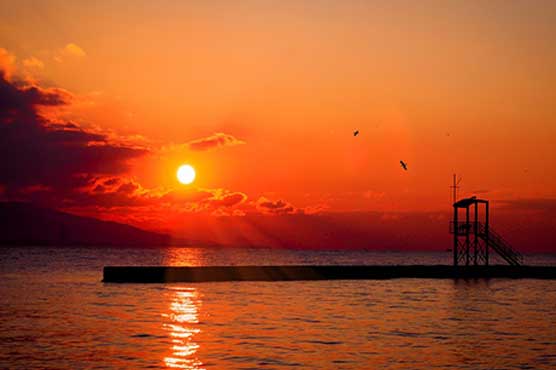
A quarter of Finland’s territory lies north of the Arctic Circle and in the country’s northern most point, the sun does not set for 60 days of the summer. In Svalbard, Norway, the northernmost inhabited region of Europe, there is no sunset from approximately 19 April to 23 August. Areas in Lapland, Finland and Sweden can experience little or no sundown during the summer period. This phenomena is known as “midnight sun”.
This dilemma for Muslims is particularly new since the month of Ramadan is pegged to the lunar calendar and it rotates on a yearly basis. For the past two years, and the next couple of years, Ramadan is to fall in the summer period. The last time this problem occurred was nearly three decades ago and back then, there were very few Muslims living in the Arctic Circle. With an increase in immigration to countries such as Finland and Norway, this problem is become a reality for more and more people.
According to a fatwa (or a clerical decree), Muslims living in countries experiencing “midnight sun” can either choose to correspond the fast timings to the closest Islamic country or to Mecca which is the capital of Saudi Arabia and considered sacred in Islam.
Some Muslims choose to fast 23 hours a day in countries where the sun sets for an hour. One woman, 26-year-old Yasmeen Alhabbash moved to Oslo, Norway, from Gaza, and fasts for 21 hours a day, compared to her 14 hours back home.
There is no uniform consensus over how to fast in countries with extremely long fasting hours or where the sun never sets at all but most choose to correspond their fast with that of a neighboring Islamic country.
When Ramadan falls in winter, these same countries will face another phenomena known as “polar nights” when the sun does not rise for months. Again, they will choose to either stick with Mecca or with a neighboring Muslim country.