Updated on
Summary
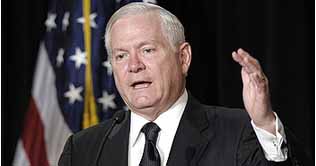
US Defence Secretary Robert Gates called for revising Byzantine rules for US arms exports, saying the current system undermines allies while failing to prevent sensitive technology from falling into the wrong hands. Gates said that the current arrangement fails at the critical task of preventing harmful exports while facilitating useful ones. Our security interests would be far better served by a more agile, transparent, predictable, and efficient regime, he said at an event organized by Business Executives for National Security. Gates proposed a single list outlining which items require licenses for export, a single licensing agency, a single enforcement authority and a single IT system. At the moment, a Byzantine amalgam of authorities, roles, and missions scattered around different parts of the federal government oversees export controls, creating confusion for both companies and government agencies, he said. President Barack Obama in August ordered his deputies to review and reform the export control regime. A report by the National Academy of Sciences in 2009 found that the export rules -- written during the Cold War to prevent the transfer of technology to the Soviet Union -- undermined national security and threatened economic growth. Gates said the system posed an obstacle to cooperating with US allies to counter threats from extremist networks or hostile states.