Summary World powers will meet for fresh talks with Iran on its controversial nuclear programme on Tuesday.
TEHRAN (AFP) - World powers will meet for fresh talks with Iran on its controversial nuclear programme on Tuesday, as hopes rise for a more conciliatory approach from the new Tehran government.
The two-day meeting in Geneva will be the first such negotiations since President Hassan Rouhani, a reputed moderate, took office in August.
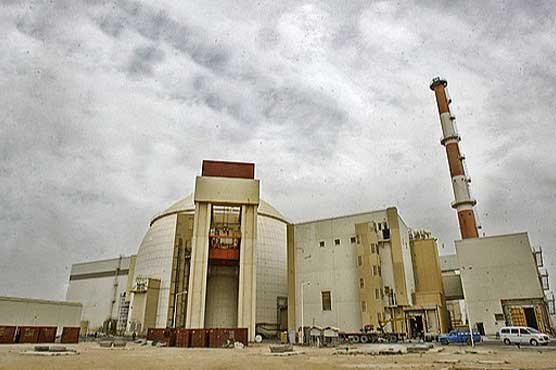
Rouhani has pledged to engage constructively to resolve the decade-long dispute over Iran s nuclear drive and ultimately secure the lifting of crippling Western sanctions.
The West and Israel suspect Iran is seeking a nuclear weapons capability, which it has repeatedly denied.
Foreign Minister Mohammad Javad Zarif has taken over as Iran s lead negotiator with the so-called P5+1 group of Britain, China, France, Russia and the United States plus Germany.
But so far he has been tight-lipped about what Iran is prepared to offer in exchange for relief from EU and US sanctions which have badly hit Iran s oil exports and its access to global banking.
"We will present our views, as agreed, in Geneva, not before," Zarif tweeted.
But his deputy in the talks, Abbas Araqchi, has insisted there can be no question of Iran relinquishing its stockpile of enriched uranium, which could potentially be used for civilian or military purposes.
"We will negotiate about the volume, levels and the methods of enrichment but shipping out the (enriched) material is a red line for Iran," said Araqchi.
Uranium needs to be enriched to levels of above 90 percent for use in a nuclear warhead.
Only low levels are required to fuel power plants, while Iran says it also needs uranium enriched to 20 percent for a medical research reactor.
The 20 percent enriched uranium is the source of the greatest concern for the West and Israel, which fear Iran could covertly divert some of it for further enrichment towards weapons grade.
Iran currently has 6,774 kilograms of low-enriched uranium, and nearly 186 kilograms of material enriched to 20 percent, as well as 187 kilograms of the 20 percent material converted to uranium oxide for use in fuel plates.
Iran says it has the right to enrich uranium for peaceful purposes and has defied repeated UN Security Council ultimatums to suspend all enrichment.
A source close to Iran s negotiators told the official IRNA news agency they would submit to the powers "a clear path" for the talks, and include a timetable and a framework with "specified first and last steps."
ISNA news agency cited Iranian diplomats as saying "recognition of the right to enrichment on Iranian soil" was the endgame for the talks, not a precondition as in the past.