Summary He had announced on Thursday that he was quitting just two weeks after taking office.
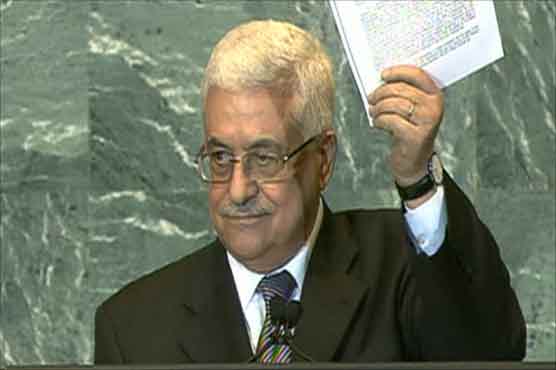
RAMALLAH (Reuters) – Palestinian President Mahmoud Abbas on Sunday accepted the resignation of Prime Minister Rami Hamdallah, who announced on Thursday that he was quitting just two weeks after taking office.
"The president accepted the resignation of the prime minister and designated him to head an interim government," Abbas spokesman Nabil Abu Rdaineh said.
Analysts also said that the image of chronic political instability could undercut crucial international support for the Palestinians, both financial and political, at a time when they are supposed to be pushing for statehood. Palestinians said they viewed the political drama as another setback for the already beleaguered Mr. Abbas and his Fatah Party.
Mr. Hamdallah, a professor of linguistics who ran a large West Bank university, was sworn in on June 6. He had no previous experience in government. An official in the prime minister’s press office said that Mr. Hamdallah had resigned because of a conflict over his authority and responsibilities.
Palestinians with knowledge of the situation said the resignation might have been prompted by power struggles between Mr. Hamdallah and the two deputy prime ministers that Mr. Abbas appointed at the same time: Mohammad Mustafa, the former chairman of the Palestine Investment Fund, who was given special responsibility for the economy; and Ziad Abu Amr, a legislator and former foreign minister, who was to focus on the political arena. Both men are seen as close to the president.
“The troika did not work in the Soviet Union,” Mr. Qaq said, “and it won’t work in Palestine.”
Still, the resignation came as a surprise. One of Mr. Hamdallah’s close friends said that he had spoken on the phone with the prime minister on Thursday morning and that he had “sounded confident” and did not mention any plans to give up his post.
Ghassan Khatib, vice president of Bir Zeit University in the West Bank and a former Palestinian government spokesman, said that Mr. Fayyad’s resignation and his replacement had been accepted by the outside world. “But to have this resignation so soon,” he added, “is very bad for stability, and consequently for the ability of the Palestinian Authority to continue getting the necessary financial and political support for the peace process in the international arena.”
The Palestinian Authority has been in a financial crisis for about two years; Mr. Fayyad had difficulty paying the tens of thousands of government employees their salaries on time.
“It was easier when Fayyad was there,” said Michael Herzog, an Israel-based fellow of The Washington Institute for Near East Policy and a former military official and negotiator. Now, he said, some may be even more reluctant to provide assistance.
But for many Palestinians, Mr. Hamdallah’s resignation offer was a symbol of a much deeper political malaise and exposed the inherent weakness and limitations of an authority that ultimately operates under Israeli occupation.
Increasingly, Palestinians in the West Bank seem to be dismissing their government as a sham. “There is no system,” said Basem Zubeidi, a political science professor at Bir Zeit University. “Everyone knows that there are no ministers, no ministries and no government because they have no real mandate to do anything. There is no authority, there is no money, there is nothing.”