Summary There is rise in incidents of terror and horror in Mexico despite tall claims of authorities.
TENOSIQUE (AFP) - In a brown friar s robe and sandals, Tomas Gonzalez doesn t look like a death threat-defying, government-challenging, hardcore migrants rights activist. But appearances can be deceptive.
"Everything that has been done to migrants in this country is because Mexican authorities have given permission for it to be done," Gonzalez told migrants near Mexico s southern border with Guatemala as he warned bluntly of abuses and human trafficking that often turn fatal.
Gonzalez may look peaceful and harmless in his straw hat, but his defiant, tough-as-nails reputation has earned him the nickname "the tornado."
Drug cartels have put a bounty on his meddlesome head. And authorities often prefer to look the other way where he is concerned.
But Gonzalez, 39, keeps hammering away, demanding attention be paid to the crimes affecting migrants on a daily basis.
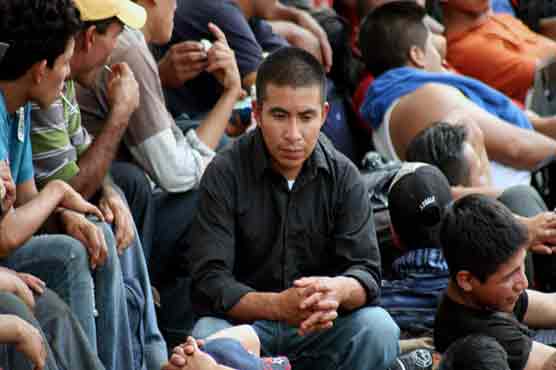
A member of the Franciscan order, he and his colleagues run shelters where undocumented aliens are able to seek help on their secret trek through Mexico north to the promised land: the United States, which is at work on immigration reform.
It was here in the town of Tenosique, just 60 kilometers (40 miles) from Guatemala, that Gonzalez founded his first shelter two years ago, a stone s throw from the first stop on the freight route that sees thousands of Central American and South American migrants risk their lives to reach the US border.
The shelter is a place where migrants, already on a mission involving some desperation and high risk, can get a meal, a shower, treatment for injuries and a shoulder to cry on.
"When we find out that a (Mexican) immigration agent has beaten, mistreated, raped someone or aggressively followed them; when we find out that criminals in cahoots with authorities charge a migrant $100 to be allowed to move on without being detained, we cannot remain silent," he told AFP.
This shelter has been rechristened "72" in memory of the number of Latin American migrants slain at a ranch in Tamaulipas state on their way to the US border in 2010.
About 150 migrants pass through each day.
"People here are really kind. With so much danger everywhere, you really feel safe here," said Javier, a Guatemalan musician making a third try at getting into the United States.
-- Death threats as routine --
In Tabasco state, where it is common for migrants to be kidnapped and killed, speaking out can be a death sentence. And Gonzalez has had plenty of death threats from those who want his voice silenced.
On March 17, criminals nabbed a migrant and warned him that they would be "back for the father s head, and for the heads of everyone who is speaking out," shelter volunteers said.
"They said their boss was really angry because several of his people had been thrown in jail, and they were organizing something from inside Honduras to come and kill me," Gonzalez recalled of another threat.
His shelter boosted security measures and brought in police guards.
"That doesn t solve the problem, but it does inhibit the bad guys a bit," said Ruben Figueroa, another migrants rights activist who works with the shelter.
Gonzalez stressed: "I am a human being. I am worried about my team, worried about people being killed. These are very human things, but of course, I am not going anywhere. We are not leaving, and we are not closing."
The threats have come not only from the brutal Zetas drug cartel, founded by former military staff and blamed for many of the 20,000 kidnappings of migrants each year.
Last year, army and police also harassed and detained Gonzalez and Figueroa.
"They have lied about us. We have been slandered, really. They say that we are defending criminals, and that we are purposely confronting authorities. But all we are doing is trying to live the Gospel in a radical way," said Gonzalez.
Drug-related violence, with cartels fighting for influence and turf, has left more than 70,000 people dead in Mexico since December 2006.
Fighting threats against migrants, who are often among the poorest people in their countries of origin, "is not a job that is cut out for just anybody. You have to be prepared physically and spiritually," said the priest, who spends an hour a day at prayer and 45 minutes working out.
"Helping undocumented people is not a crime," he insisted. "It is a blessing."