Updated on
Summary A senior Communist Party leader said Friday that disclosure of assets of officials is under study.
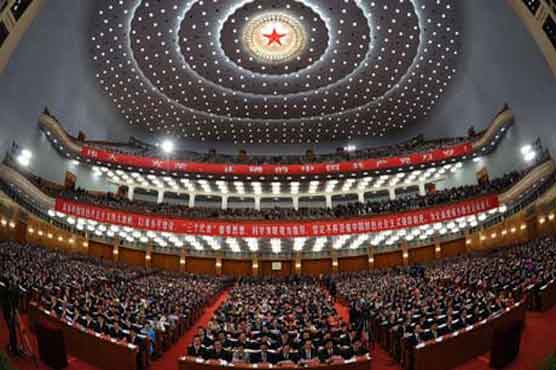
Asset disclosure for Chinese officials is likely to be slowly phased in over time, a senior Communist Party leader said Friday, as the government grapples with the fraught task of rooting out the corruption that has fed widespread public anger.The comments from Wang Yang, a member of the decision-making Politburo with a reputation as a reformer, came a day after the party opened a weeklong congress to install a new leadership with a call to fight corruption.Speaking to reporters, Wang said that the province he runs, Guangdong, is exploring methods for officials to declare their wealth and that in the future public disclosure of assets will be required of all officials.I believe Chinese officials, in accordance with central rules, will gradually make public their assets, Wang said after a meeting with congress delegates from Guangdong. He did not give a time frame.Wangs comments highlight the handwringing at many levels of the party over its inability to tamp down on the corruption by officials and their family members that has deepened public disgust and fed many of the tens of thousands of protests that hit China yearly.At the congresss opening Thursday, President Hu Jintao warned that unrestrained graft threatened to topple the partys continued rule. He called on the partys 82 million members to be ethical and to stop their family members from trading on their connections to amass fortunes.The congress itself had no public agenda on Friday. Delegations met separately to discuss the lengthy report Hu delivered. But in fact, most of the delegates have little say over the main agenda. The selection of younger leaders to replace Hu and his colleagues is done behind the scenes by the departing leadership, retired party elders and other power brokers.Wangs views matter. An ally of Hus from their days 30 years ago in the Communist Youth League, Wang has gone on to forge credentials as a reformer. In Guangdong, he has tried to guide the economy away from labor-intensive assembly-line processing and enacted more tolerant rules for environmental and other local activist groups that the party has mostly tried to suppress.Wang has been considered a candidate for the new leadership, the Politburo Standing Committee, though party-connected scholars say his policies and popularity have brought a pushback from conservatives, diminishing his chances.On corruption, however, the party has been in need of new thinking.The party, which controls courts, police and prosecutors, has proved feeble in policing itself yet does not want to undermine its control by empowering an independent body to do so. Some officials have been required to report income, real estate holdings and other wealth to their superiors since 2010, but the measure has done little to staunch the graft.The idea of public asset disclosure has been batted about for years, if more loudly in recent months following a string of scandals. A Politburo member, Bo Xilai, was cashiered after his wife murdered a British businessman, and he is accused of corruption and other misdeeds over two decades.An aide to President Hu was demoted this summer after his son crashed a Ferrari he should not have been able to afford. Foreign media have also reported that family members of Hus successor, Xi Jinping, and his prime minister, Wen Jiabao, have assembled vast fortunes.Even so, a senior personnel officer for the party said Friday that improving its internal controls and punishing transgressors remained at the top of the partys agenda.The party is confronted with growing dangers of lacking in drive and in competence and with detachment from the people and corruption, said Wang Jingqing, a vice minister of the Organization Department.