Updated on
Summary Alliance of convenience appears between liberals and Islamists against Kuwait leadership.
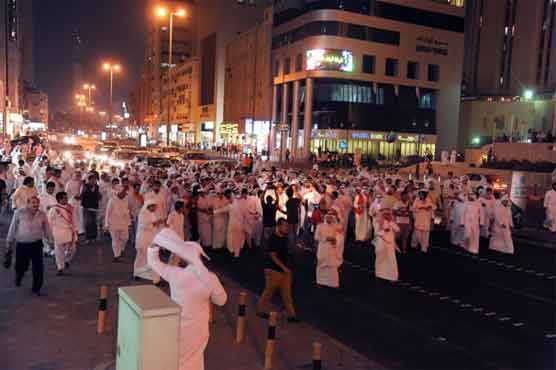
For Kuwaits embattled rulers, clashes earlier this week with anti-government protesters were more than just a sign tensions may be mounting.The crowds themselves showed the widening nature of the Gulf nations political crisis: Stirrings of a rare alliance of convenience between liberals and Islamists against Kuwaits Western-backed leadership.While its not the first time Middle East protests have brought together political foes Cairos Tahrir Square last year and Irans postelection unrest in 2009 had a full spectrum of voicesKuwaits tiny size means that the coalescence of such varied groups could make for an opposition that punches far above its own weight.Despite the rising unrest, the ruling family appears in no imminent danger of an Arab Spring-style revolt such as Bahrains 20-month-old Shiite Muslim-led uprising against the Sunni monarchy.But the emerging alliance underscores the complicated challenges for Kuwaits ruling family as the oil-rich country moves toward Dec. 1 parliamentary elections.Simultaneous pressure from liberals and Islamist conservatives could push Kuwait deeper into a political morass that has already disrupted the economy and raised questions about stability in one of Washingtons most critical military footholds in the region.Kuwaits importance to the Pentagon rose sharply after the U.S. troop withdrawal from Iraq in December. It is now the hub for American ground forces in the Gulf, where the U.S. and its Arab allies seek to counter Irans military buildup.This is certainly not a revolution. It is a call for change and serious reform, said Shafeeq Ghabra, political affairs professor at Kuwait University.There is an overlapping interest in Kuwaits many political factions despite their differences. They want balance of power in the political game.Islamists and their allies want power. They are pressing hard to reclaim their hold on the countrys legislature, which is the most politically empowered among the Gulf Arab states.Meanwhile, liberals are rallying around claims the rulers are overreaching. Many have strongly objected to the governments hard-ball political efforts over the past months that included disbanding the opposition-controlled parliament.This has become the meeting point for the unusual joint onslaught that could become the most broad-based challenge to Kuwaits leadership since it was restored by the 1991 U.S.-led invasion that drove out Saddam Husseins forces.Today we unite together in fighting a bigger entity. The autocracy in Kuwait is stopping true democratic life. We must fight autocracy first, said Lama al-Othman, a human rights activist and liberal columnist for Aljarida newspaper.As a liberal, my fight with the Islamist opposition is always ongoing, she continued. I refuse repression, I refuse it when its practiced by the opposition and I also refuse it when its practiced by the government.At last Sundays protest rally, which drew thousands of people, fully veiled women marched alongside others wearing jeans and their hair in ponytails. Men in the traditional white robes of the Gulf chanted with college-age students in t-shirts.Riot police used tear gas and stun grenades against protesters who defied orders to limit the rally to a site in front of the parliament building. Dozens were reported injured or overcome by the gas clouds.Kuwaits government later ordered a ban on any public gatherings of more than 20 people, while loyalist groups issued a statement pledging support for the 83-year-old emir, Sheik Sabah Al Ahmad Al Sabah, who has ruled since 2006.The monarchy still has wide public support and many even those currently siding with Islamists would likely favor the ruling system if any serious attempts were made by Islamic conservatives to impose strict social rules such as curfews on women and sex-segregated universities.