Updated on
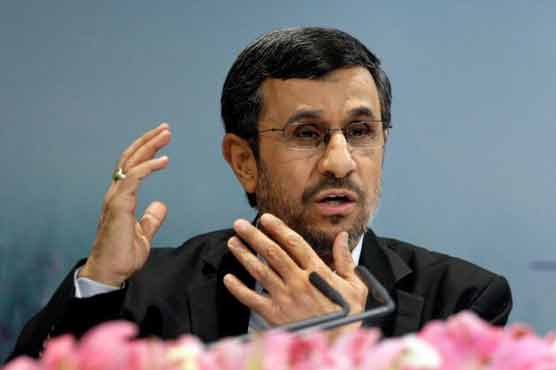
Summary We are not a people to retreat on the nuclear issue, he told a news conference in Tehran.
Iran will not back down on its nuclear programme despite the problems caused by Western sanctions, including a dramatic slide in the value of its currency, President Mahmoud Ahmadinejad said on Tuesday.If somebody thinks they can pressure Iran, they are certainly wrong and they must correct their behaviour, he said. Ahmadinejads comments came amid an accelerated slide in Irans currency, which has now lost more than 80 percent of its value compared with a year ago -- with 17 percent of its value shed on Monday alone.The currency, the rial, slipped another four percent on Tuesday to close at 36,100 to the dollar, according to exchange tracking websites.Ahmadinejad said the plunge was part of an economic war waged by the West on the Islamic republic and a psychological war on the exchange market.Iran, he said, had sufficient foreign currency reserves. Those reserves were estimated at around $100 billion at the end of last year, thanks to surging oil exports. But the US Treasury, which is monitoring the sanctions, believes Irans foreign earnings have been cut by $5 billion a month under the Western economic measures.These are the most punishing sanctions we have ever been able to amass as an international community and they are very important for trying to get Irans attention on the important denuclearisation work, US State Department spokeswoman Victoria Nuland said in Washington on Monday.In his media conference, Ahmadinejad backtracked on hints he had made during a visit to New York last week to attend a UN General Assembly that Iran could consider direct negotiations with the United States on the nuclear issue.Direct negotiation is possible, but needs conditions, and I do not think the conditions are there for talks. Dialogue should be based on fairness and mutual respect, he said. But he also said: I think that this situation cannot last in the relations between Iran and the United States.Ahmadinejad on his return was criticised by hardliners in Iran for opening the door to the possibility of negotiations with America. That also fuelled criticism that his government is mismanaging the economy.The chairman of Tehrans chamber of commerce, Yahya Ale-Eshagh, was quoted as saying by the Mehr news agency that part of this (currency) tumult is due to sanctions. But he also said the person who is not able to manage in a time of crisis should not continue working in his post.Mohammad Bayatian, a member of parliament on an industry and mines commission, said, according to the parliamentary website icana.ir, that a petition has been prepared to question the president. He said the petition was due to the government not paying attention to the parliaments remarks over its management of the forex market.The parliaments presiding board was to decide whether to admit the petition. If it goes ahead, it would only be to hear Ahmadinejad speak on the issue, and it would not involve a confidence vote or other serious procedure.Mehdi Mohammadi, a figure close to Irans Supreme National Security Council, wrote in a piece for the Vatan Emrouz newspaper on Tuesday: Is the currency situation in the market due to sanctions? No... The problem is not a lack of (foreign) currency. He put blame on the government, and on unidentified mafias he said were profiting from the currency volatility.Mohammadi also said holding talks with the United States was not an option. Past experience shows that speaking of negotiations in these conditions only sends a signal of weakness. The enemy only makes concessions and takes you serious when youre strong, he wrote.On the prospect of a military conflict breaking out over the nuclear issue, Ahmadinejad reaffirmed that he was not very concerned about persistent threats from Israel. Iran is not a country to be shaken by, lets say, a few firecrackers, he said.