Updated on
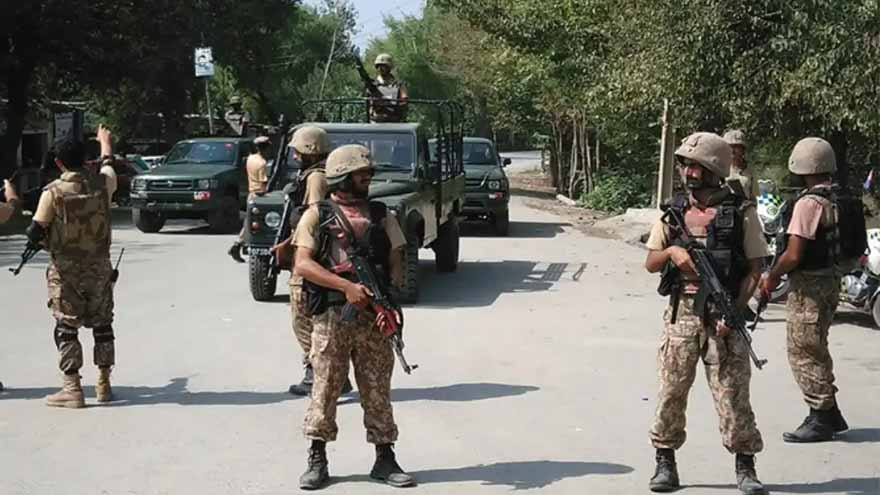
Summary Nigerian soldiers Monday killed two leaders of a radical sect responsible for hundreds of killings.
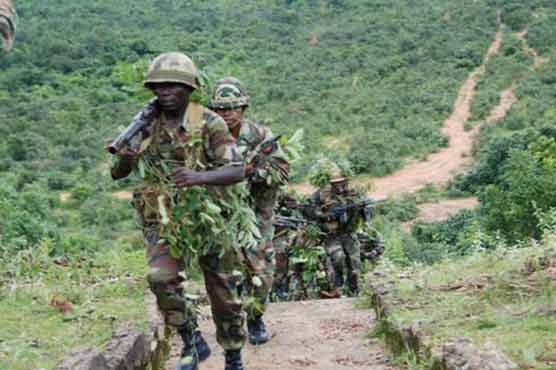
The dead included the spokesman for the sect known as Boko Haram, as well as a commander who operates in Kogi state south of Nigerias capital, the official said.The killings could prove to be a boon to Nigerias security forces, which remain largely unable to stop guerrilla attacks and bombings by the sect, which killed another 13 people this weekend alone, authorities said.The shooting occurred Monday morning in Mariri, a town to the southeast of Kano, the largest city in Nigerias Muslim north.There, soldiers stopped a vehicle with the sect spokesman, the commander, the spokesmans wife and their children, the official said. It is unclear what happened next, though the official said soldiers shot dead both the commander and the spokesman.The wife and children remain in military custody, the official said.The wife told soldiers the men had accompanied her to Kano where she sought medical help, the official said.The official spoke on condition of anonymity as the information was not to be made immediately public Monday. Lt. Iweha Ikedichi, a military spokesman in the region, later told journalists that soldiers had only killed one man, the Boko Haram spokesman. However, the official who spoke to The Associated Press had been at the checkpoint and offered further details about the scene.Government officials may be hesitating as they previously claimed in February to have arrested the sects spokesman, who uses the nom de guerre Abul Qaqa when speaking to journalists. Only days afterward, a spokesman using the same name told journalists: We are waxing stronger by the day despite the arrest of some of our top members. The sect also threatened journalists who previously reported on the governments claim without mentioning Boko Harams denial.The sect, whose name means Western education is sacrilege in the Hausa language of Nigerias north, has been waging an increasingly bloody fight against the nations government. More than 680 people have died in drive-by killings and bombings blamed on Boko Haram this year alone, according to a count by The Associated Press. The sect has demanded the release of all its captive members and has called for strict Shariah law to be implemented across the entire country.The killing of members of the sects senior leadership comes as the group recently changed some of its tactics and attacked more than 30 mobile phone towers throughout northern Nigeria, disrupting communications in a nation reliant on cellular phones.Meanwhile, Abubakar Shekau, the leader of the sect who occasionally appears in videos posted to the Internet, remains at large. Security officials and experts believe he and other Boko Haram members are hiding somewhere in the neighboring countries of Cameroon, Chad or Niger.The U.S. in June placed financial sanctions on Shekau and two other high-ranking Boko Haram members, though it remains unclear whether the group has any assets in America or use banks there. American officials also have said Boko Haram has loose ties with al-Qaida in the Islamic Maghreb and the Somali terrorist organization al-Shabab.The groups attacks also raised ethnic and religious tensions in Nigeria, a nation of more than 160 million people largely split between a Christian south and a Muslim north.This weekend, killings blamed on Boko Haram continued. In Kano, police said a security agent and three of his family members were shot dead Sunday by sect members. Gunmen attacked a suburb Sunday on the outskirts of Bauchi, killing eight people who were playing poker, state police commissioner Muhammad Ladan said.Assailants also shot dead a respected moderate Muslim cleric in Maiduguri, the northeastern city thats the sects spiritual home, authorities said.Long flight delays soar in July The number of long flight delays in July was more than previous eight months combined.Twenty eight planes were stuck on the ground at U.S. airports for more than three hours that month, the height of the summer travel season. Eighteen of those planes were operated by U.S. carriers.Sixteen of the U.S. flights were going in or out of Chicago OHare on July 13, a day of severe thunderstorms. All of the longest delays were on regional carriers that operate smaller jets for larger airlines.There was only one international flight that sat on the ground for more than four hours, and its susceptible to a big fine. Caribbean Airlines flight 526 from Georgetown, Guyana to New Yorks JFK Airport sat on the ground for four hours and three minutes. U.S. and international airlines can be fined up to $27,500 per passenger if a flight is stuck for more than three hours.The last time there were more three hour delays in a single month was October 2011. There was just one long delay last July.Overall, flights were less on-time in July than they were in both June 2012 and July 2011. United Airlines, which has a base in Chicago, had the worst on-time rate. US Airways had the best on-time rate for a network carrier, but Hawaiian Airlines and Alaska Airlines topped the overall list.As more flights were stuck and passengers grew frustrated, they complained much more. The Department of Transportation received just under 2,500 complaints in July, almost double a year earlier and up 50 percent from June.They also had more reason to complain about lost or damaged bags. The mishandled baggage rate fell from a year earlier but was up from June.