Updated on
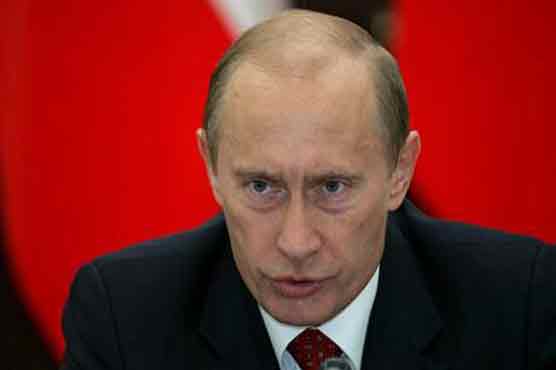
Summary Vladimir Putin has urged Western and Arab governments to review their policy on Syria.
Why should Russia be the only one reassessing its position? Perhaps our negotiating partners should reassess their position, Putin told Russia Today television.To us, the most important thing is to end the violence, to force all the sides in the conflict... to sit down at the negotiating table, determine the future and ensure the security of all the participants of the domestic political process, he said.Only then move on to these practical steps about the internal organisation of the country itself.Putin has previously rejected providing asylum to Syrian President Bashar al-Assad and insisted that it still viewed either him or his representatives as an integral part of the negotiating process.Moscow has stirred Western and Arab world anger by vetoing three UN Security Council resolutions that would have slapped sanctions on Assad during the nearly 18-month conflict.The interview comes amid efforts by Putin to repair a foreign policy image hurt by Russias refusal to back calls for Assad to go amid bloodshed since March 2011 that monitors say has claimed as many as 26,000 lives.The Russian foreign ministry, meanwhile, said it had full assurance that the chemical weapons stockpile amassed by the regime was safe and would not be used against Assads foes.We are fully confident -- and have the official assurance from Damascus - that this countrys government is taking all the necessary measures to guarantee the chemical arsenals safety, said Deputy Foreign Minister Sergei Ryabkov.We exclude the possibility of chemical arms being used for combat purposes, Ryabkov told Interfax.On the ground, the two kidnapped brothers of a Syrian rebel commander were killed on Thursday, the Syrian Observatory for Human Rights said, as battles raged between rebels and army forces in several districts of the capital.The men were kidnapped on Wednesday night at an army checkpoint, said the Britain-based monitoring group. They were found dead in the Qadam district of Damascus amid a sharp increase in reports of abductions across the country.Amateur video posted on YouTube by activists showed the bodies of the two men, identified as Mohammed and Ahmed al-Zakh, covered in blood. The bead of one of the victims had been partly blown off.The Observatory also reported fierce battles and army shelling in Qadam in southern Damascus where anti-regime sentiment is strong, as well as shelling in nearby Assali.Clashes also broke out elsewhere in the city, including in the Sayyida Zeinab area of the southeastern outskirts, home to an important Shiite Muslim shrine, said the watchdog.Kafr Zeita in the central province of Hama, one of the main arenas of the 17-month revolt against Assad, also saw fierce shelling for the second consecutive day, activists reported.It is horrific that the towns that have seen the most consistent dissent by unarmed protesters should be subjected to such violence, an activist who identified himself as Abu Ghazi told AFP via Skype.A preliminary toll compiled by the Observatory said that at least 17 people were killed in violence across Syria on Thursday, a day after 176 people -- most of them civilians -- died.Rebels on Wednesday announced plans to reform and stem the proliferation of militias in the hope of winning support from the international community which has been reluctant to arm them.Assad himself came under renewed diplomatic fire from Turkish Prime Minister Recep Tayyip Erdogan, who said Syria had become a terrorist state, and from Egyptian President Mohamed Morsi, who told him to go.And at a meeting in Cairo, Arab foreign ministers condemned the pursuit of violence, killings and ugly crimes carried out by the Syrian authorities and their shabiha militias against Syrian civilians.They also condemned violence and killings of civilians from any side in a veiled reference to rebels battling the regime. The crimes and massacres being carried out are crimes against humanity, said the ministers.A rebel general said on Wednesday that the Free Syrian Army would soon adopt changes aimed at overcoming divisions and addressing the growing number of militias fighting on its behalf.