Updated on
Summary David Camerons cabinet reshuffle elicited a tepid response.
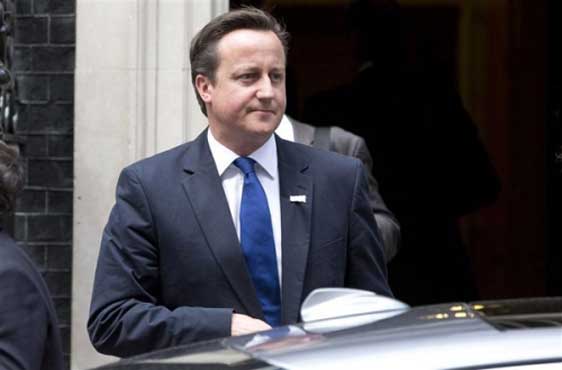
British Prime Minister David Cameron hopes to inject fresh life into his struggling coalition government with a government reshuffle, while keeping his unpopular finance minister George Osborne.However his first reshuffle since the coalition government came to power two and a half years ago elicited a tepid response in Wednesdays papers.Cameron was seeking, in Tuesdays reshuffle, to rejuvenate the Conservative Party element in the coalition cabinet with an eye on the next election in 2015.The big hitters -- those holding the finance, foreign and interior portfolios -- emerged unscathed from the changes, which also saw Cameron promote culture minister Jeremy Hunt to the health ministry.Hunt recently resisted calls to resign over his closeness to Rupert Murdochs media empire.Paul Deighton, a top official credited with delivering a successful London Olympics and Paralympics, was given a key ministerial role in the Treasury.Deighton, the chief executive of Olympics organisers LOCOG, will join the House of Lords -- the upper house of Britains parliament -- so he can take up his role as minister for infrastructure and economic delivery.Addressing one of the pressing issues in his in-tray as parliament returns to work after the summer, Cameron replaced transport minister Justine Greening, an opponent of the expansion of Londons Heathrow airport.Greening becomes international development minister while former chief whip Patrick McLoughlin takes over her transport brief, as the government faces increasingly urgent calls for an expansion of airport capacity in London.London Mayor Boris Johnson hit out at the removal of Greening from the transport job, claiming it showed the government was intent on the simply mad policy of a new runway at Heathrow. He vowed to fight any such expansion all the way.The veteran Ken Clarke, a former finance minister, was removed from the justice ministers job and given a roving role as a wise head in government, with Chris Grayling taking over his post.Cameron also moved a trusted lieutenant, Andrew Mitchell, from the international development brief to become chief whip, the governments chief enforcer in parliamentary business.It will be Mitchells job to crush the sort of party dissent that Cameron faced last month, when a senior backbencher challenged the prime minister to prove whether he was man or mouse over the Heathrow issue.Wednesdays newspapers picked up on this quip, with the Mirror splashing Squeak across its front-page, accusing Cameron of giving in to the partys right wing, while the i ran with the mouse that roared as its main headline.The pro-Tory Telegraph focussed on the mayors comments, running with the headline Boris turns guns on PM in battle for Heathrow.Cameron resisted calls to remove Osborne, the Chancellor of the Exchequer who was roundly booed at the Olympic Stadium in east London on Monday when he presented athletics medals at the Paralympics.Two other key members of the cabinet, Foreign Secretary William Hague and Home Secretary Theresa May, also held on to their jobs.The Liberal Democrat junior coalition partners brought former chief secretary to the Treasury, David Laws, back into government as a junior education minister.The well-regarded former banker was forced to quit the cabinet shortly after the 2010 election over a row about a housing agreement with his male partner. Many observers believe he is destined for a more prominent job soon.The promotion of Hunt has surprised political commentators.He had clung on to his job in April despite claims his office leaked confidential information to Murdochs News Corp. over its bid to take full control of British pay-TV giant BSkyB.Hunt, who oversaw the London Olympics as part of his ministerial role, was branded Minister for Murdoch by critics, but insisted he did not pass any confidential information to News Corp. himself.News Corp was forced to drop its 7.8-billion ($12.2 billion, 9.7 billion euro) bid for full control of the highly profitable BSkyB in July 2011 over the phone-hacking scandal at its now-defunct News of the World tabloid newspaper.A YouGov poll in the Sunday Times put support for the Conservatives at 35 percent, centre-left Labour at 41 percent and the Liberal Democrats at nine percent.